Understanding Angiosperms: The Diverse World of Flowering Plants
From the towering canopies of ancient forests to the tiny floating leaves of a pond, flowering plants—scientifically known as angiosperms—are the most successful and diverse group of land plants on Earth. These plants have shaped our landscapes, provided the bulk of human food sources, and evolved complex relationships with pollinators to dominate nearly every terrestrial ecosystem.
The term "angiosperm" is derived from the Greek words angeion (meaning vessel) and sperma (meaning seed), referring to the way their seeds are enclosed within a protective vessel or fruit.
Key Facts
- Species Count: Approximately 300,000 known species, with estimates ranging between 250,000 and 400,000.
- Taxonomic Scale: Comprises 64 orders and 416 families.
- Dominant Clades: Eudicots (75%), Monocots (23%), and Magnoliids (2%).
- Evolutionary Timeline: Diverged from gymnosperms over 300 million years ago, with explosive diversification during the Cretaceous period.
- Defining Feature: The production of flowers and fruits that completely envelop the seeds.
What Distinguishes Angiosperms from Other Plants?
While they share some similarities with gymnosperms (non-flowering seed plants), angiosperms possess several unique biological adaptations that have allowed them to thrive.
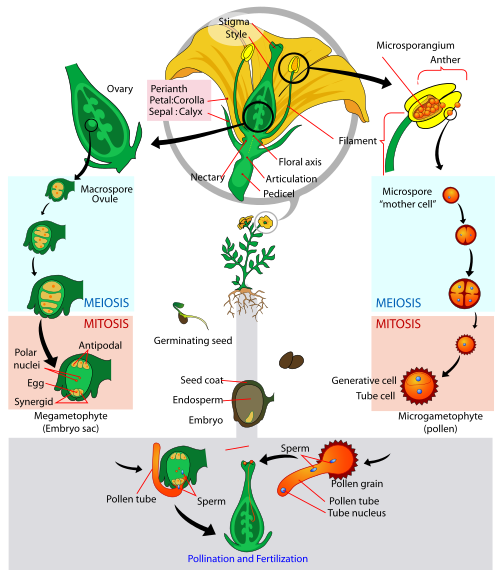
The most obvious feature is the flower. Flowers contain reduced gametophytes—the haploid stage of the plant life cycle. In most angiosperms, the male gametophyte consists of three cells, while the female gametophyte (the embryo sac) consists of seven cells with eight nuclei.
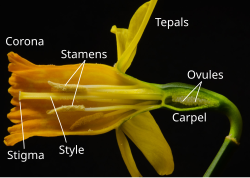
A closer look at flower anatomy reveals specialized structures. For example, in some species, petals and sepals are replaced by a fused tube called a corona and tepals.
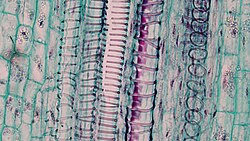
Beyond the visible flower, angiosperms have distinct internal systems. Their xylem—the tissue responsible for transporting water and minerals upward from the roots—consists of vessel elements rather than the tracheids found in gymnosperms.
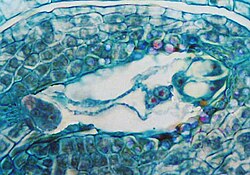
Furthermore, angiosperms produce endosperm, a nutrient-rich tissue within the seed that provides energy for the developing embryo. The female gametophyte is significantly reduced to form this embryo sac.
Finally, the ovules are enclosed within a carpel, which, after fertilization, develops into a fruit. This fruit completely envelops the seeds, protecting them and often aiding in their dispersal.
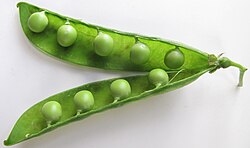
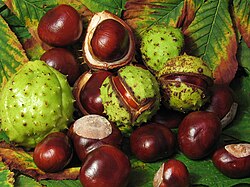
Fruits can vary wildly in form, from the fleshy berries we eat to pods that split open, a process known as dehiscing, to release their seeds.
Taxonomic and Ecological Diversity
The sheer variety of angiosperms is staggering. They include everything from forbs (flowering plants without woody stems), grasses, and vines to the majority of broad-leaved trees and shrubs.
This diversity is evident in their physical size. The Eucalyptus regnans can reach heights of nearly 100 meters, while the rootless freshwater plant Wolffia arrhiza is less than 2 mm across. They have adapted to almost every environment on Earth, including hot, cold, wet, and dry climates, as well as acidic, alkaline, fresh, and salt waters.
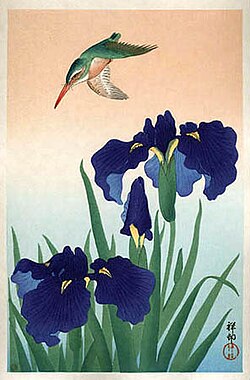
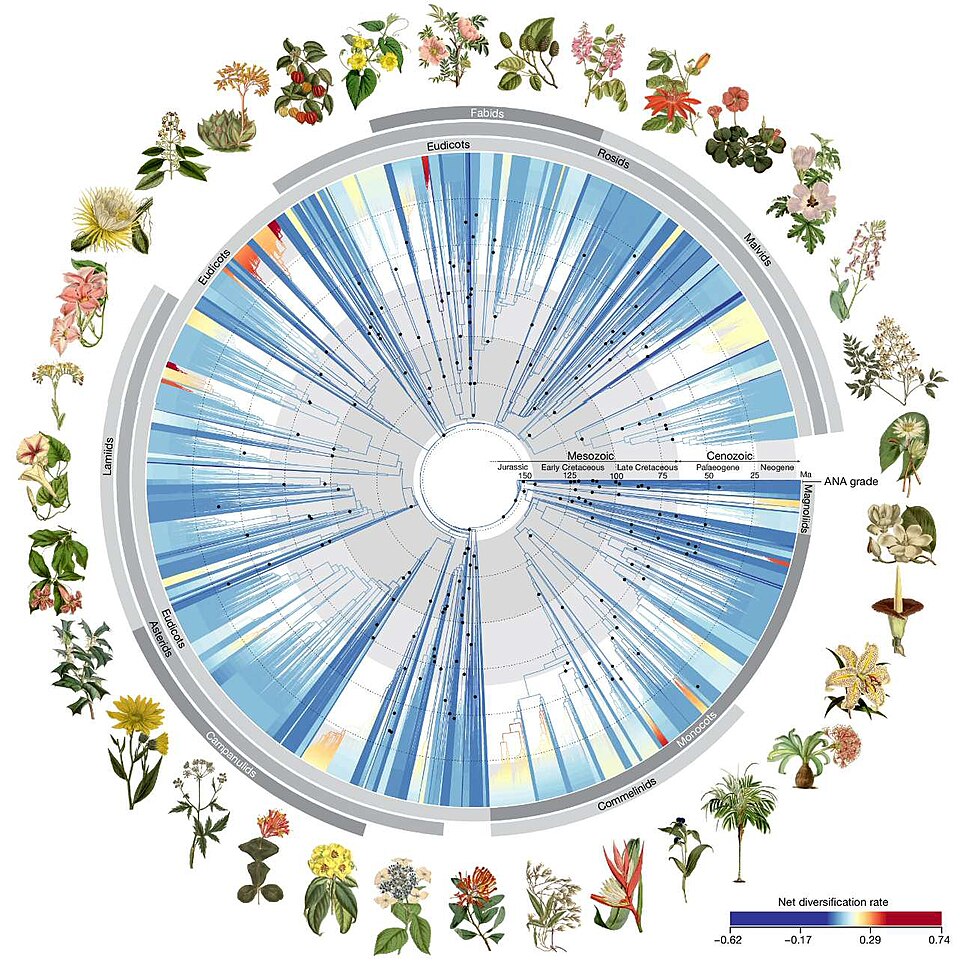
Modern classification is managed by the Angiosperm Phylogeny Group (APG), which uses molecular phylogenetics (the study of evolutionary relationships using DNA) to organize plants. The current APG IV system identifies 64 orders and 416 families. The vast majority of species fall into three main groups: eudicots, monocots, and magnoliids.
Evolutionary History
The ancestors of flowering plants diverged from the common ancestor of all living gymnosperms before the end of the Carboniferous period, more than 300 million years ago. However, they did not become the dominant plant group immediately.
During the Cretaceous period, angiosperms underwent adaptive radiation—a process of rapid evolutionary diversification. This allowed them to fill various ecological niches and become the primary plant group across the planet.
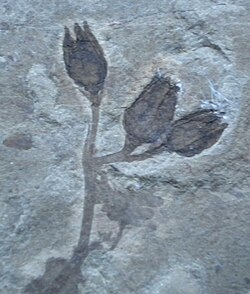
The way we classify these plants has evolved over time. In 1690, Paul Hermann coined "Angiospermae" to describe plants with seeds in capsules. By 1827, Robert Brown expanded the meaning to include all plants with enclosed ovules. By 1851, Wilhelm Hofmeister's research on embryo sacs helped establish the modern definition encompassing both monocotyledons and dicotyledons.
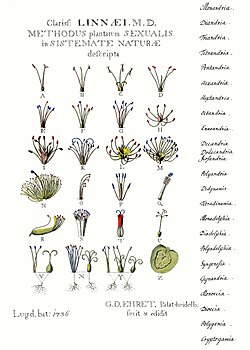
Recent molecular phylogeny has further refined our understanding of how these plants relate to one another and the rest of the plant kingdom.
The Role of Angiosperms in Human Life
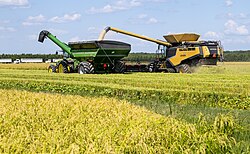
Humans rely heavily on angiosperms for survival. Many of our most critical food crops belong to a few highly productive families.
| Family | English Name | Example Foods |
|---|---|---|
| Poaceae | Grasses, cereals | Rice, maize, wheat, barley, rye, oats, sugar cane |
| Fabaceae | Legumes, pea family | Peas, beans, lentils, clover, alfalfa |
| Solanaceae | Nightshade family | Potatoes, tomatoes, peppers, aubergines |
| Cucurbitaceae | Gourd family | Squashes, cucumbers, pumpkins, melons |
| Brassicaceae | Cabbage family | Brussels sprouts, broccoli, mustard, oilseed rape |
| Apiaceae | Parsley family | Carrots, parsley, coriander, fennel, cumin |
| Rutaceae | Rue family | Oranges, lemons, grapefruits |
| Rosaceae | Rose family | Apples, pears, cherries, apricots, plums, peaches |

Conservation and Climate Change
Despite their resilience, many flowering plants are now vulnerable to rapid environmental changes. Climate change is beginning to impact plant diversity globally.
Research suggests that if global warming reaches 2 °C (3.6 °F), approximately 3% of flowering plants are likely to face extinction within a century. This risk increases to 10% if warming reaches 3.2 °C (5.8 °F). In the most severe scenarios, up to half of all tree species could be lost.
![Viola calcarata, a species highly vulnerable to climate change.[91]](/images/d8/e4/d8e4fda09fd391aa33f5e425e8cfa58e6d78f69f7ccc4456ae1c92b182a481c3.jpg)
Frequently Asked Questions
What is the main difference between angiosperms and gymnosperms?
The primary difference is that angiosperms produce flowers and enclose their seeds within a fruit, whereas gymnosperms produce "naked" seeds, usually in cones, and do not produce flowers or fruits.
What are the three main clades of angiosperms?
The three main clades are the eudicots (which make up about 75% of species), the monocots (about 23%), and the magnoliids (about 2%).
How do angiosperms transport water?
Angiosperms use xylem, which contains specialized vessel elements. These long tubes are more efficient at transporting water and minerals than the tracheids found in more primitive seed plants.
When did flowering plants become dominant?
While they diverged from gymnosperms over 300 million years ago, angiosperms diversified explosively and became the dominant plant group during the Cretaceous period.
How does climate change affect flowering plants?
Climate change threatens plant diversity; estimates suggest that 3% to 10% of flowering plant species could go extinct within a century depending on the level of global warming, with tree species being particularly vulnerable.