Sequential Hermaphroditism in Animals and Plants
In the diverse world of biology, sex is not always a fixed trait. While many species remain one sex throughout their lives, others employ a flexible strategy known as sequential hermaphroditism. This biological phenomenon occurs when an organism changes its sex at some point during its life cycle, producing male gametes (sperm) and female gametes (eggs) at different stages.
This process is a normal part of the reproductive cycle for many fish, gastropods, and plants. These transitions are typically triggered by specific cues, such as the organism's age, physical size, or the existing social structure of its community.
Key Facts
- Sequential Hermaphroditism: The ability of an organism to change sex during its lifetime.
- Protandry: A transition from male to female.
- Protogyny: A transition from female to male.
- Bidirectional: The capacity to switch between male and female multiple times.
- Dichogamy: The botanical term for sequential hermaphroditism in flowers.
Sequential Hermaphroditism in Animals
In the animal kingdom, sex change is often a strategic adaptation to maximize reproductive success. Depending on the species, this change can happen in one of three primary directions.
Protandry (Male to Female)
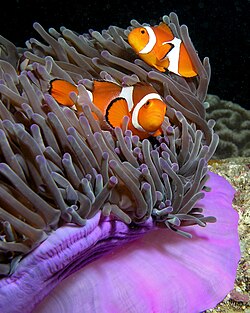
Protandrous hermaphroditism occurs when an individual begins its life as a functional male and later transitions into a female. A classic example is the Ocellaris clownfish (Amphiprion ocellaris).
Protogyny (Female to Male)
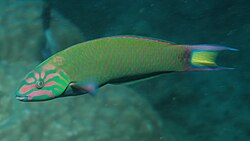
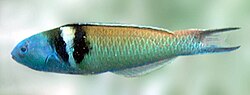
Protogynous hermaphroditism is the opposite transition, where an organism starts as a female and becomes a male. This is frequently observed in various wrasse species, such as the Moon wrasse (Thalassoma lunare) and the bluehead wrasse.
In some species, such as the bluehead wrasse, a terminal-phase male emerges after this transition, often dominating the social hierarchy.
Bidirectional and Simultaneous Hermaphroditism
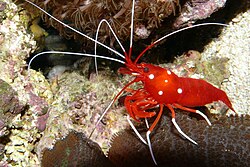
Some organisms are more flexible still. Bidirectional (or serial) hermaphrodites can change sex in either direction—male to female or female to male—potentially repeating this process several times. Additionally, some species exhibit simultaneous hermaphroditism, where both male and female functions are active at once. For example, certain shrimp in the genus Lysmata perform protandric simultaneous hermaphroditism.
The Science of Sex Change: Causes and Mechanisms
Biologists use several models to explain why an organism would evolve the ability to change sex. One prominent theory is the size-advantage model, which suggests that if the reproductive success of a male increases more rapidly with size than that of a female (or vice versa), it is advantageous to switch sex as the organism grows.
The transition can involve different biological paths. Some organisms possess both male and female germ cells in their gonads from the start, while others completely remodel their gonadal tissue to switch from one functional type to the other.
Dichogamy in Botany
In plants, sequential hermaphroditism is referred to as dichogamy. This occurs when the male and female functions of a flower are separated in time. While a whole plant might have both male and female flowers open simultaneously, individual flowers follow a specific sequence.
Protandry vs. Protogyny in Plants
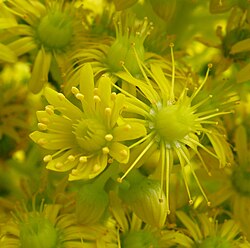
- Protandrous flowers: The male function (pollen release) occurs before the female function (stigma receptivity). An example is Aeonium undulatum.
- Protogynous flowers: The female function occurs before the male function.
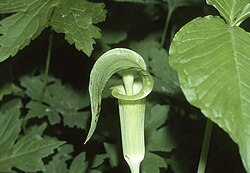
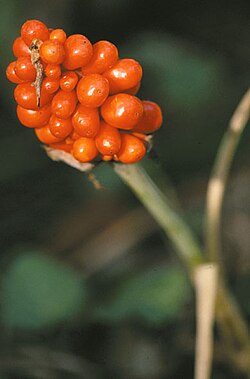
In the Arisaema triphyllum plant, the difference between male and female stages is physically distinct.
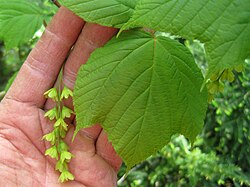
Other examples of botanical sex flexibility include the striped maple (Acer pensylvanicum).
While it was previously believed that dichogamy evolved primarily to reduce inbreeding, modern research suggests it may also serve as a mechanism to reduce pollen-pistil interference, ensuring that a flower's own pollen does not block the receptivity of its stigma.
Summary of Sequential Hermaphroditism
| Term | Direction of Change | Common Examples | Context |
|---|---|---|---|
| Protandry | Male $\rightarrow$ Female | Clownfish, Aeonium undulatum | Animals & Plants |
| Protogyny | Female $\rightarrow$ Male | Moon wrasse, Bluehead wrasse | Animals |
| Bidirectional | Male $\leftrightarrow$ Female | Certain fish species | Animals |
| Dichogamy | Temporal separation | Striped maple, Arisaema | Plants (Flowers) |
Frequently Asked Questions
What triggers a sex change in sequential hermaphrodites?
Sex changes are typically cued by social structures (such as the loss of a dominant individual), the achievement of a specific age, or reaching a certain physical size.
Is dichogamy the same as sequential hermaphroditism?
Yes, dichogamy is the specific term used in botany to describe sequential hermaphroditism in flowering plants.
Can an animal change its sex more than once?
Yes, bidirectional (or serial) hermaphrodites have the capacity to switch between male and female multiple times throughout their lives.
Why do plants use dichogamy?
Dichogamy is used to reduce pollen-pistil interference and was historically thought to be a primary method for reducing inbreeding.
What is the difference between simultaneous and sequential hermaphroditism?
Simultaneous hermaphrodites possess both functional male and female reproductive organs at the same time, whereas sequential hermaphrodites switch from one sex to the other at different life stages.