Second Boer War: The Conflict That Reshaped Southern Africa
The Second Boer War, fought between October 11, 1899, and May 31, 1902, was a pivotal struggle for dominance in Southern Africa. Pitting the British Empire against the two independent Boer republics—the South African Republic (Transvaal) and the Orange Free State—the war evolved from a conventional military clash into a brutal guerrilla conflict that left a lasting scar on the region's history.
The roots of the conflict lay in the Witwatersrand Gold Rush, which triggered a massive influx of foreign settlers, primarily British citizens known as Uitlanders. These settlers faced restrictive voting laws in the South African Republic, requiring 14 years of residence to participate in politics. When diplomatic efforts and the Bloemfontein Conference of 1899 failed to resolve these grievances, the British government deployed 10,000 troops, sparking an open war.
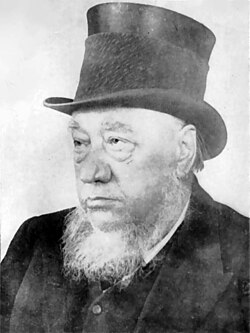
Key Facts
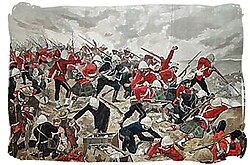
- Duration: October 11, 1899 – May 31, 1902.
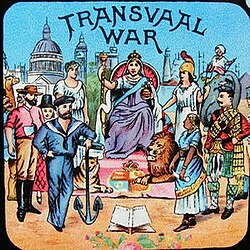
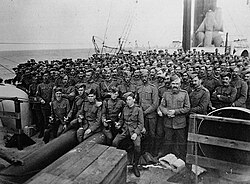
- Belligerents: The United Kingdom and its Empire (including Canada, Australia, New Zealand, and India) vs. the South African Republic, Orange Free State, and Boer volunteers.
- Outcome: British victory; dissolution of the Boer republics and the signing of the Treaty of Vereeniging.
- Total Imperial Strength: Approximately 448,435 personnel.
- Total Boer Strength: Approximately 87,365 personnel.
- Financial Cost: Estimated at £211,156,000 for the British government.
The Three Phases of War
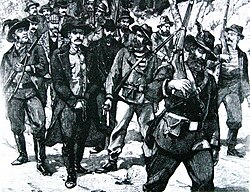
Phase I: The Boer Offensive (1899–1900)
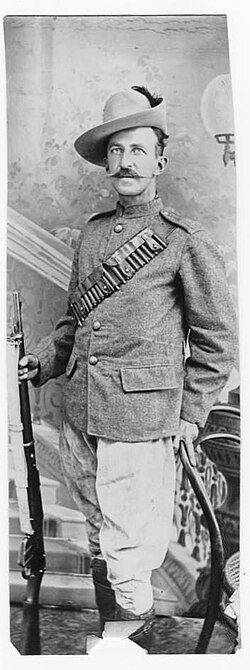
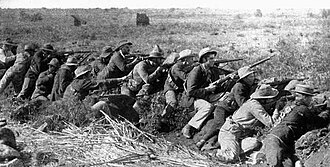
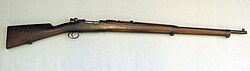
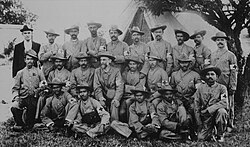
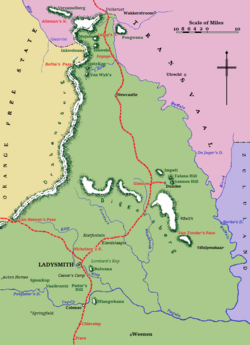
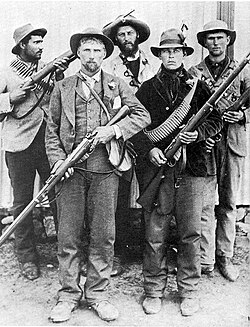
The war began with a swift Boer offensive into the British-held Natal and Cape Colony. The Boers utilized commandos—civilian militias characterized by high mobility and expert marksmanship—outnumbering the initial British force of 13,000 with roughly 33,000 soldiers. While most Boers fought in civilian clothes, the Staatsartillerie (State Artillery) wore light green uniforms.
This phase was marked by the Boer sieges of Ladysmith, Mafeking, and Kimberley, which tied down significant British resources and caused early humiliations for the Imperial forces.
Phase II: The British Counter-Offensive (1900)
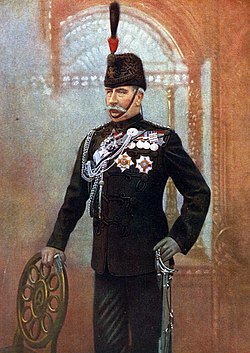
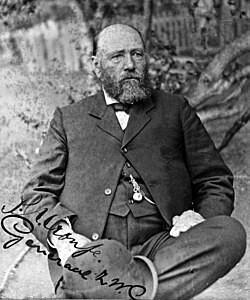
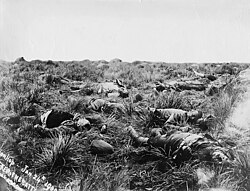
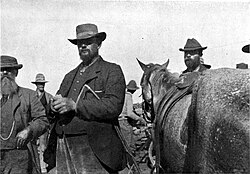
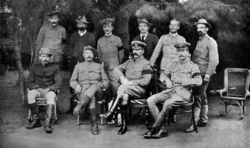
Following early defeats, General Redvers Buller was replaced by Lord Roberts. The British shifted their strategy, successfully relieving the besieged cities and capturing the Boer capitals. The capture of Pretoria signaled a turning point, forcing the Boer forces to retreat and leading to the surrender of thousands of soldiers, including General Piet Cronjé at the Battle of Paardeberg.
Phase III: Guerrilla Warfare and Scorched Earth (1900–1902)
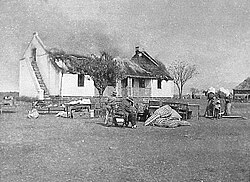
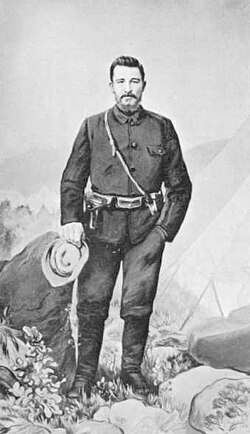
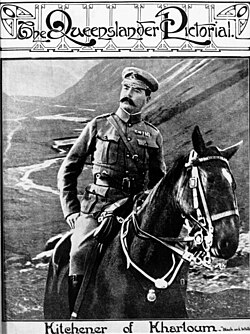
Refusing to surrender, Boer leaders like Christiaan de Wet launched a guerrilla campaign. In response, Lord Kitchener implemented a scorched earth policy, burning farms and destroying crops to deny the guerrillas food and shelter. To restrict Boer movement, the British constructed a vast network of blockhouses.
Human Cost and Controversies
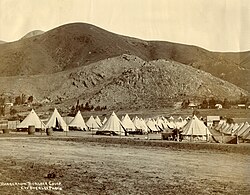
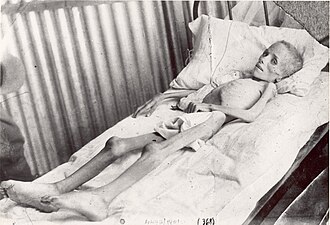
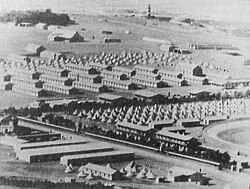
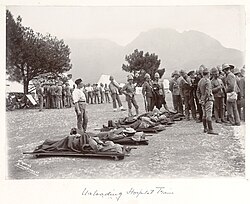
The war is remembered for its severe impact on non-combatants. The British established concentration camps to house Boer women and children displaced by the scorched earth policy, as well as camps for native Africans. These camps were plagued by disease and malnutrition, leading to thousands of deaths.
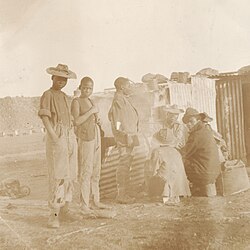
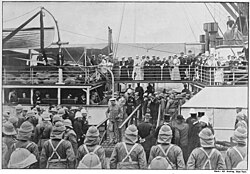
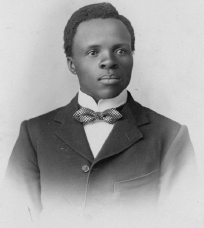
The conflict also saw the involvement of diverse Imperial forces, including the Natal Indian Ambulance Corps, which included a young Mohandas K. Gandhi.
War Summary and Statistics
| Category | British Empire | Boer Republics & Allies |
|---|---|---|
| Total Strength | 448,435 | 87,365 |
| Dead | 22,092 | 6,189 |
| Captured/Surrendered | 2,006 | 45,256 |
| Sick/Wounded/Missing | 76,364 | 110 |
Frequently Asked Questions
![Memorial window from St Patrick's Cathedral, Dublin by An Túr Gloine. Many Irish Republicans sympathised with the Boer side,[169] rather than the British side on which fought the Royal Irish Regiment.](/images/77/ea/77ea26a8a07f67b4f9c47d6447cb676a3525a58da5eee82597ed44d8c43437b7.jpg)
What caused the Second Boer War?
The primary cause was the tension over the Witwatersrand Gold Rush. The British sought greater influence in the region and pushed for voting rights for the Uitlanders (foreigners), which the Boer government of the South African Republic resisted.
What was the 'scorched earth' policy?
It was a military strategy used by the British to defeat Boer guerrillas by destroying their means of survival. This involved burning farms, killing livestock, and destroying crops to force the guerrillas to surrender.
How did the war end?
The war ended with the Treaty of Vereeniging on May 31, 1902. The Boer republics were dissolved and became British colonies, eventually leading to the creation of the Union of South Africa.
Who were the Boer commandos?
The commandos were civilian militias rather than a professional standing army. They were highly skilled in scouting, riding, and marksmanship, which made them formidable opponents in the South African terrain.
What role did other Commonwealth nations play?
Canada, Australia, and New Zealand provided significant troop contributions. For example, Canadian soldiers played a major role in the victory at the Battle of Paardeberg.