Scopa: The Specialized Pollen-Carrying Structures of Non-Parasitic Bees
In the intricate world of pollination, bees have evolved highly specialized anatomical tools to ensure they can transport food back to their nests. One of the most vital of these adaptations is the scopa. Derived from the Latin word for "broom," a scopa refers to the specific modifications on the bodies of non-parasitic bees that function as a pollen-carrying apparatus.
While many people associate bees with pollen, not all bees carry it in the same way. The scopa is a distinct biological feature designed specifically for the efficient movement of pollen grains.
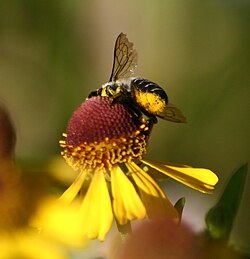
How Scopa Works: Hairs and Setae
At its most fundamental level, a scopa consists of a dense mass of elongated, often branched hairs known as setae. These hairs are strategically positioned to trap and hold pollen during flight.
The location of these hairs varies significantly between different bee species. In many bees, the scopa is located on the hind legs. This modification typically involves the tibia (the segment of the leg), though some species also feature modified hairs on the femur or the trochanter.
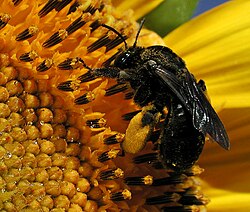
Variations in Pollen Transport Locations
Not all bees rely solely on their legs to move pollen. Evolution has produced several distinct methods of transport:
- Leg-based Scopa: The most common form, where hairs are concentrated on the hind limbs.
- Abdominal Scopa: Certain families, most notably the Megachilidae, lack modified hairs on their legs. Instead, they possess an extensive scopa on the ventral (underside) surface of the abdomen.
- Multi-segmental Scopa: Some species, such as certain Halictid bees, may utilize both the hind legs and the abdomen to carry their loads.
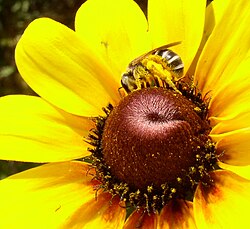
Distinguishing Scopa from Other Structures
It is easy to confuse various bee adaptations, but in entomology, the term "scopa" is strictly reserved for hairs adapted for pollen transport. Other specialized hairs may exist on a bee's face, mouthparts, or front and middle legs to collect floral oils or other plant chemicals, but these are not classified as scopae.
Scopa vs. Corbicula
Honey bees and bumblebees possess a more highly developed structure known as the corbicula, or pollen basket. While the scopa is a collection of hairs, the corbicula is a specialized structure that allows for even more efficient transport.
Furthermore, some bees do not use external hairs at all. Certain species transport pollen internally within their crop (a part of the digestive tract). Additionally, kleptoparasitic bees—which do not gather their own pollen—lack a scopa entirely.
Key Facts
- Definition: A scopa is a pollen-carrying apparatus made of dense, often branched hairs (setae).
- Etymology: The term comes from the Latin word for "broom."
- Primary Locations: Found on the hind legs (tibia, femur, or trochanter) or the underside of the abdomen.
- Megachilidae: This family is unique for using an abdominal scopa rather than leg hairs.
- Exclusions: The term does not apply to hairs used for oils, nor to the corbicula found in honey bees.
Comparison of Pollen Transport Methods
| Structure/Method | Primary Location | Commonly Found In |
|---|---|---|
| Scopa (Leg) | Hind legs (tibia, femur, trochanter) | Most non-parasitic bees |
| Scopa (Abdominal) | Ventral surface of the abdomen | Megachilidae family |
| Corbicula | Hind legs (pollen basket) | Honey bees and bumblebees |
| Internal Transport | The crop | Specific non-scopa species |
Frequently Asked Questions
What is the difference between a scopa and a corbicula?
A scopa is a dense collection of hairs used for carrying pollen, whereas a corbicula is a more highly developed "pollen basket" structure found in honey bees and bumblebees.
Do all bees have a scopa?
No. Some bees transport pollen internally in their crop, and kleptoparasitic bees, which do not collect their own pollen, lack a scopa entirely.
Can a scopa be found on the abdomen?
Yes. While many bees have scopae on their legs, the Megachilidae family uses an extensive scopa located on the underside of the abdomen.
Is any hair on a bee considered a scopa?
No. The term "scopa" is strictly limited to hairs that are specifically adapted for the transport of pollen. Hairs used for collecting floral oils or chemicals are not called scopae.
What are the specific leg segments involved in a leg-based scopa?
At a minimum, the modified hairs are located on the tibia, but they can also be found on the femur and/or the trochanter.