Bees: The Diverse and Essential World of Anthophila
Bees are a diverse group of flying insects belonging to the clade Anthophila. While many people immediately think of the honeybee when they hear the word, the reality of the bee world is far more complex and varied. From solitary dwellers to highly organized social colonies, these insects have played a vital role in Earth's ecosystems for millions of years.
Tracing their temporal range back approximately 70 million years, bees have evolved alongside flowering plants, creating intricate biological relationships that sustain much of our natural world.
![Honeybees are quite atypical of bees in general[11][12]](/images/19/aa/19aafa538fc610b5670cec52f36fae3bf4a81a6aa24be14c44ffde6c9d78dade.webp)
Key Facts
- Scientific Classification: Bees belong to the order Hymenoptera and the superfamily Apoidea.
- Evolutionary Age: They have existed for an estimated 70 to 0 million years.
- Diversity: They range from solitary species to complex social organisms like honeybees.
- Ecological Role: Bees are critical commercial and wild pollinators.
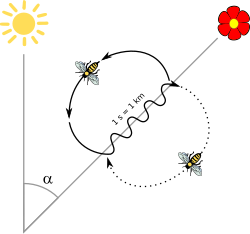
- Communication: Some species, like honeybees, use complex movements like the "waggle dance" to communicate food locations.
Biological Characteristics and Diversity
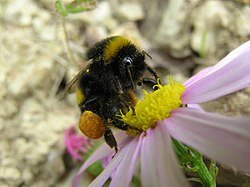
Bees exhibit a wide array of physical traits tailored to their specific lifestyles. Their anatomy often includes specialized mouthparts for lapping nectar and structures for collecting pollen. For example, many bees possess corbiculae, or pollen baskets, used to transport food back to their nests.
Solitary vs. Social Bees
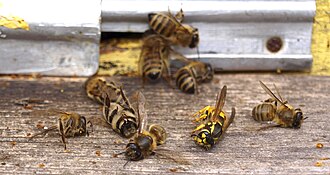
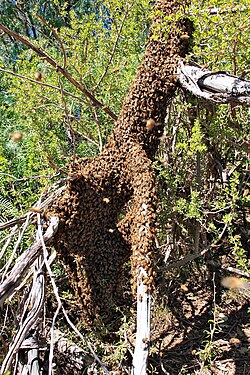
Not all bees live in hives. While honeybees are famous for their communal living, many other species are solitary, meaning they live and breed alone. Others are communal, sharing nesting sites but maintaining individual roles. This social structure is often influenced by a haplodiploid breeding system, a method of sex determination that can drive altruistic behaviors in social colonies.
Nesting and Life Cycles
Nesting habits vary significantly across the different families of bees, such as Apidae, Megachilidae, and Halictidae. Some bees, like leafcutter bees, use vegetation to construct nests, while others, like carpenter bees, excavate wood. Bumblebees often create nests with wax cells to house their developing larvae and pupae.
Evolutionary Relationships and Ecology
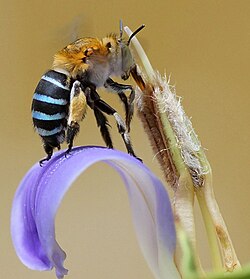
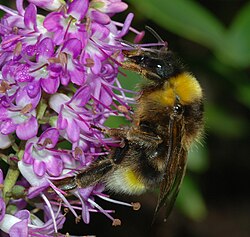
The history of bees is deeply intertwined with the evolution of flowers, a process known as coevolution. As flowers evolved specific shapes and nectar rewards, bees evolved specialized tools, such as long tongues, to access them. This relationship makes bees some of the most important pollinators on the planet.
However, the relationship is not always mutualistic. Some insects act as brood parasites, laying their eggs in the nests of other bees, while others, like the bee-fly, act as Batesian mimics—appearing like bees to avoid predators without actually being part of the bee family.
Human Interaction: From Mythology to Industry
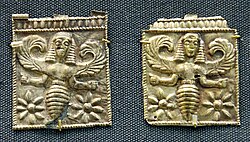
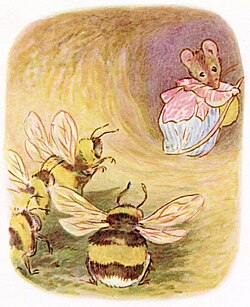
Humans have long been fascinated by bees. They appear in ancient mythology, such as the winged bee goddesses of Rhodes, and in classical literature. In modern times, they are featured in popular culture, from animated films to fantasy novels.
Beekeeping and Food Production
Apiculture, or beekeeping, is a major global industry. Honeybees are managed commercially to produce honey and to provide pollination services for agriculture. Beyond honey, some cultures use bee larvae as a food source, and there is even interest in apitherapy, the use of bee products for medicinal purposes.
| Category | Examples/Details |
|---|---|
| Major Families | Andrenidae, Apidae, Colletidae, Halictidae, Megachilidae, Melittidae, Stenotritidae |
| Social Structures | Solitary, Communal, Eusocial (Social) |
| Primary Roles | Pollination, Food Production (Honey, Larvae) |
| Threats | Parasites, Pesticides, Habitat Loss, Climate Change |
Frequently Asked Questions
How do bees communicate the location of food?
Certain social bees, most notably honeybees, use a specialized movement known as the waggle dance to communicate the direction and distance of food sources to other members of the hive.
What is the difference between a bee and a wasp?
While they share similarities, bees are generally distinguished by their specialized mouthparts for lapping nectar and their role as primary pollinators, whereas many wasps have different predatory or scavenging behaviors.
Are all bees social insects?
No. While honeybees are highly social, many bee species are solitary, meaning they do not live in large colonies and do not have a queen or worker caste system.
What are the main threats to bee populations?
Bee populations face several stressors, including exposure to chemical pesticides, various parasites and pathogens, habitat loss, and the effects of climate change.
What is a brood parasite in the context of bees?
A brood parasite is an organism that exploits the reproductive efforts of another species. In the bee world, some species lay their eggs in the nests of other bees, forcing the host to raise the parasite's offspring.