Entomophily: The Complex World of Insect Pollination
In the natural world, the survival of countless plant species depends on a delicate and ancient partnership. This process, known as entomophily—a term derived from the Greek words for "insect" and "love"—is the method by which plants use insects to distribute their pollen. Unlike wind or water pollination, which rely on chance, entomophily is a targeted strategy that has driven millions of years of biological innovation.
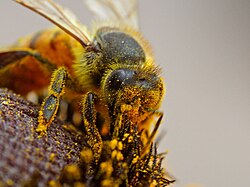
To attract these tiny couriers, many flowering plants have evolved elaborate advertisements. These include vibrant colors, intricate patterns known as honey guides, and enticing scents. Some even go so far as to mimic insect pheromones to trick specific species into visiting. In return for this service, plants provide rewards such as nectar and pollen, creating a mutualistic relationship where both parties benefit.
Key Facts
- Entomophily is the biological term for pollination by insects.
- Insect-pollinated flowers are typically larger, more colorful, and more fragrant than wind-pollinated ones.
- Pollinators include bees, butterflies, moths, wasps, flies, ants, and beetles.
- Coevolution has led to highly specialized relationships, such as the bond between figs and fig wasps.
- A decline in plant diversity can lead to the extinction of specialized pollinators.
The Evolutionary History of Pollination
Long before the rise of modern flowering plants (angiosperms), the botanical landscape was dominated by seed plants that relied heavily on the wind. However, the history of insect pollination stretches back much further than many realize. Fossil evidence from the early Permian period shows Tillyardembia gymnosperms with pollen attached to the bodies of ancient insects.
During the Mesozoic era, various extinct insect groups, such as long-proboscid scorpionflies and certain lacewings, likely served as pollinators. As angiosperms radiated during the Early Cretaceous, they displaced many gymnosperm lineages. While some insect pollinators went extinct alongside their original hosts, others transitioned to form new, highly efficient associations with the emerging flowering plants.
How Plants Recruit Insects
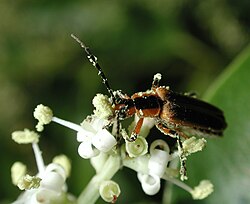
Wind and water pollination are inefficient processes that require plants to produce massive quantities of pollen to ensure success. In contrast, entomophilous plants can be more selective. By evolving specific lures, they encourage insects to maintain floral fidelity—the tendency of a pollinator to visit flowers of the same species repeatedly.
Floral Attractions and Adaptations
Plants utilize several primary methods to entice insects:
- Nectar: A sugary reward that provides energy.
- Pollen: A nutrient-rich food source.
- Fragrances: Scents that can range from sweet to the smell of decaying organic matter (sapromyophily).
- Visual Cues: Bright colors and ultraviolet patterns that guide insects to the nectar.
The ideal pollinator is often a hairy insect, as its body provides an excellent surface for pollen grains to adhere to during transit.
Specialized Pollination Mechanisms
Different insect groups have evolved unique ways of interacting with flowers, leading to a diverse array of pollination strategies.
Bees and Wasps
Bees are among the most important pollinators because they actively collect food for their brood. Many flowers have adapted to their specific behaviors. For example, some flowers feature a "lower lip" that only opens when a heavy insect lands, or they require buzz pollination, where a bee vibrates its flight muscles to dislodge pollen from specific structures, such as those found in tomato plants.
Butterflies and Moths
Lepidoptera (butterflies and moths) possess long, straw-like mouthparts called proboscides. Butterflies, which are mostly diurnal (active during the day), are often drawn to pink, mauve, and purple flowers. Moths, being largely nocturnal, frequent pale, highly fragrant flowers that bloom at night. Hawkmoths are notable for their ability to hover while feeding, transferring pollen via their long proboscis.
Beetles and Flies
Beetle pollination often involves flat, open flowers that produce heavy scents, sometimes mimicking fruity or spicy aromas. Some plants, like the giant water lily, even use traps to keep beetles inside the flower for longer periods. Flies, while often less reliable pollinators due to their haphazard movement, can be highly effective when they are abundant, such as certain species of syrphid flies.
Remarkable Plant-Insect Pairings
In some instances, coevolution has reached a level of extreme specialization where a plant and an insect are inextricably linked.
The Bee Orchid
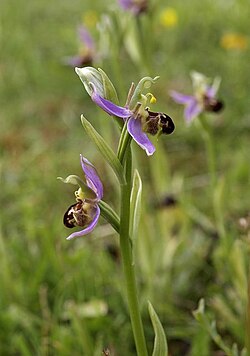
The bee orchid employs a deceptive strategy. It produces a scent that mimics a female bee and features a lip that looks like a female insect. This triggers pseudocopulation, where a male bee attempts to mate with the flower, inadvertently transferring pollen in the process.
The Fig and the Wasp
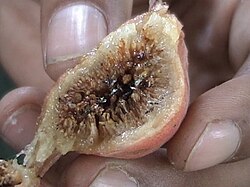
Figs belong to the genus Ficus and possess a unique inflorescence called a syconium—a fleshy, hollow structure containing many tiny flowers inside. This system relies on tiny agaonid wasps. The female wasp enters the syconium to lay eggs and pollinate the flowers, while the males assist in mating before the next generation of winged females exits to find new figs.
Summary of Pollination Strategies
| Pollinator Type | Common Flower Traits | Key Mechanism |
|---|---|---|
| Bees/Wasps | Yellow/Blue, UV guides, landing platforms | Landing, nectar collection, buzz pollination |
| Butterflies | Large, brightly colored, tubular | Probing with long proboscis |
| Moths | Pale, nocturnal scent, tubular | Hovering or landing on night blooms |
| Beetles | Flat, open, fruity/spicy or carrion scents | Crawling over exposed anthers |
| Flies | Often primitive or carrion-scented | Haphazard movement and feeding |
Frequently Asked Questions
What is the difference between entomophily and anemophily?
Entomophily is pollination by insects, characterized by colorful, scented flowers and larger pollen grains. Anemophily is pollination by wind, which typically involves less showy flowers and the production of vast quantities of fine, lightweight pollen.
Why are bees such important pollinators?
Bees are highly efficient because they actively collect pollen and nectar to feed their larvae. This drive to gather resources ensures they move frequently between flowers of the same species, making them reliable agents of pollen transfer.
Can plants pollinate themselves?
Yes, some plants are capable of self-pollination. For example, the bee orchid is almost exclusively self-pollinating in its northern ranges, though it uses insect mimicry for pollination in the Mediterranean.
How does climate change affect insect pollination?
Because many pollinators and plants have evolved specialized, mutualistic relationships, they are highly dependent on one another. A decline in plant diversity or a mismatch in the timing of flowering and insect emergence can be catastrophic for both groups.
What is buzz pollination?
Buzz pollination is a technique used by certain insects, like bumblebees, to extract pollen. The bee clings to a flower and vibrates its flight muscles at a specific frequency, which dislodges pollen from specialized structures that would otherwise be inaccessible.