Bees: The Fascinating Biology and Global Impact of Anthophila
Bees are a diverse group of flying insects belonging to the clade Anthophila. While many people immediately think of the honeybee when they hear the word, the world of bees is far more expansive, encompassing everything from solitary foragers to complex social colonies. These insects have existed for an estimated 70 to 0 million years, playing a critical role in the Earth's ecosystems through their relationship with flowering plants.
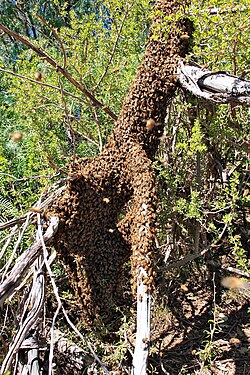
![Honeybees are quite atypical of bees in general[11][12]](/images/19/aa/19aafa538fc610b5670cec52f36fae3bf4a81a6aa24be14c44ffde6c9d78dade.webp)
Key Facts
- Scientific Classification: Bees belong to the order Hymenoptera and the superfamily Apoidea.
- Diversity: They include various families such as Apidae, Megachilidae, and Halictidae.
- Social Structures: Bees can be solitary, communal, or eusocial (highly organized social groups).
- Ecological Role: They are vital commercial and wild pollinators.
- Diet: Most bees feed on nectar and pollen.
Biological Characteristics and Classification
Bees are classified within the class Insecta and the order Hymenoptera. They are distinguished from wasps by several morphological and behavioral traits. Anatomically, bees possess specialized features such as lapping mouthparts (including the labium and maxillae) designed for nectar consumption, and often have structures like corbiculae (pollen baskets) to transport food.
Anatomy and Sensory Organs
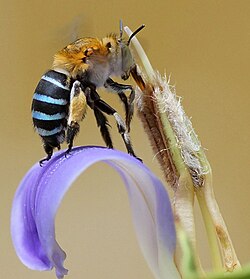
A typical bee's head features antennae, three ocelli (simple eyes), and large compound eyes. These sensory organs are essential for navigation and finding food sources. The diversity in mouthparts is a key evolutionary trait, with some species developing long tongues to access nectar in deep, tubular flowers.
Evolution and Social Behavior
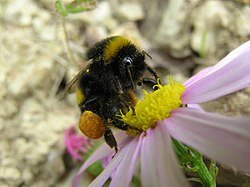
The evolutionary history of bees is closely tied to the rise of flowering plants, a process known as coevolution. As flowers evolved specific shapes to attract pollinators, many bee species evolved specialized tools to reach their rewards.
Haplodiploidy and Altruism
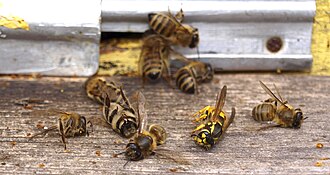
Many social bees utilize a haplodiploid breeding system, a method of sex determination that influences their social structures. This system is often linked to the altruistic behavior seen in worker bees, who may sacrifice themselves to defend the hive against predators like yellowjackets.
Solitary vs. Social Bees
Not all bees live in large hives. While honeybees are famous for their complex colonies, many species are solitary, meaning individual females build their own nests and care for their own offspring. Others are communal, sharing nesting sites but maintaining individual maternal care.
Ecology and Floral Relationships
Bees are among the most important commercial pollinators on the planet. Their ability to move pollen between flowers facilitates plant reproduction, which in turn supports entire food webs. Some bees have even developed specialized behaviors, such as the leafcutting bee, which uses circular cutouts from leaves to construct nests.
Mimicry and Parasitism
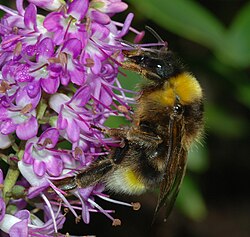
In the natural world, some insects use Batesian mimicry, where a harmless species evolves to look like a dangerous one to avoid predators. For example, the bee-fly Bombylius major mimics the appearance of bees. Conversely, some bees act as brood parasites, such as Bombus vestalis, which lays its eggs in the nests of other bumblebee species.
Human Interaction: From Mythology to Industry
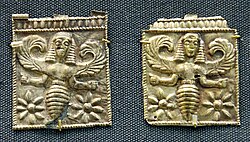
Humans have maintained a complex relationship with bees for millennia. In ancient history, bees have been depicted in art and mythology, such as the gold plaques of winged bee goddesses from 7th-century BC Rhodes.
Beekeeping and Food Production
Apiculture, or beekeeping, is a major global industry. Honeybees provide honey and wax, while many other bee species are managed as commercial pollinators for agriculture. Beyond honey, bee larvae are consumed as food in certain cultures, such as the Javanese dish botok tawon.
Bees in Culture
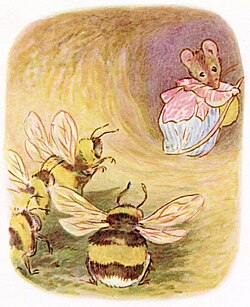
Bees have inspired countless works of art and literature, from Beatrix Potter's illustrations to modern films like Bee Movie. They remain a powerful symbol in both folklore and contemporary media.
Summary of Bee Diversity and Roles
| Bee Type | Social Structure | Primary Role/Trait |
|---|---|---|
| Honeybee | Eusocial | Honey production and hive defense |
| Bumblebee | Social/Communal | Effective pollinators in various climates |
| Mason Bee | Solitary | High-efficiency individual pollination |
| Leafcutter Bee | Solitary | Uses leaves for nest construction |
Frequently Asked Questions
How do honeybees communicate the location of food?
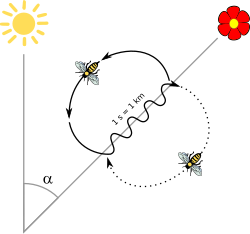
Honeybees use a specialized movement known as the waggle dance to indicate the direction and distance of food sources to other workers in the hive.
What is the difference between a bee and a wasp?
While they share similarities, bees are generally distinguished by their mouthparts (lapping vs. chewing) and their primary role as pollinators, often possessing specialized structures for carrying pollen.
Are all bees social insects?
No. While honeybees are highly social, many other species are solitary, living and nesting independently without a large colony structure.
Why are bees important for agriculture?
Bees act as essential pollinators. By transferring pollen between plants, they enable the production of many fruits, vegetables, and seeds that humans rely on for food.
What are brood parasites in the bee world?
Brood parasites are species that lay their eggs in the nests of other bees, relying on the host bee to provide care and food for their offspring.