Schwarzburg-Sondershausen: The History of a Thuringian Principality
Nestled in the heart of what is now the German state of Thuringia, Schwarzburg-Sondershausen was a small but historically significant sovereign entity. From its origins as a county to its elevation as a principality, this state navigated the complex political landscape of Central Europe for over three centuries, evolving through various imperial and national confederations.
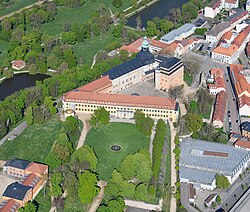
The state served as a political unit within several major historical frameworks, including the Holy Roman Empire, the Confederation of the Rhine, the German Confederation, the North German Confederation, and eventually the German Empire. Its capital, Sondershausen, served as the administrative and cultural hub of the region.
Key Facts
- Duration: Existed from 1599 to 1918.
- Capital: Sondershausen.
- Area: 862 square kilometers (333 sq. mi.).
- Population: Approximately 85,000 as of 1905.
- Final Status: Merged into the state of Thuringia in 1920.
Political Evolution and History
From County to Principality
The entity began as a county (an earldom) after being partitioned from Schwarzburg in 1599. For nearly a century, it was governed by the Counts of Schwarzburg-Sondershausen. A pivotal shift occurred in 1697 when the state was raised to the status of a principality, a higher rank of nobility and sovereignty within the Holy Roman Empire.
The Path to the Weimar Republic
The principality remained under the rule of the House of Schwarzburg until the seismic shifts of the German Revolution of 1918–1919. This revolution led to the fall of the German monarchies, ending the reign of the princes. Following the collapse of the monarchy, the territory transitioned into the Free State of Schwarzburg-Sondershausen, joining the Weimar Republic as a constituent state.
The independence of the Free State was short-lived; in 1920, it merged with other small neighboring states to form the modern state of Thuringia.
Demographics and Geography
At its peak around the turn of the 20th century, Schwarzburg-Sondershausen covered 862 km². The population was distributed across several key towns and villages, with Arnstadt and Sondershausen serving as the primary urban centers.
| Village/Town | Inhabitants (Dec 1, 1910) |
|---|---|
| Arnstadt | 17,841 |
| Sondershausen | 7,759 |
| Langewiesen | 3,814 |
| Greußen | 3,348 |
| Großbreitenbach | 3,255 |
| Gehren | 2,917 |
| Geschwenda | 2,291 |
The Rulers of Schwarzburg-Sondershausen
The leadership of the state was divided into two primary eras: the period of the Counts and the subsequent era of the Princes.
The Counts (1552–1697)
Early governance was characterized by shared rule among various family members. Notable counts included John Günther I and Günther XLII. The era concluded with the joint rule of Christian William and Anton Günther II.
The Princes (1697–1918)
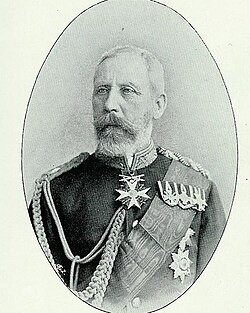
Upon becoming a principality in 1697, the state was led by a succession of princes. Anton Günther II and Christian William were the first to hold the title. The line continued through various rulers, including Karl Günther, until the final prince, Günther Victor, who ruled from 1909 until the revolution in November 1918.
Frequently Asked Questions
When did Schwarzburg-Sondershausen become a principality?
It was raised from a county to a principality in 1697.
Who was the last prince of Schwarzburg-Sondershausen?
The last prince was Günther Victor, who reigned from March 28, 1909, until November 1918.
What happened to the state after the German Revolution?
After the revolution, it became the Free State of Schwarzburg-Sondershausen and later merged with other small states in 1920 to form the state of Thuringia.
Which town was the largest in the principality by 1910?
Arnstadt was the largest settlement, with a population of 17,841 inhabitants as of December 1, 1910.
What was the total area of the principality?
The state covered an area of 862 square kilometers (333 square miles).