Schwarzburg-Rudolstadt: The History of a Thuringian Principality
Nestled in the heart of present-day Thuringia, Germany, Schwarzburg-Rudolstadt was a historic state that existed from 1599 to 1918. From its origins as a modest county to its elevation as a principality, this small but resilient territory played a distinct role in the complex political landscape of the Holy Roman Empire and the subsequent unification of Germany.
Key Facts
- Duration: 1599–1918.
- Capital: Rudolstadt.
- Highest Rank: Principality (Fürstentum) from 1711.
- Final Ruler: Prince Günther Victor.
- Modern Location: Part of the state of Thuringia, Germany.
- Peak Population: Approximately 97,000 by 1905.
The Foundation of the County
The state emerged in 1599 following a restructuring of the lands held by the Schwarzburg dynasty. The family's ancestral seat was the 11th-century Schwarzburg Castle, though the administrative center shifted to the larger town of Rudolstadt in 1571.
The division of the territory was triggered by the death of Count Günther XLI in 1583, who died without an heir. His younger brothers inherited the lands, with Albert VII receiving the region around Rudolstadt. Following the death of another brother, William I, in 1597, the surviving siblings—Albert VII and John Günther I—formalized the split via the Treaty of Stadtilm in 1599. This agreement established two separate entities: the counties of Schwarzburg-Rudolstadt and Schwarzburg-Sondershausen.
Elevation to a Principality
For over a century, the descendants of Albert VII ruled as sovereign counts of the Holy Roman Empire. A significant shift in status occurred under Count Albert Anton (1662–1710), who was elevated to the rank of prince by Emperor Leopold I. However, it was his son, Louis Frederick I, who first officially bore the princely title in 1710. By 1711, the state was formally recognized as the Principality of Schwarzburg-Rudolstadt.
Throughout the 19th century, the principality navigated the turbulent waters of European geopolitics. It survived mediatisation (the process of annexing small estates into larger states) and joined several successive political unions, including the Confederation of the Rhine in 1807, the German Confederation in 1815, the North German Confederation, and eventually the German Empire.
Demographics and Geography
By 1905, Schwarzburg-Rudolstadt covered an area of 940 square kilometers (360 sq mi). Its population grew steadily over the decades, rising from 58,000 in 1835 and 62,000 in 1848 to a total of 97,000 by the early 20th century.
| Year | Population |
|---|---|
| 1835 | 58,000 |
| 1848 | 62,000 |
| 1905 | 97,000 |
The Fall of the Monarchy and Integration
The end of the principality came during the German Revolution of 1918–1919. As the monarchies across Germany collapsed, Prince Günther Victor became the last ruling prince to abdicate on November 23, 1918.
In 1919, the territory transitioned into the Free State of Schwarzburg-Rudolstadt and joined the Weimar Republic. Shortly thereafter, in 1920, it merged with other neighboring small states to form the modern state of Thuringia.
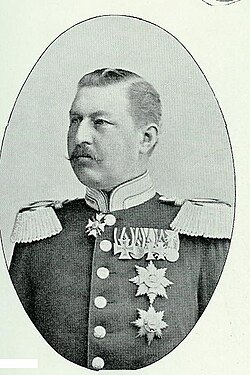
Rulers of Schwarzburg-Rudolstadt
Counts (1574–1710)
- Albrecht VII (1574–1605): Founder of the county.
- Charles Günther I (1605–1630)
- Albrecht Günther (1612–1634)
- Louis Günther I (1630–1646)
- Emilie of Oldenburg-Delmenhorst (1646–1662): Regent.
- Albert Anton (1662–1710)
Princes (1710–1918)
- Louis Frederick I (1710–1718): First to bear the princely title.
- Frederick Anton (1718–1744)
- John Frederick (1744–1767)
- Louis Günther II (1767–1790)
- Frederick Charles (1790–1793)
- Louis Frederick II (1793–1807)
- Caroline Louise of Hesse-Homburg (1807–1814): Regent.
- Frederick Günther (1814–1867)
- Albert (1867–1869)
- Georg Albert (1869–1890)
- Günther Victor (1890–1918): The final ruler; also Prince of Schwarzburg-Sondershausen from 1909.
Frequently Asked Questions
How was Schwarzburg-Rudolstadt created?
It was established in 1599 through the Treaty of Stadtilm, which divided the Schwarzburg dynasty lands between brothers Albert VII and John Günther I.
When did it become a principality?
While Count Albert Anton was elevated to the rank of prince by Emperor Leopold I, the state officially became a principality in 1711 under Louis Frederick I.
Who was the last ruler of the state?
Prince Günther Victor was the final ruler, abdicating on November 23, 1918, during the German Revolution.
What happened to the state after 1918?
It briefly became the Free State of Schwarzburg-Rudolstadt in 1919 before merging with other small states in 1920 to form the state of Thuringia.
What was the capital of Schwarzburg-Rudolstadt?
The capital was the town of Rudolstadt, which became the seat of the family in 1571.