Schwäbisch Gmünd: A Historic Gem of Baden-Württemberg
Nestled in the northern foothills of the Swabian Jura Mountains, Schwäbisch Gmünd is a city that seamlessly blends ancient Roman heritage with medieval grandeur and modern academic excellence. Located in the eastern part of Baden-Württemberg, Germany, this city serves as a vital hub in the Ostalb district, boasting a rich history as a self-ruling free imperial city.
With a population of approximately 64,416 as of late 2024, Schwäbisch Gmünd is the second-largest city in the East Württemberg region. Its strategic position on the Rems river, roughly 50 kilometers east of Stuttgart, has made it a center of administration, education, and specialized craftsmanship for centuries.
Key Facts
- Status: A Große Kreisstadt (chief city under district administration) since 1956.
- Heritage: A free imperial city from the 13th century until 1802.
- UNESCO Site: Home to the Schirenhof Castrum, part of the Limes Germanicus.
- Specialization: Renowned for gold and silver handicrafts, specifically silver overlay.
- Education: Host to the University of Education Schwäbisch Gmünd and the State Highschool for gifted children.
Geography and Administration
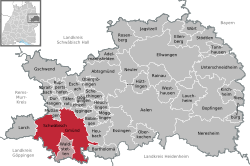
Schwäbisch Gmünd is situated where the Josefsbach (Waldstetter-bach) meets the River Rems. The municipal area is expansive, covering 113.78 square kilometers and encompassing several localities, including Bargau, Bettringen, Degenfeld, and others. The city sits at an elevation of 321 meters, providing a scenic backdrop of the Swabian Jura.
A Journey Through History
Roman Origins and the Limes
The city's history dates back to approximately AD 85, when the area served as part of the northern frontier of the Roman Empire. The Romans established the Limes Germanicus—a sophisticated line of fortifications—which included a small castrum (military fort) at the present-day Schirenhof field. While the Alemanni took over the region around 223 AD, the Roman legacy remained. For centuries, the ruins were known as "Etzel castle" before scientific excavations in the late 19th century confirmed their Roman origin.
Imperial Status and Growth
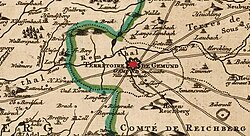
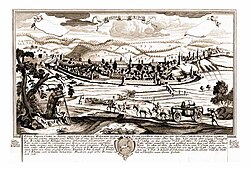
First mentioned in a 1162 deed under Emperor Frederick Barbarossa, Gmünd rose to prominence as an Imperial City in 1268. It maintained this autonomous status for over five centuries until its annexation to the Electorate of Württemberg in 1802. This era of independence fostered the city's growth as a center of trade and governance.
Modern Military Presence
In the post-WWII era, Schwäbisch Gmünd became a significant site for the U.S. Army. From 1955 through the 1980s, various units, including the 56th Field Artillery Group equipped with Pershing missiles, were stationed at the Hardt and Bismarck Kasernes. This period brought a temporary influx of American educators and families to the local community.
Architectural Landmarks
The City Hall
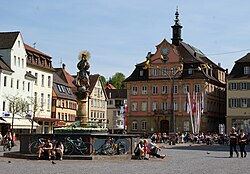
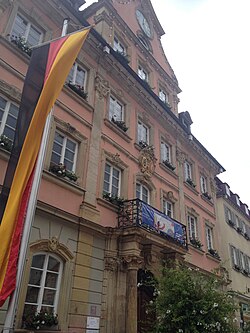
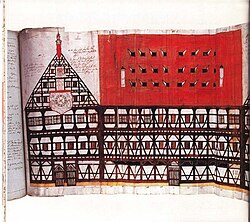
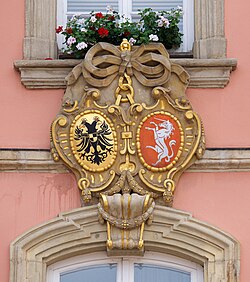
Located at the south end of the Markt Square, the current city hall was originally the Debler patrician house, designed by architect Johann Michael Keller. It replaced the Old City Hall, a fachwerk (half-timbered) structure that was lost to a devastating fire in 1793. Today, only the clock face and two bells from the original structure remain.
Religious Monuments
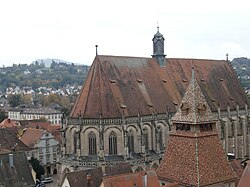
The city is defined by two major Catholic churches. The Holy Cross Minster (Heilig-Kreuz-Münster) is the main church, a project that took nearly 500 years to complete. Its history is marked by a dramatic event in 1497 when the south tower collapsed onto the north tower.
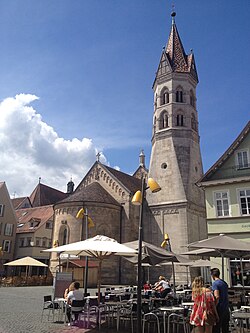
The Church of Saint John (Johanneskirche) is a late Romanesque and neo-Romanesque structure. Legend says it was built by Agnes of Hohenstaufen after she recovered her lost wedding ring from the antlers of a stag. A physical reminder of the city's turbulent past remains here: a cannonball from the Thirty Years' War is still lodged in the church's apse.
Education, Science, and Economy
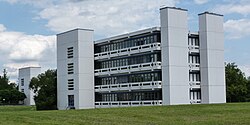
Schwäbisch Gmünd is a center for specialized learning. The University of Education Schwäbisch Gmünd (est. 1825) is one of only six such institutions in the state dedicated to teacher training. The city also hosts the Landesgymnasium für Hochbegabte for gifted children and the Hochschule für Gestaltung, a design school founded in 1776.
Economically, the city is famous for its precious metal work. It is the birthplace of silver overlay (Silberbelagwaren), a technique perfected by inventor Friedrich Deusch in the late 19th century to decorate porcelain and glass. Modern industry continues to thrive with the presence of Robert Bosch GmbH's steering division, Weleda, and the toy manufacturer Schleich.
City Overview Summary
| Category | Details |
|---|---|
| State/District | Baden-Württemberg / Ostalbkreis |
| Population (2024) | 64,416 |
| Total Area | 113.78 km² |
| Key Industries | Precious metals, Automotive, Education, Toys |
| Notable Sites | Limes Germanicus, Holy Cross Minster, Johanneskirche |
Notable Figures
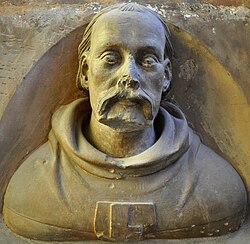
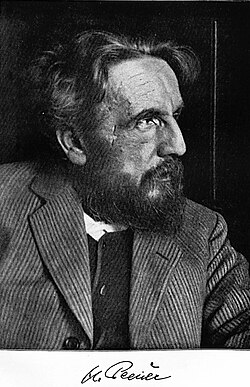
The city has been home to many influential people, including the architects Heinrich and Peter Parler, the painter Hans Baldung, and the industrial designer Hartmut Esslinger. In the realm of sports, it is the hometown of Olympic gold medalist ski jumper Carina Vogt.

Frequently Asked Questions
What is the significance of the Limes Germanicus in Schwäbisch Gmünd?
The Limes Germanicus was the fortified northern border of the Roman Empire. The Schirenhof Castrum in Schwäbisch Gmünd is a preserved part of this system and is recognized as a UNESCO World Heritage Site.
What is "silver overlay" and why is it linked to this city?
Silver overlay is a technique of decorating porcelain or glass with a layer of silver. Friedrich Deusch, a resident of Schwäbisch Gmünd, pioneered this method in the late 19th century, making the city a global center for this craft.
Which educational institutions are most prominent in the city?
The most notable are the University of Education Schwäbisch Gmünd, the State Highschool for gifted children (Landesgymnasium für Hochbegabte), and the Hochschule für Gestaltung (design school).
What is the legend behind the Church of Saint John?
The church was commissioned by Agnes of Hohenstaufen after she lost her wedding ring while hunting. She vowed to build a church where the ring was found, which eventually happened when the ring was discovered in the antlers of a fallen stag.
How did the U.S. Army influence the city?
From the 1950s to the 1980s, the U.S. Army maintained a significant presence at the Hardt and Bismarck Kasernes, housing artillery units and missile batteries, which integrated American culture and education into the local community for several decades.