Schaumburg-Lippe: The History of a Miniature German State
In the complex tapestry of German history, few entities are as curious as Schaumburg-Lippe. Once a sovereign county and later a principality, this tiny state existed for centuries in what is now the modern state of Lower Saxony. Despite its diminutive size, Schaumburg-Lippe maintained its own administration, nobility, and political identity through several major shifts in European power.
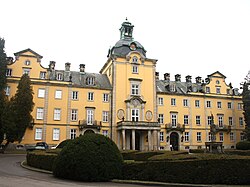
With its capital at Bückeburg, the state covered an area of approximately 340 square kilometers (130 square miles). Over time, it evolved from a precarious county into a recognized principality, eventually becoming the least populous state in the German Empire by 1913.
Key Facts
- Founded: 1647 as a county through the partition of the County of Schaumburg.
- Capital: Bückeburg.
- Status Evolution: County (1647) → Principality (1807) → Free State (1918).
- Population: Approximately 29,000 in 1861, growing to over 40,000 by its later years.
- Final Integration: Merged into Lower Saxony in 1946.
The Origins and Early Struggles
The creation of Schaumburg-Lippe in 1647 was the result of a diplomatic division. Following the death of Count Otto V of Holstein-Schaumburg in 1640, who left no male heir, treaties were signed between the Duke of Brunswick-Lüneburg, the Landgrave of Hesse-Kassel, and the Count of Lippe to partition the territory.
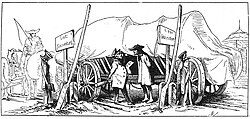
The early years were marked by instability. The new county was forced to share critical infrastructure and institutions with the neighboring County of Schaumburg, which was controlled by Hesse-Kassel. This included the representative assembly and the economically vital Bückeberg mines. To protect the state's sovereignty against external pressures and the erratic policies of Count Frederick Christian, Count William (who reigned from 1748 to 1777) maintained a standing army of 1,000 troops—a significant force for such a small territory.
A turning point occurred in 1777 upon the death of Count William. The junior line, known as Schaumburg-Lippe-Alverdissen, inherited the county, effectively reuniting the two territories.
Political Evolution and the German Empire
Schaumburg-Lippe's political status shifted frequently as the map of Europe was redrawn. It transitioned from a state of the Holy Roman Empire to a member of the Confederation of the Rhine, the German Confederation, and the North German Confederation.
In 1807, the state was raised to a principality under George William. By 1871, it became a constituent state of the German Empire. Despite its size, it maintained a structured government. Under the constitution of 1868, the state featured a legislative diet of 15 members: ten elected by rural districts and towns, three representing the nobility, clergy, and educated classes, and two nominated by the prince.
On the national stage, the principality exercised its influence by sending one member to the Bundesrat (the federal council) and one deputy to the Reichstag (the imperial parliament).
The End of the Monarchy
The era of princely rule came to an end during the German Revolution of 1918. The last reigning prince, Adolf II, abdicated, and the territory transitioned into the Free State of Schaumburg-Lippe. This republican status lasted until 1946, when the state was finally merged into the larger state of Lower Saxony.

Summary of State Evolution
| Period | Political Status | Affiliation |
|---|---|---|
| 1647–1806 | County | Holy Roman Empire |
| 1806–1813 | State | Confederation of the Rhine |
| 1815–1866 | State | German Confederation |
| 1867–1871 | State | North German Confederation |
| 1871–1918 | Principality | German Empire |
| 1918–1946 | Free State | Germany (Weimar/Nazi era) |
Frequently Asked Questions
How was Schaumburg-Lippe originally formed?
It was created in 1647 through the partition of the County of Schaumburg after Count Otto V died without a male heir, resulting in treaties between the Duke of Brunswick-Lüneburg, the Landgrave of Hesse-Kassel, and the Count of Lippe.
What was the capital of Schaumburg-Lippe?
The capital was Bückeburg, which served as the residence of the ruling princes.
Who was the last prince of Schaumburg-Lippe?
The last prince was Adolf II, who reigned from 1911 until his abdication in 1918.
How was the government structured under the 1868 constitution?
The state had a legislative diet of 15 members: ten elected by towns and rural districts, three representing the nobility, clergy, and educated classes, and two appointed by the prince.
When did Schaumburg-Lippe cease to be an independent state?
While it became a Free State in 1918, it officially ceased to exist as a separate entity in 1946 when it was merged into Lower Saxony.