Saul Bellow: The Life and Legacy of a Literary Giant
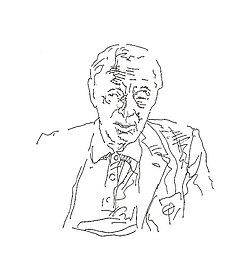
Saul Bellow was a towering figure in 20th-century literature, a Canadian-American writer whose works bridged the gap between the colloquial rhythms of urban life and profound philosophical inquiry. Known for his cerebral characters and mastery of the English language, Bellow captured the complexities of the human condition, earning him some of the highest honors in the literary world, including the Nobel Prize in Literature.
Key Facts
- Full Name: Born Solomon Bellows.
- Major Awards: Nobel Prize in Literature (1976), Pulitzer Prize for Fiction (1976), and three National Book Awards.
- Defining Works: The Adventures of Augie March, Herzog, and Humboldt's Gift.
- Education: Studied at the University of Chicago, Northwestern University, and the University of Wisconsin.
- Legacy: The only writer to win the National Book Award for Fiction three times.
Early Life and Education
Born in Lachine, Quebec, in 1915, Saul Bellow was the son of Lithuanian-Jewish immigrants who had moved from Saint Petersburg, Russia. His early years were shaped by his family's heritage, with his father hailing from a shtetl (a small Jewish town) in the Pale of Settlement. While records from the Jewish Genealogical Society-Montreal suggest a July birth, Bellow customarily celebrated his birthday on June 10.
Bellow's academic journey took him through several institutions, including Northwestern University, where he earned a BA. Although he initially hoped to study literature, he pivoted toward anthropology and sociology—subjects that would later deeply inform the social observations in his novels.
The Rise to Literary Prominence
Bellow's early career was marked by a transition from academia to full-time writing. After teaching at the University of Minnesota from 1946 to 1948, he received a Guggenheim Fellowship. This grant allowed him to move to Paris, where he began work on his breakthrough novel, The Adventures of Augie March (1953).
The Adventures of Augie March is a picaresque novel—a genre featuring a roguish hero who lives by his wits in a corrupt society—often compared to the classic Don Quixote. The novel's colloquial yet philosophical style established Bellow as a major voice in American letters.
Mid-Career Success and Philosophical Depth
In 1964, Bellow achieved significant commercial success with Herzog. This cerebral novel focuses on a troubled college professor who communicates through unsent letters, exploring themes of mental instability and intellectual isolation. Bellow continued to examine the intersection of genius and instability in his 1975 work, Humboldt's Gift.
For Humboldt's Gift, Bellow drew inspiration from his friend and rival, the poet Delmore Schwartz, and incorporated elements of anthroposophy (a spiritual science developed by Rudolf Steiner), a subject he had studied in Chicago.
Later Years and Academic Contributions
Throughout his life, Bellow maintained a deep passion for teaching, valuing the human interaction and exchange of ideas. He held appointments at numerous prestigious institutions, including Yale, Princeton, New York University, and Boston University. In his later years, he moved to Brookline, Massachusetts, where he resided until his death on April 5, 2005, at the age of 89.
Bellow's personal life was marked by five marriages and the fathering of four children, including writer Adam Bellow. His commitment to the English language was also evident in his brief support for U.S. English, an organization advocating for English as the official language of the United States.
Summary of Achievements
| Year | Award/Achievement | Associated Work (if applicable) |
|---|---|---|
| 1954 | National Book Award | The Adventures of Augie March |
| 1965 | National Book Award | Herzog |
| 1971 | National Book Award | Mr. Sammler's Planet |
| 1976 | Nobel Prize in Literature | Body of Work |
| 1976 | Pulitzer Prize for Fiction | Humboldt's Gift |
| 1988 | National Medal of Arts | N/A |
Frequently Asked Questions
How many National Book Awards did Saul Bellow win?
Saul Bellow won the National Book Award for Fiction three times (1954, 1965, and 1971), making him the only writer to achieve this feat.
What is the significance of The Adventures of Augie March?
The novel is celebrated for its famous opening paragraph and its picaresque structure, establishing Bellow's reputation as a major author through its blend of colloquial language and philosophical depth.
Who was the inspiration for the character in Humboldt's Gift?
The character Von Humboldt Fleisher was modeled after Bellow's late friend and rival, the poet Delmore Schwartz.
Where was Saul Bellow born?
He was born in Lachine, Quebec, Canada, to parents who had emigrated from Saint Petersburg, Russia.
What other academic interests influenced Bellow's writing?
Bellow graduated with honors in anthropology and sociology, subjects that provided a foundation for the social and human observations present in his novels.