Tennessee Williams: The Life and Legacy of an American Dramatic Icon
Tennessee Williams stands as one of the most influential figures in American theater, a master of the stage and screen whose work captured the fragility and passion of the human spirit. Born Thomas Lanier Williams III, he transformed the landscape of 20th-century drama by blending raw emotional honesty with a distinct Southern sensibility.
Throughout a career spanning over five decades, Williams moved from the early struggles of an aspiring writer to international acclaim. His ability to craft complex characters and atmospheric settings allowed him to explore themes of desire, loneliness, and the clash between illusion and reality.

Key Facts
- Full Name: Thomas Lanier Williams III.
- Active Years: 1930–1983.
- Major Works: A Streetcar Named Desire, The Glass Menagerie, and Cat on a Hot Tin Roof.
- Education: Attended the University of Missouri, Washington University, and the University of Iowa (where he earned a BA).
- Death: Passed away on February 25, 1983, at the age of 71.
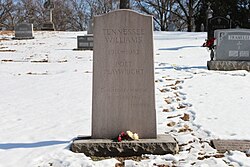
- Final Resting Place: Calvary Cemetery in St. Louis.
Early Life and Education
The formative years of Tennessee Williams were shaped by the landscapes of the American South. His early experiences provided the emotional and geographic backdrop for much of his later work, grounding his plays in a specific sense of place and cultural tension.
Williams pursued higher education at several institutions, including the University of Missouri and Washington University, eventually obtaining his Bachelor of Arts from the University of Iowa. These academic pursuits helped refine his voice as he transitioned from a student of literature to a practitioner of the craft.
The Path to Literary Success
The road to fame was not immediate. In 1939, with the support of his agent Audrey Wood, Williams received a $1,000 grant from the Rockefeller Foundation (approximately $23,100 in 2025 currency) for his play Battle of Angels. Although the play was produced in Boston in 1940, it was poorly received by critics, serving as an early lesson in the volatility of the theater world.
Despite early setbacks, Williams continued to write prolifically. He expanded his repertoire beyond plays to include novels, short stories, and poetry, establishing himself as a versatile literary force.
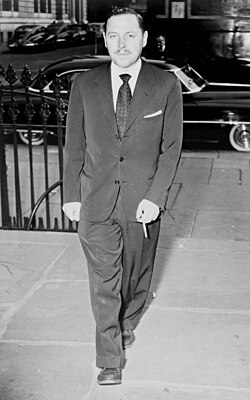
A Prolific Body of Work
Williams is best known for his plays, which often utilized Southern Gothic elements—a style characterized by decayed settings and grotesque characters to explore social issues and psychological trauma. His career saw the creation of timeless classics that remain staples of global theater.
Major Plays and Screenplays
His most celebrated works include The Glass Menagerie (1944), A Streetcar Named Desire (1947), and Cat on a Hot Tin Roof (1955). Many of these were adapted into successful films, with Williams often serving as the screenwriter, ensuring his vision translated from the stage to the silver screen.
Novels and Short Stories
Beyond the stage, Williams authored novels such as The Roman Spring of Mrs. Stone (1950) and Moise and the World of Reason (1975). He was also a gifted short story writer, producing collections like One Arm and Other Stories (1948) and Hard Candy (1954).
| Category | Notable Examples | Key Period/Year |
|---|---|---|
| Plays | A Streetcar Named Desire, The Glass Menagerie | 1940s–1950s |
| Screenplays | Baby Doll, Suddenly Last Summer | 1950s–1960s |
| Novels | The Roman Spring of Mrs. Stone | 1950 |
| Short Stories | One Arm, Hard Candy | 1948–1954 |
| Non-Fiction | Memoirs | 1975 |
Final Years and Posthumous Legacy
Tennessee Williams spent his final years continuing to write, with his last works appearing up until 1983. He passed away on February 25, 1983, leaving behind a legacy that continues to be studied and performed worldwide.
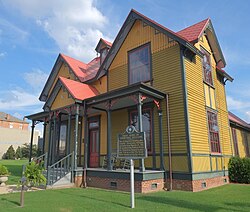
Since his death, Williams has received enduring recognition. His home in Columbus, Mississippi, has been renovated as a welcome center, and he is honored with markers on the Mississippi Writers Trail and the St. Louis Walk of Fame. His works continue to be published in comprehensive collections, including the Library of America series.
Frequently Asked Questions
What was Tennessee Williams' real name?
His birth name was Thomas Lanier Williams III; "Tennessee" was the nom de plume he adopted in 1939.
Which of his plays are considered the most famous?
His most renowned plays include The Glass Menagerie, A Streetcar Named Desire, and Cat on a Hot Tin Roof.
Did Tennessee Williams write anything other than plays?
Yes, he was a prolific writer of novels, short stories, poetry, and non-fiction, including his 1975 Memoirs.
Where is Tennessee Williams buried?
He is buried at Calvary Cemetery in St. Louis, Missouri.
How did the Rockefeller Foundation support his early career?
In 1939, the foundation awarded him a $1,000 grant in recognition of his play Battle of Angels.