Saturn's Moon System: From Massive Titans to Irregular Clusters
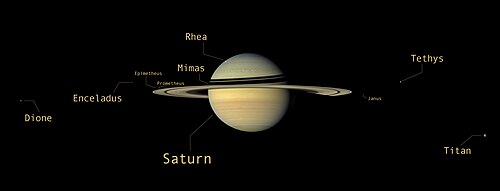
Saturn is far more than just a ringed giant; it is a complex gravitational playground hosting a vast and diverse collection of natural satellites. From the massive, atmosphere-shrouded world of Titan to the tiny, irregularly shaped fragments drifting in the far reaches of the system, Saturn's moons represent a wide spectrum of celestial evolution. These bodies are categorized into regular moons, which follow predictable paths, and irregular moons, which often arrive in large, clustered groups.
Key Facts

- Saturn possesses a massive system including regular moons and over 250 known irregular moons.
- Titan is the largest moon, significantly larger than any of Saturn's irregular satellites.
- Irregular moons are often classified into groups such as the Inuit, Gallic, and Norse groups.
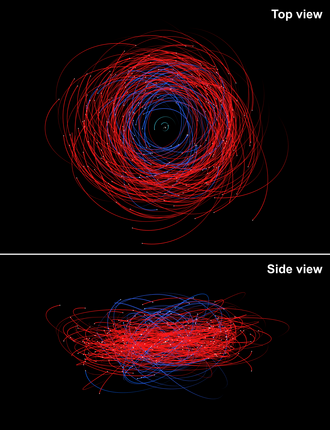
- Many irregular moons orbit in a retrograde direction, meaning they move opposite to Saturn's rotation.
- The Norse group is the largest collection of irregular moons, containing 210 members.
The Regular Moons: Giants of the System
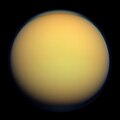
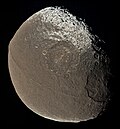
The regular moons of Saturn are the prominent, often spherical bodies that orbit relatively close to the planet. These moons are characterized by their significant mass and stable, predictable orbits. Titan, for instance, stands as a titan among satellites, possessing a scale that dwarfs the smaller irregular fragments.
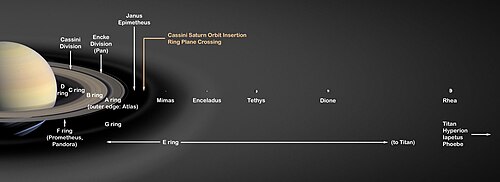
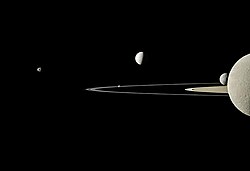
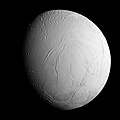
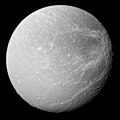
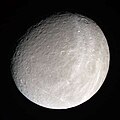
Beyond Titan, other major moons like Rhea, Dione, and Enceladus play critical roles in the system's dynamics. These bodies often exhibit smoother, more spherical shapes due to their gravitational influence and geological history.
Comparative Scale of Major Moons
To understand the sheer scale of Saturn's primary satellites, it is helpful to compare their physical dimensions and orbital characteristics.
| Moon Name | Diameter (km) | Mass (relative to Moon) | Orbital Period (days) |
|---|---|---|---|
| Titan | 5149 | 0.03 | 1527.6 |
| Rhea | 1527 | 0.002 | 451.7 |
| Dione | 1123 | 0.015 | 377.4 |
| Enceladus | 504 | 0.0005 | 396.4 |
The Irregular Moons: Clustered and Chaotic
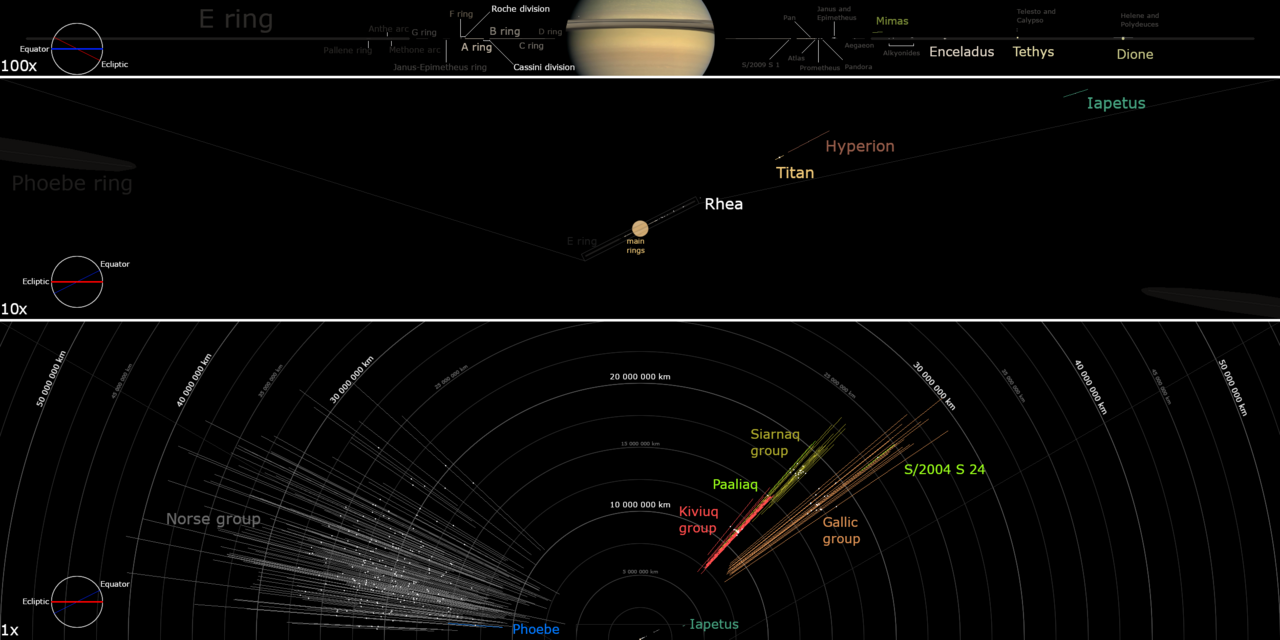
Farther from the planet, Saturn is surrounded by a swarm of irregular moons. Unlike the regular moons, these are typically much smaller, irregularly shaped, and follow highly inclined or retrograde orbits (orbits that move in the opposite direction of the planet's rotation). As of 2025, there are approximately 250 known irregular moons.
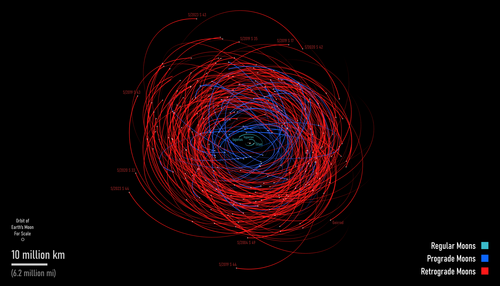
These moons are not scattered randomly; instead, they appear in distinct families or groups, likely the remnants of larger bodies that were captured by Saturn's gravity. These groups are often named based on mythological themes.
Major Moon Groups
Astronomers categorize these irregular satellites into several primary groups:
- Norse Group: The largest group, consisting of 210 moons. This group includes sub-groups like the Mundilfari, Phoebe, Kari, and low-inclination Norse moons.
- Inuit Group (Kiviuq): A collection of 39 moons.
- Gallic Group: A group containing 19 moons.
- Round Moons: A smaller subset of 7 moons.
Phoebe: The Largest Irregular
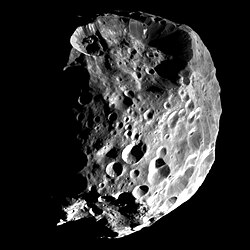
Within the irregular population, Phoebe stands out as the largest. It is a significant body that belongs to the Norse group and orbits at a great distance from Saturn.
Observing the Smallest Fragments
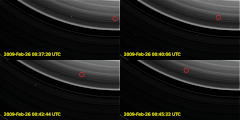
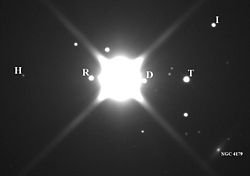
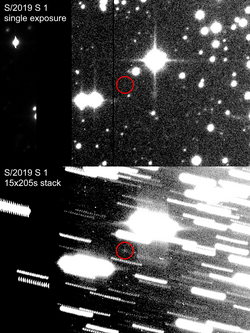
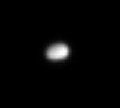
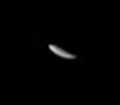
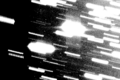
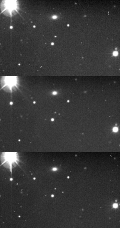
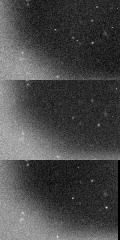
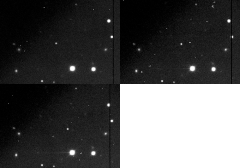
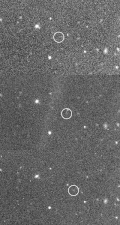
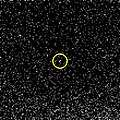
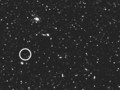
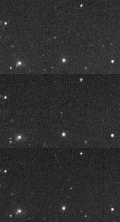
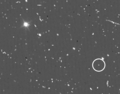
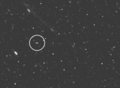
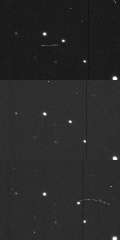
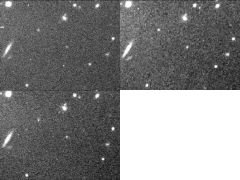
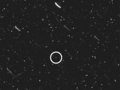
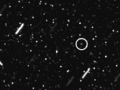
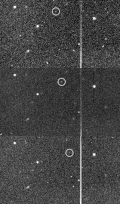
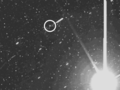
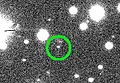
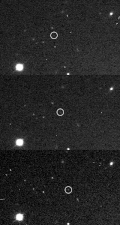
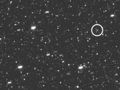
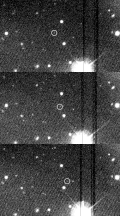
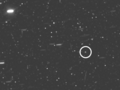
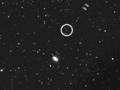
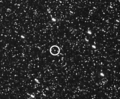
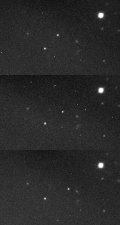
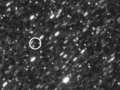
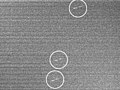
Detecting these tiny, distant objects requires advanced astronomical techniques. Because many of these moons are extremely faint, astronomers often use the shift-and-add technique. This involves taking multiple images and stacking them according to the moon's predicted motion to increase the signal-to-noise ratio, making a barely visible object appear clearly.
The physical appearance of these moons varies wildly. While some are nearly spherical, many are elongated, cratered, or possess strange shapes like ridges or equatorial bulges.

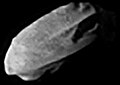
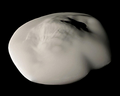
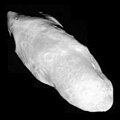
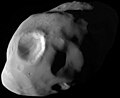
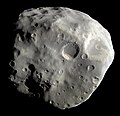
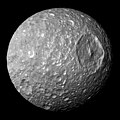
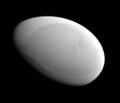
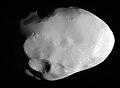
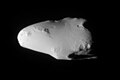
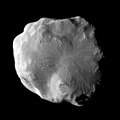
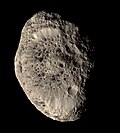
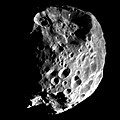
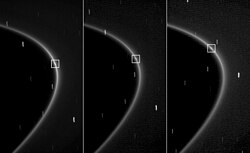
Some moons, such as Aegaeon, are even found embedded within the ring system itself, specifically within the bright arcs of the G Ring.
Frequently Asked Questions
What is the difference between regular and irregular moons?
Regular moons orbit close to the planet in nearly circular paths and are often large and spherical. Irregular moons orbit much further away, often in highly tilted or retrograde paths, and are typically smaller and irregularly shaped.
Why do many irregular moons orbit in a retrograde direction?
Retrograde orbits occur when a moon moves in the opposite direction of the planet's rotation. This is a common characteristic of moons that were captured by the planet's gravity from elsewhere in the solar system.
What are the Norse, Inuit, and Gallic groups?
These are classifications used by astronomers to group irregular moons that share similar orbital characteristics, suggesting they may have originated from the same parent bodies.
How do scientists find such small, faint moons?
Scientists use specialized imaging techniques like "shift-and-add," where multiple images are stacked to reveal objects that are too dim to be seen in a single exposure.
Is Titan a regular or irregular moon?
Titan is a regular moon. It is one of Saturn's largest and most significant satellites, orbiting in a stable, prograde path close to the planet compared to the irregular moons.