Planetary-Mass Objects: Defining the Diverse Worlds of Our Universe
In the vast expanse of space, the distinction between a planet, a moon, and a star is not always as clear-cut as it seems. To bridge the gap between these diverse celestial bodies, astronomers use the term planetary-mass object (PMO), also known as a planemo or a planetary body. This term provides a way to classify objects that share similar physical characteristics, even if they do not fit into traditional astronomical categories.
By geophysical definition, a planetary-mass object is any celestial body massive enough to achieve hydrostatic equilibrium—a state where its own gravity is strong enough to pull it into a rounded, ellipsoid shape—but lacks the mass required to sustain nuclear fusion in its core like a star.
![The planetary-mass moons to scale, compared with Mercury, Venus, Earth, Mars, and Pluto (the other planetary-mass objects beyond Neptune have never been imaged up close). Borderline Proteus and Nereid (about the same size as round Mimas) have been included. Unimaged Dysnomia (intermediate in size between Tethys and Enceladus) is not shown; it is in any case probably not a solid body.[1]](/images/ca/30/ca3048591f576f40171a0fc8b733da9f80c4df9c52d12ef9c04b0317d9223832.jpg)
Key Facts
- Hydrostatic Equilibrium: The defining physical trait of a PMO is its ability to assume a rounded shape due to gravity.
- Diverse Origins: PMOs can be planets, dwarf planets, moons, or even free-floating "rogue" planets.
- Mass Threshold: They are massive enough to be round but not massive enough to become stars.
- Sub-brown Dwarfs: Some PMOs form through cloud collapse rather than the gradual accumulation of material.
The Diverse Categories of Planetary-Mass Objects
Because PMOs can exist in many different environments and forms, they are categorized based on their relationship to stars and their method of formation.
Planets and Exoplanets
A standard planet is a large, rounded body that orbits a star, a stellar remnant, or a brown dwarf. In our Solar System, this includes the eight recognized planets, ranging from terrestrial worlds like Earth to gas giants like Jupiter. Most planets are thought to form via the nebular hypothesis, where material accumulates in a protoplanetary disk through a process called accretion.
Dwarf Planets
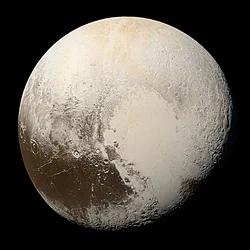
A dwarf planet is a PMO that orbits a star directly and is large enough to be round, but has not "cleared the neighborhood" of other debris in its orbit. While the International Astronomical Union (IAU) classifies them as a separate category, some scientists argue they should be considered a subtype of planet based solely on their physical properties.
Planetary-Mass Satellites
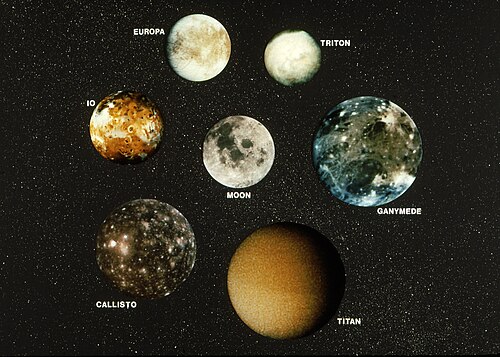
Not all large, round worlds orbit stars directly. Some are satellites, or moons, orbiting larger planets. Interestingly, some satellites are larger than many dwarf planets. For example, Ganymede, Titan, and Callisto are similar in size to or larger than the planet Mercury. Titan even possesses a thick atmosphere and stable liquid bodies on its surface, though its liquids are methane rather than water.
Rogue Planets and Captured Worlds
Some planetary-mass objects wander the cosmos alone. Rogue planets are ejected from their original stellar systems during formation. However, these wanderers can sometimes be captured by other stars, entering wide, often unaligned orbits within a new system.
Sub-brown Dwarfs and Former Stars
PMOs can also originate from processes typically associated with star formation. Sub-brown dwarfs form through the gravitational collapse of gas clouds, similar to stars, but at a much lower mass. Additionally, some PMOs are the remnants of former stars; in binary systems, a star may lose mass to a heavier companion, eventually shrinking into a planetary-mass object, such as a helium or carbon planet.
![Artist's impression of a super-Jupiter around the brown dwarf 2M1207.[15]](/images/09/62/096209b18f24cb8b10f2452ea1e39fffb53d184d8f7bc04184d95018a80f76a8.jpg)
Summary of Planetary-Mass Object Types
| Type | Primary Orbit | Defining Characteristic |
|---|---|---|
| Planet | Star, stellar remnant, or brown dwarf | Has cleared its orbital neighborhood |
| Dwarf Planet | Star | Has not cleared its orbital neighborhood |
| Satellite | Planet or larger body | Orbits a primary planetary body |
| Rogue Planet | None (Interstellar space) | Free-floating without a host star |
| Sub-brown Dwarf | Variable | Formed via cloud collapse |
Frequently Asked Questions
What is the main difference between a planet and a planetary-mass object?
A planetary-mass object is a broad term that includes anything with enough mass to be round. A "planet" is a specific subset of these objects that must also orbit a star and have cleared its orbital path of other debris.
Can a moon be considered a planet?
Geophysically, many large moons (like Titan or Ganymede) are similar to planets in size and shape. Some scientists propose the term "satellite planet" to recognize their planetary nature, though they are traditionally classified as satellites because they orbit a planet rather than a star.
How do rogue planets form?
Rogue planets are typically thought to be ejected from their original planetary systems during the chaotic early stages of system formation.
What is hydrostatic equilibrium?
Hydrostatic equilibrium is the state where an object's internal gravity is balanced by its internal pressure, allowing the object to achieve a stable, rounded shape.