Sack of Aleppo (962): The Byzantine Triumph over the Hamdanids
In December 962, the city of Aleppo—the jewel of northern Syria—fell to the forces of the Byzantine Empire. This event was not merely a tactical victory but a devastating blow to the Hamdanid Emirate, marking a pivotal shift in the long-standing Arab–Byzantine wars. Led by the formidable general Nikephoros Phokas, the Byzantine campaign culminated in a brutal sack that stripped the city of its wealth and shattered the prestige of its ruler.
The Rise of the Hamdanid Emirate
The conflict centered on the rivalry between the Byzantine Empire and the Hamdanid dynasty. In October 944, the emir Sayf al-Dawla captured Aleppo, establishing it as the capital of a realm that stretched from Homs in the south to the Byzantine frontier in the northwest. Under his rule, Aleppo became a beacon of culture and architecture, featuring the magnificent palace of Halbas, complete with an aqueduct and lush gardens. Historians have compared the intellectual and cultural vibrancy of the Hamdanid court to that of Renaissance Italy.
Beyond culture, Sayf al-Dawla positioned himself as the primary defender of the Muslim world against Byzantine advances in eastern Anatolia. For nearly two decades, he engaged in over forty battles. While he initially held the upper hand, the tide turned when the Byzantines appointed Nikephoros Phokas as the Domestic of the Schools (commander-in-chief). Supported by his brother Leo and nephew John Tzimiskes, Nikephoros began a systematic campaign to dismantle Hamdanid power.
The turning point occurred in 960. Attempting to exploit Nikephoros' absence during the reconquest of Crete, Sayf al-Dawla invaded Byzantine Cappadocia. However, he was lured into an ambush by Leo Phokas. Though the emir escaped, his military strength was effectively broken.
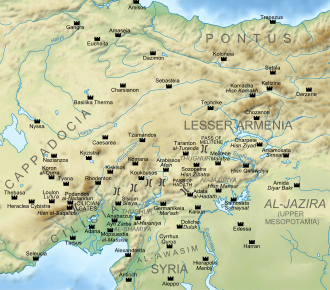
The Campaign of 962: Strategy and Surprise
Nikephoros Phokas employed a calculated scorched-earth strategy to isolate Aleppo. In 961, he sacked Anazarbus in Cilicia, destroying its walls and expelling the population. This created a wasteland that severed the vital supply lines between Syria and Cilicia.
By April 962, Nikephoros bypassed Cilicia entirely, securing the western passes of the Anti-Taurus Mountains by attacking Marash, Sisium, Duluk, and Manbij. Sayf al-Dawla, perhaps misled by ongoing truce negotiations or a false sense of security, failed to recognize the imminent threat, focusing instead on rebuilding Anazarbus.
The Fall of the City
The illusion of safety vanished in November when the Byzantines captured Manbij and its governor, Abu Firas al-Hamdani. In early December, Nikephoros marched on Aleppo. The attack was a complete surprise, likely because the Byzantines rarely campaigned during the winter months. This gave the Empire a massive numerical advantage; Arab sources estimate 70,000 Byzantine troops against only 4,000 Hamdanid defenders.
The Hamdanid response was chaotic. Sayf al-Dawla retreated from Azaz without engaging the enemy, while his lieutenant, Naja al-Kasaki, was defeated by John Tzimiskes. Unable to defend the capital, Sayf al-Dawla fled to the fortresses of Balis and then Sab'in.
The Sack and Destruction
The Byzantines first targeted the palace of Halbas, looting its golden roof before demolishing the structure. On December 23 or 24, the army stormed the city. While a Daylamite garrison successfully held the citadel, the rest of Aleppo was plundered for nearly nine days. Buildings were torched and fortifications torn down. In a grim display of retaliation, Nikephoros reportedly ordered the execution of 1,200 Arab prisoners after his nephew, Theodore Parsakoutenos, was killed during an assault on the citadel.
Key Facts
- Date: December 24–31, 962.
- Primary Belligerents: The Byzantine Empire vs. the Hamdanid Dynasty.
- Key Byzantine Leaders: Nikephoros Phokas, John Tzimiskes, and Theodore Parsakoutenos.
- Key Hamdanid Leaders: Sayf al-Dawla and Naja al-Kasaki.
- Byzantine Spoils: 390,000 silver dinars, 2,000 camels, 1,400 mules, and 10,000 captives.
- Outcome: Decisive Byzantine victory and the sacking of the Hamdanid capital.
Summary of the Conflict
| Category | Details |
|---|---|
| Strategic Goal | Break Hamdanid power and secure the Syrian frontier. |
| Byzantine Tactic | Scorched-earth policy and winter offensive. |
| Hamdanid Failure | Lack of coordination and failure to anticipate winter warfare. |
| Casualties/Losses | 10,000 captives; destruction of the city and Halbas palace. |
| Long-term Impact | Irreversible loss of prestige for Sayf al-Dawla. |
Aftermath and Legacy
The aftermath was bleak. The historian Ibn Hawqal noted that the city's stone walls provided no protection, the mosque was ruined, and the population was decimated. While Sayf al-Dawla eventually repopulated the city with refugees from Qinnasrin, the damage was more than physical.
Historians debate the ultimate significance of the event. Some view it as a temporary setback compared to the later conquest of Cilicia. However, others argue that the loss of prestige was a fatal blow. For the remainder of his reign, Sayf al-Dawla's authority was plagued by internal disputes and revolts among his subordinates.
Frequently Asked Questions
Why were the Hamdanids surprised by the attack?
The Hamdanids were caught off guard primarily because the Byzantines launched their offensive in December. It was not customary for Byzantine armies to campaign during the winter, leading Sayf al-Dawla to believe he was safe.
What was the significance of the palace of Halbas?
The palace of Halbas was a symbol of Hamdanid wealth and cultural sophistication, featuring splendid gardens and an aqueduct. Its total destruction and the looting of its golden roof symbolized the fall of the emir's prestige.
Did the Byzantines capture the entire city?
No. While the Byzantines plundered and burned the city, they were unable to capture the citadel, which remained under the control of a Daylamite garrison.
Who was Nikephoros Phokas?
Nikephoros Phokas was the Byzantine commander-in-chief (Domestic of the Schools) known for his aggressive military strategies, including the use of scorched-earth tactics to isolate his enemies.
What happened to the inhabitants of Aleppo?
The city suffered immense casualties and chaos. Approximately 10,000 inhabitants, mostly young men, were taken as captives by the Byzantine army.