The True Cross: History, Relics, and Traditions
In Christian tradition, the True Cross refers to the original wooden cross upon which Jesus of Nazareth was crucified. For centuries, this object has served as a powerful symbol of faith, sparking historical quests, diplomatic conflicts, and the creation of countless relics distributed across the globe.
The narrative of the True Cross blends historical accounts with religious legend, centering on its recovery in the 4th century and its subsequent journey through the rise and fall of empires.
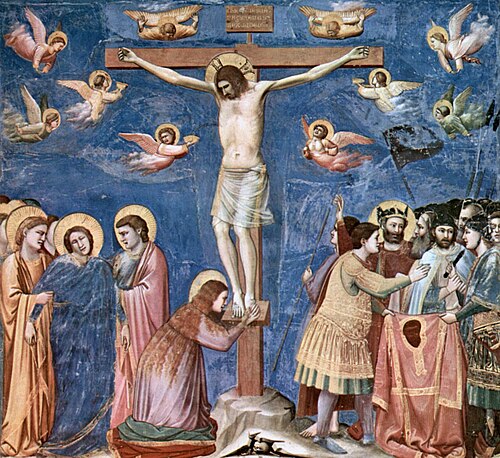
Key Facts
- Discovery: Traditionally attributed to Saint Helen, mother of Emperor Constantine the Great, between 326 and 328 AD.
- Location: Recovered at the Holy Sepulchre in Jerusalem.
- Liturgical Celebration: The Feast of the Exaltation of the Cross is observed on September 14.
- Relic Dispersion: Fragments are held by various churches, including Roman Catholic, Eastern Orthodox, and Oriental Orthodox denominations.
- Historical Loss: The primary relic disappeared from historical records after the Battle of Hattin in 1187.
The Discovery and Early Traditions
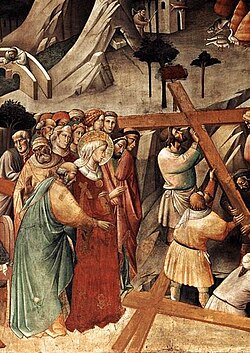
According to historical accounts by Gelasius of Caesarea and Tyrannius Rufinus, Empress Helen traveled to the Holy Land in the years 326–328. There, she is said to have discovered three crosses at the Holy Sepulchre—those used for Jesus and the two thieves, Dismas and Gestas. While one cross bore the titulus (the inscription of Jesus's name), Rufinus notes that a miracle was required to confirm which of the three was the True Cross.

Conflicting Historical Sources
Not all early sources agree on the discovery. Eusebius of Caesarea, writing the Life of Constantine, provides the earliest account of the rediscovery of the Tomb of Jesus and the construction of the first church at the site. However, Eusebius makes no mention of the True Cross. He focuses instead on the demolition of a temple of Venus—likely built by Hadrian in 130 AD—to make way for the Christian church.
Conversely, Cyril, Bishop of Jerusalem (c. 350-386), provides some of the earliest evidence of the cross's veneration. In his Catechetical Lectures around 350 AD, he claimed that the "whole world has since been filled with pieces of the wood of the Cross," suggesting that relics were already being widely distributed.
The Journey of the Relic: From Jerusalem to Damascus
The True Cross became a trophy of war and a symbol of political legitimacy during the Perso-Byzantine Wars. In 614 AD, the Sassanid Emperor Khosrau II captured Jerusalem and took the cross as a trophy. It remained in Persian hands until 628 AD, when the Byzantine Emperor Heraclius defeated the Persians and recovered the relic.
Heraclius initially took the cross to Constantinople before restoring it to Jerusalem on March 21, 630 AD. However, some scholars, such as Constantin Zuckerman, suggest the original cross may have been lost by the Persians and that Heraclius returned a fake to serve political interests.

The Crusades and Final Disappearance
During the Crusades, the cross remained a highly prized object. In 1110, King Baldwin I of Jerusalem gave a splinter of the cross to King Sigurd I of Norway. However, the main relic was captured by Saladin during the Battle of Hattin in 1187. Despite attempts by Richard the Lionheart and other rulers to ransom it, the cross was never returned. It was last seen in Damascus and subsequently vanished from historical records.

The Dispersion and Volume of Relics
Over the centuries, fragments of the True Cross were broken off and distributed globally. These were often kept in golden reliquaries and worn by the faithful. By the 5th century, fragments had reached Rome and North Africa.
| Location | Volume (Cubic Millimetres) |
|---|---|
| Monastery of Koutloumousiou (Mt Athos) | 870,760 |
| Rome | 537,587 |
| Brussels | 516,090 |
| Venice | 445,582 |
| Ghent | 436,450 |
| Paris | 237,731 |
The authenticity of these fragments is a subject of intense debate. In 1870, Charles Rohault de Fleury conducted a study suggesting that the total volume of all known relics amounted to only about 0.004 cubic metres—less than 3% of the estimated volume of a standard cross of that era. Furthermore, while some fragments were identified as pine, others were found to be olive wood.
Veneration and Liturgical Observance
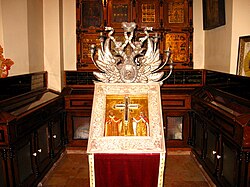
The veneration of the True Cross is integrated into the calendars of several Christian denominations. The Feast of the Exaltation of the Cross (September 14) commemorates both the dedication of the Church of the Holy Sepulchre and the return of the relic from Persia.
In the Orthodox tradition, the "Procession of the Venerable Wood" is held on August 1, where relics are carried through the streets to bless the city and cleanse the air of sickness. In the West, the May 3 date (the "Invention of the True Cross") was historically observed but was removed from the Roman Catholic liturgical calendar in 1960.

Frequently Asked Questions
Who discovered the True Cross?
According to tradition, Empress Helen, the mother of Emperor Constantine the Great, discovered the True Cross in Jerusalem between 326 and 328 AD.
What happened to the True Cross after the Battle of Hattin?
The cross was captured by Saladin in 1187. Although various Christian leaders attempted to ransom it, it was never returned and was last recorded in Damascus before disappearing from history.
Are the current relics of the True Cross authentic?
Authenticity is widely disputed. Historians and critics point to the fact that the total volume of existing fragments is far too small to constitute a single cross, and microscopic analysis has shown different types of wood, such as pine and olive.
When is the Feast of the Exaltation of the Cross celebrated?
It is celebrated on September 14 by Roman Catholic, Eastern Orthodox, Oriental Orthodox, Lutheran, and Anglican churches.
Did the Russian cruiser Moskva carry a piece of the True Cross?
Yes, in February 2020, it was reported that a fragment of the True Cross was placed on board the ship. Following the sinking of the vessel in April 2022, it is speculated that the fragment went down with the ship.