Ruby Bridges: The Six-Year-Old Who Integrated New Orleans Schools
In November 1960, a six-year-old girl became an unlikely symbol of courage and change in the American South. Ruby Bridges, a first-grader in New Orleans, Louisiana, became the first African American child to attend the formerly whites-only William Frantz Elementary School. Her journey to the classroom was not a simple walk, but a historic act of defiance against systemic racism during the New Orleans school desegregation crisis.
Born Ruby Nell Bridges on September 8, 1954, she grew up as the eldest of five children. While her early years were spent playing softball and caring for her siblings, her life changed forever when her parents responded to a call from the National Association for the Advancement of Colored People (NAACP) to volunteer children for the integration of the city's school system.
The Legal Battle for Integration
The backdrop of Ruby's experience was the landmark 1954 Supreme Court ruling Brown v. Board of Education. This decision declared that separate public schools for white and black children were unconstitutional, effectively outlawing racial segregation in education. However, many southern states resisted this federal mandate.
In New Orleans, the Orleans Parish School Board attempted to circumvent the law by administering an entrance exam designed to keep black children out of white schools. Despite these hurdles, Ruby was one of only six black children in the city to pass the test.
The Walk to William Frantz Elementary
On November 14, 1960, Ruby began her attendance at William Frantz Elementary. Because of the intense hostility from the local community, she had to be escorted to and from the building by federal marshals.
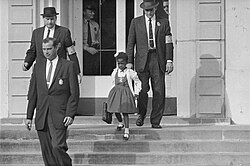
The scenes outside the school were chaotic. Ruby later recalled that the shouting and throwing of objects reminded her of Mardi Gras. While her father was initially hesitant, her mother, Lucille, insisted on the move to ensure Ruby received a better education and to take a step forward for all African American children.
The courage Ruby displayed during this time was immortalized by artist Norman Rockwell in his 1964 painting, The Problem We All Live With, which depicts the young girl being escorted by marshals through a crowd of protesters.
A Classroom of One
The integration was met with a fierce boycott. White parents pulled their children from the school, and nearly every teacher refused to work in a classroom with a black student. Only one teacher, Barbara Henry from Boston, agreed to teach Ruby. For over a year, Ruby was effectively a class of one.
The boycott began to break on the second day when a Methodist minister, Lloyd Anderson Foreman, walked his five-year-old daughter, Pam, into the school, stating he simply wanted the privilege of taking his child to school. Eventually, other white parents followed suit, and the protests subsided.
Life After the Crisis
Throughout her first year, Ruby received weekly counseling from child psychiatrist Robert Coles, who later wrote The Story of Ruby Bridges to share her experience with other children. As an adult, Ruby Bridges Hall worked as a travel agent for 15 years before dedicating her life to activism.
In 1999, she founded the Ruby Bridges Foundation to promote tolerance, respect, and the appreciation of differences. She has consistently argued that racism is a "grown-up disease" that should not be spread through children.
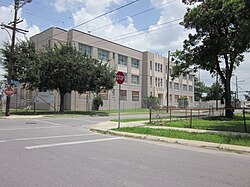
Ruby's resilience continued into adulthood. After losing her home to the levee failures during Hurricane Katrina in 2005, she fought to ensure that William Frantz Elementary School remained open despite the damage it sustained.
Key Facts
- First Integration: Ruby Bridges was the first African American child to attend William Frantz Elementary School on November 14, 1960.
- Federal Protection: She was escorted to school by U.S. Marshals due to violent protests.
- Artistic Legacy: She is the subject of Norman Rockwell's famous painting, The Problem We All Live With.
- Educational Impact: She spent over a year being taught exclusively by one teacher, Barbara Henry.
- Philanthropy: She established the Ruby Bridges Foundation in 1999 to combat racism.
| Category | Details |
|---|---|
| Born | September 8, 1954 (Tylertown, Mississippi) |
| Key Event | Integration of William Frantz Elementary (1960) |
| Major Honors | Presidential Citizens Medal (2001), National Women's Hall of Fame (2024) |
| Foundation | Ruby Bridges Foundation (est. 1999) |
| Notable Works | Author of Through My Eyes and I Am Ruby Bridges |
Frequently Asked Questions
Why did Ruby Bridges need U.S. Marshals to go to school?
Ruby required federal protection because of the violent opposition from white protesters who were against the desegregation of public schools in New Orleans.
Who was the teacher that agreed to teach Ruby?
Barbara Henry, a teacher from Boston, was the only educator at William Frantz Elementary who agreed to teach Ruby, resulting in Ruby being taught alone for over a year.
What is the significance of the Norman Rockwell painting?
The painting, The Problem We All Live With, captures the tension and courage of the integration process, depicting Ruby's walk to school surrounded by federal marshals.
What does the Ruby Bridges Foundation do?
The foundation promotes values of tolerance, respect, and appreciation of all differences to help end racism by educating children.
How did Hurricane Katrina affect Ruby Bridges?
Ruby lost her home in Eastern New Orleans due to the failure of the levee system during the 2005 storm, and she later advocated for the reopening of the damaged William Frantz Elementary School.