NAACP: A Century of Fighting for Civil Rights and Racial Justice
The National Association for the Advancement of Colored People (NAACP) stands as one of the oldest and most influential civil rights organizations in the United States. Founded during a period of intense racial violence and systemic oppression, the organization has spent over a century utilizing legal action, public advocacy, and grassroots organizing to secure political, educational, social, and economic equality for Black Americans.
From its early days fighting the horrors of lynching to its pivotal role in dismantling state-sponsored segregation, the NAACP has evolved to meet the changing needs of the community while remaining steadfast in its core mission of racial justice.

Key Facts
- Founded: February 12, 1909.
- Founders: W. E. B. Du Bois, Mary White Ovington, Moorfield Storey, Ida B. Wells, Lillian Wald, and Henry Moskowitz.
- Official Publication: The Crisis.
- Legal Status: 501(c)(4) Civic League and Social Welfare Organization.
- Current Leadership: President and CEO Derrick Johnson; Chairman Leon W. Russell.
- Membership: Approximately 300,000 members.
The Foundations of the Movement
The NAACP emerged from the Niagara Movement, a precursor organization that sought to challenge the accommodationist approach to racial progress. On February 12, 1909, a diverse group of activists and intellectuals incorporated the NAACP to create a more sustainable and broad-based vehicle for civil rights advocacy.
The organization's early leadership included Moorfield Storey as National President and William English Walling as Chairman of the executive committee. To amplify its voice, the NAACP launched The Crisis, a magazine that became a vital organ for documenting racial injustice and promoting Black intellectualism.

Combating Jim Crow and Systemic Segregation
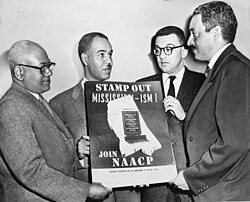
For decades, the NAACP fought against Jim Crow laws—state and local laws that enforced racial segregation—and the widespread disenfranchisement of Black voters. A cornerstone of their strategy was the creation of the Legal Defense Fund, which provided the financial and legal resources necessary to challenge discriminatory laws in court.
This legal strategy culminated in landmark victories regarding desegregation, most notably in the realm of public education. By the 1950s, the organization's reach had expanded significantly; by 1958, the South alone hosted over half of the NAACP's 1,230 chapters and 302,000 members.
Political Engagement and Federal Relations
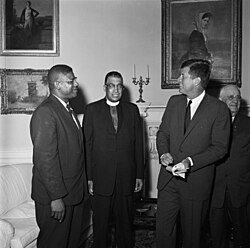
The NAACP has consistently engaged with the highest levels of government to influence policy. This is evidenced by meetings between NAACP representatives and U.S. Presidents, including a 1961 meeting between E. Franklin Jackson, Stephen Gill Spottswood, and President John F. Kennedy.
Facing Violent Opposition
The struggle for equality often came with a heavy price. NAACP attorneys and activists frequently faced harassment and violence. In September 1963, the home of NAACP attorney Arthur Shores in Birmingham, Alabama, was targeted by a bomb, resulting in injuries to his wife.

Modern Advocacy and Current Activities
In the 21st century, the NAACP has expanded its focus to address contemporary issues of inequality. This includes advocating for LGBT rights, with the organization endorsing same-sex marriage in 2012 on the basis that gay rights are civil rights.
The organization also monitors systemic hostility in various states. In 2017, the NAACP issued a travel warning for African Americans visiting Missouri, and a similar advisory was issued for Florida in 2023, citing a hostile environment for Black travelers.

Youth and Education
The NAACP continues to invest in the next generation through its Youth and College Division and the ACT-SO program (Afro-Academic, Cultural, Technological and Scientific Olympics), which encourages academic and artistic excellence among youth.
Environmental Justice
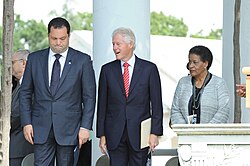
Recognizing that marginalized communities are disproportionately affected by pollution, the NAACP has integrated environmental justice into its platform, producing reports on the impact of fossil fuels and warning local chapters against manipulation by the energy industry.
Organizational Overview
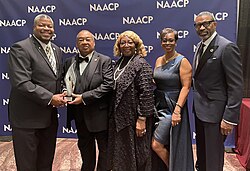
The NAACP maintains a robust structure of local branches and a national convention that rotates through various U.S. cities to maintain a nationwide presence.
| Category | Details |
|---|---|
| Budget (2019) | $24,800,000 |
| Headquarters | Washington, D.C. (Planned move from Baltimore) |
| Key Awards | Image Awards, Theatre Awards, Spingarn Medal, Thalheimer Award, Montague Cobb Award |
| Primary Focus | Civil rights, legal defense, voting rights, and racial equality |
Frequently Asked Questions
Who founded the NAACP?
The NAACP was founded on February 12, 1909, by W. E. B. Du Bois, Mary White Ovington, Moorfield Storey, Ida B. Wells, Lillian Wald, and Henry Moskowitz.
What is the purpose of The Crisis magazine?
The Crisis serves as the official publication of the NAACP, acting as a primary organ for the organization to communicate its mission and highlight issues of racial injustice.
What is the ACT-SO program?
ACT-SO is a program designed to support and showcase the academic, cultural, technological, and scientific achievements of African American youth.
Does the NAACP support LGBT rights?
Yes. The NAACP has officially endorsed same-sex marriage, asserting that LGBT rights are a fundamental part of the broader civil rights struggle.
What is the Spingarn Medal?
The Spingarn Medal is one of the organization's most prestigious awards, given to honor general outstanding achievements by African Americans.