The Harmony of Faith: Inside the St. John Will-I-Am Coltrane African Orthodox Church
In the heart of San Francisco, there exists a unique sanctuary where the boundaries between musical genius and divine spirituality blur. The St. John Will-I-Am Coltrane African Orthodox Church is not a typical congregation; it is a community centered on the spiritual power of jazz and the legacy of the legendary saxophonist John Coltrane. Founded on the belief that music can be a vessel for the divine, this church blends Christian liturgy—the customary public worship performed by a religious group—with the improvisational spirit of jazz.

The Origins of a "Sound Baptism"
The church's journey began on September 18, 1965, when founders Franzo and Marina King attended a John Coltrane performance at The Jazz Workshop in San Francisco's North Beach neighborhood. The couple described the experience as a "sound baptism," a profound spiritual transformation triggered by the music. This encounter led them to host gatherings at their home, where friends gathered to listen to jazz records through a spiritual lens.
These informal meetings evolved into the Yardbird Club, named after the nickname of saxophonist Charlie Parker. Over time, the club transitioned into a formal religious institution in 1969. Before settling on its current identity, the church operated under several names, including the Yardbird Temple and the One Mind Temple Evolutionary Transitional Church of Christ.
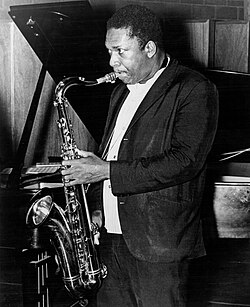
Coltrane Consciousness and Sacred Music
At the core of the church's theology is a concept known as Coltrane Consciousness. This is the belief that the music of John Coltrane is an "anointed sound" descending from heaven, intended to awaken the listener to a higher spiritual power.
The Sacred Text of Jazz
The church views Coltrane's seminal album, A Love Supreme, as a sacred text. The founders based this belief on the album's sonic qualities and the spiritual themes found in Coltrane's interviews and liner notes. Specifically, the Kings interpreted the first three parts of the album—"Acknowledgment," "Resolution," and "Pursuance"—as representations of the Father, Son, and Holy Spirit.
The Role of Charlie Parker
The church also recognizes the influence of saxophonist Charlie Parker. In their theology, Parker is viewed as a forerunner who prepared the world for Coltrane, drawing a parallel to the relationship between John the Baptist and Jesus.
A Journey Through Diverse Faiths
The church's spiritual path has been eclectic, evolving through various religious influences over the decades.
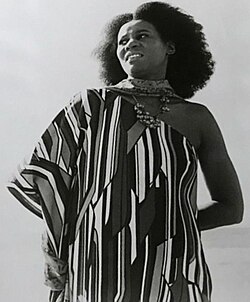
- Hinduism: In the 1970s, the Kings followed Alice Coltrane, the musician and widow of John Coltrane, as a Hindu guru. During this period, the church joined Alice's "Vedantic Center," and members adopted Hindu names and sang in Sanskrit.
- The African Orthodox Church: Following a legal dispute with Alice Coltrane in 1981, the congregation caught the attention of George Duncan Hinkson, head of the African Orthodox Church. In 1982, the church officially joined this denomination on the condition that John Coltrane be venerated as a saint rather than a god.
- Pentecostalism: While the church once incorporated Sufi Muslim teachings and Hinduism, its current practices more closely align with Pentecostalism—a Christian movement emphasizing the direct personal experience of God—which is the faith Franzo King grew up with.
Social Activism and the "Beans and Rice Church"
Beyond its spiritual services, the church has a long history of social activism and commitment to racial equity for African Americans in San Francisco. This mission led to a close relationship with the Black Panther Party. Huey P. Newton, a founder of the party, served as a mentor to Franzo King, and the church helped raise funds for Black Panther events.
The church became well-known for its community outreach, most notably a free daily vegetarian meal program that served hundreds of people. This generosity earned the congregation the affectionate nickname "the Beans and Rice Church." Additionally, the church offered hatha yoga—a physical practice focusing on posture and breath—alongside prayer, fasting, and meditation.
The Church Today
Despite challenges with rising rents that forced them to leave their long-term location on Divisadero Street in 2000, the church continues to thrive. As of 2026, the congregation holds weekly services at the Magic Theater venue at Fort Mason in San Francisco.
These services remain a vibrant mix of traditional Christian sermons and jazz improvisation. Each service begins with the blowing of a conch shell and features live music, including saxophone performances by Archbishop Franzo King. The sanctuary is adorned with religious icons of John Coltrane painted by artist Mark Dukes.
The city of San Francisco has formally recognized this unique legacy, with mayors Willie Brown and London Breed both proclaiming July 20 as "John Coltrane Day" in 2001 and 2023, respectively.
| Feature | Details |
|---|---|
| Founded | 1969 by Franzo and Marina King |
| Location | San Francisco, California (Currently at Fort Mason) |
| Affiliation | African Orthodox Church |
| Core Belief | Coltrane Consciousness; Coltrane as a Saint |
| Sacred Text | A Love Supreme (Album) |
| Key Activities | Jazz-infused liturgy, guided meditations, social activism |