Civil Rights Movement (1896–1954): The Long Struggle for Legal Equality
The civil rights movement spanning from 1896 to 1954 was a prolonged, primarily nonviolent campaign aimed at securing full civil rights and legal equality for all Americans. This era fundamentally reshaped American society by exposing the devastating costs of racism and establishing the social and legal frameworks for civil rights acceptance. The movement is often defined by two landmark Supreme Court decisions: the 1896 Plessy v. Ferguson ruling, which established the "separate but equal" doctrine, and the 1954 Brown v. Board of Education decision, which finally overturned it.
Key Facts
- Timeframe: 1896 to 1954, bookended by the Plessy and Brown Supreme Court rulings.
- Legal Foundation: The 13th (abolition), 14th (citizenship/equal protection), and 15th (voting rights) Amendments provided the constitutional basis for equality.
- Core Strategy: A combination of nonviolent action, grassroots organizing, and a systematic legal assault on state-sponsored segregation.
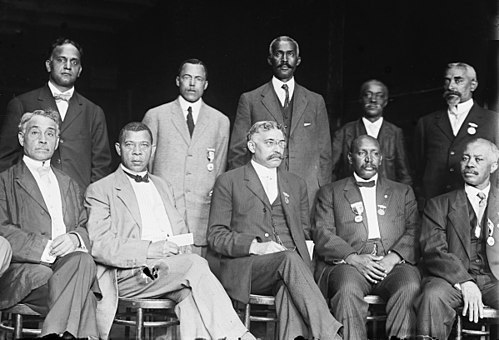
- Key Organizations: The NAACP (founded 1909) and Marcus Garvey's Universal Negro Improvement Association (UNIA).
- Major Obstacles: The "separate but equal" doctrine, white primaries, and the systemic disenfranchisement of Black voters in the South.
The Constitutional Foundation and Reconstruction
Following the Civil War, the United States attempted to expand the legal rights of African Americans through three critical constitutional amendments. The 13th Amendment (1865) abolished slavery, though it did not grant citizenship. The 14th Amendment (1868) granted citizenship to all persons born in the US and guaranteed equal protection under the law. Finally, the 15th Amendment (1870) prohibited the denial of voting rights based on race.
During the Reconstruction era (1865–1877), the Freedmen's Bureau and Northern troops worked to enforce these laws. This period saw the election of many Black leaders to local and state offices and a surge in community-led educational initiatives.
The Era of Segregation and Disenfranchisement
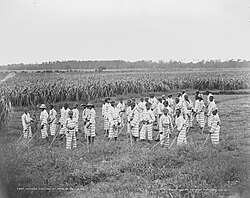
Despite early gains, the late 19th century saw a resurgence of political control by the Democratic Party in the South. Between 1890 and 1908, state legislatures implemented systemic disenfranchisement—the act of depriving a person or group of the right to vote. This was achieved through mechanisms like white primaries (primaries open only to white voters) and "grandfather clauses," the latter of which was declared unconstitutional in the 1915 case Guinn v. United States.
The impact was severe. In Alabama, for example, it is estimated that only 1,500 Black citizens were registered to vote by 1941. This disenfranchisement also affected approximately 600,000 poor whites.
Violence and the Fight Against Lynching
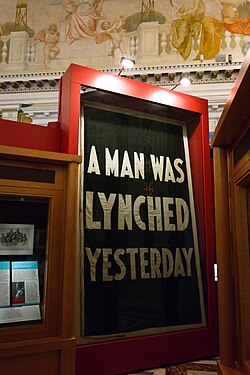
The turn of the 20th century saw a rise in lynchings, primarily targeting Black men in the South. While Republicans in Congress repeatedly proposed federal anti-lynching legislation, these efforts were consistently blocked by Southern Democrats. In 1922, Representative Leonidas C. Dyer worked with the NAACP to pass an anti-lynching bill in the House, but it was defeated in the Senate via filibuster in 1922, 1923, and 1924.
Economic Growth and Educational Advancement
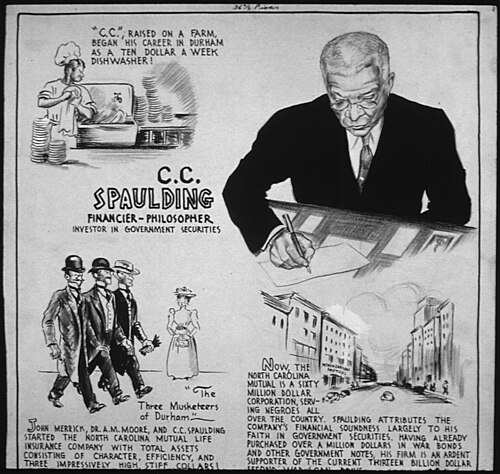
Amidst systemic oppression, the African American community achieved significant milestones in business and education. This period is often viewed as a golden age of Black entrepreneurship. Charles Clinton Spaulding, a prominent business leader and advisor to President Franklin D. Roosevelt, founded the North Carolina Mutual Life Insurance Company, which became the largest Black-owned business in the US with assets exceeding $40 million.
Education was equally vital. By 1900, the community had trained 30,000 African American teachers in the South, and a majority of the Black population had achieved literacy. This was supported by "normal schools" (teacher training colleges) and the establishment of public education across Southern states.
The Legal Path to Victory
The NAACP, founded in 1909, led a strategic legal campaign to dismantle segregation. While early efforts faced setbacks, such as Corrigan v. Buckley (1926) regarding housing, the organization gradually secured pivotal victories. These included Smith v. Allwright (1944) on voting, Shelley v. Kraemer (1948) on housing, and Sweatt v. Painter (1950) on schooling.
Additionally, the Scottsboro Boys cases resulted in the 1935 rulings of Powell v. Alabama and Norris v. Alabama, which integrated anti-racism jurisprudence into the American criminal justice system.
| Case Name | Year | Focus Area | Outcome/Significance |
|---|---|---|---|
| Plessy v. Ferguson | 1896 | Segregation | Upheld "separate but equal" doctrine |
| Guinn v. United States | 1915 | Voting | Struck down Oklahoma's grandfather clause |
| Smith v. Allwright | 1944 | Voting | Key victory against voting restrictions |
| Shelley v. Kraemer | 1948 | Housing | Victory against restrictive covenants |
| Sweatt v. Painter | 1950 | Education | Advanced desegregation of professional schools |
| Brown v. Board of Education | 1954 | Education | Overturned Plessy v. Ferguson |
Frequently Asked Questions
What was the "separate but equal" doctrine?
Established by the 1896 Supreme Court ruling in Plessy v. Ferguson, this doctrine held that racial segregation was constitutional as long as the facilities provided for each race were equal in quality.
How did the NAACP contribute to the movement?
The NAACP focused on a legal assault against state-sponsored segregation, litigating against disenfranchisement and segregation in housing, voting, and education, eventually leading to the victory in Brown v. Board of Education.
What were "white primaries"?
White primaries were electoral practices used primarily by the Democratic Party in the South to prevent African Americans from voting in primary elections, thereby excluding them from the most influential part of the electoral process.
Who was Charles Clinton Spaulding?
He was a leading Black business leader who founded the North Carolina Mutual Life Insurance Company and served as an advisor to President Franklin D. Roosevelt to promote Black political leadership.
What was the significance of the 14th Amendment?
Ratified in 1868, the 14th Amendment granted citizenship to all persons born in the United States and guaranteed that all citizens receive equal protection under the laws.