Royal Street: A Historic Treasure of the New Orleans French Quarter
Located in the heart of New Orleans, Louisiana, Royal Street (known in French as Rue Royale and in Spanish as Calle Real) stands as one of the city's most iconic thoroughfares. Dating back to the early 18th century, this historic street is a cornerstone of the French Quarter, blending colonial heritage with a vibrant modern culture of art and commerce.
Today, Royal Street is globally recognized for its concentration of high-end antique shops, prestigious art galleries, and luxury hotels, making it a primary destination for visitors seeking the elegance and mystery of the Crescent City.
Key Facts
![Looking southwest down Royal Street during the 2015 French Quarter Festival. (The skyscraper is the Place St. Charles office building.)[1]](/images/5e/85/5e85739d97e74de4b035536130c27fb5b4b16b9698f89014f27d913d210caeb8.jpg)
- Origin: Established in the early 18th century as one of the city's original streets.
- Geography: Extends from Canal Street through the French Quarter, Faubourg Marigny, Bywater, and the Lower Ninth Ward.
- Specialties: Renowned for rare antiques, fine art, and spiritual boutiques.
- Landmarks: Home to the historic Hotel Monteleone.
- Resilience: Much of the street was spared from flooding during Hurricane Katrina due to the French Quarter's naturally higher elevation.
Geography and Layout
Royal Street begins at Canal Street, where it connects to St. Charles Avenue in uptown New Orleans. From there, it winds through several distinct neighborhoods, including the French Quarter, Faubourg Marigny, and Bywater, eventually reaching the Jackson Barracks. A physical gap exists in the street's continuity between the Bywater and Lower Ninth Ward neighborhoods, caused by the Industrial Canal.
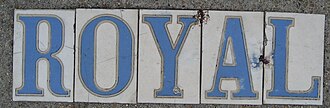
The street is visually defined by its historic architecture and charm, including the distinctive paving that characterizes the area.
The Art and Commerce of the French Quarter
The upper section of Royal Street, closer to Canal Street, is a hub of luxury. This area is famous for its opulent antique shops and art galleries, some of which are cited as being among the most expensive shopping destinations in the world. These stores often feature rare artifacts, including fine furniture once owned by historical royalty.
Block-by-Block Highlights
- The 700 Block: A center for fine art, featuring galleries of prominent New Orleans artists such as George Rodrigue and Ally Burguieres.
- The 800 Block: While still hosting art galleries, this block has evolved into a center for the spiritual and occult, featuring establishments like the Voodoo Bone Lady, Sassy Magick Noir, and The Vampire Cafe.
Culture and Tourism
Royal Street is more than just a shopping district; it is a living cultural experience. Every afternoon, a three-block stretch between St. Louis and St. Ann Streets is closed to vehicle traffic, transforming into a pedestrian zone. This area becomes a stage for street performers, where visitors can encounter everything from emerging New Orleans jazz musicians to various eclectic acts.
The street also hosts significant hospitality landmarks, most notably the Hotel Monteleone. Established in the late 19th century, this family-owned high-rise remains one of the most famous hotels in the city.
Historical Resilience
The geography of the French Quarter played a critical role during the 2005 disaster of Hurricane Katrina. Because the original city was constructed on naturally higher ground near a curve in the Mississippi River, Royal Street remained largely spared from the catastrophic flooding that devastated other parts of New Orleans, with the exception of the section located in the Lower Ninth Ward.
| Feature | Details |
|---|---|
| Alternative Names | Rue Royale (French), Calle Real (Spanish) |
| Primary Industries | Antiques, Fine Art, Hospitality |
| Key Neighborhoods | French Quarter, Faubourg Marigny, Bywater, Lower Ninth Ward |
| Notable Hotel | Hotel Monteleone |
| Pedestrian Zone | Between St. Louis and St. Ann Streets (Afternoons) |
Frequently Asked Questions
What is Royal Street famous for?
Royal Street is best known for its high-end antique shops, art galleries, and its role as a historic artery of the New Orleans French Quarter.
Which neighborhoods does Royal Street pass through?
The street runs through the French Quarter, Faubourg Marigny, Bywater, and the Lower Ninth Ward, ending at the Jackson Barracks.
Is Royal Street open to pedestrians?
Yes, specifically between St. Louis and St. Ann Streets, the road is closed to traffic every afternoon to create a pedestrian-only zone for visitors and street performers.
Why did Royal Street avoid flooding during Hurricane Katrina?
The French Quarter portion of the street was built on naturally higher ground near the Mississippi River, which protected it from the floods that affected much of the city.
What can be found on the 800 block of Royal Street?
While it still contains art galleries, the 800 block is now a haven for the spiritual and spooky, featuring shops like the Voodoo Bone Lady and The Vampire Cafe.