Royal Marines: The Elite Amphibious Force of the United Kingdom
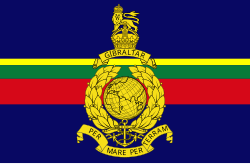
The Royal Marines are the United Kingdom's premier amphibious light infantry force, specializing in amphibious warfare and special operations. As a core component of His Majesty's Naval Service, they operate under the motto Per Mare, Per Terram (By Sea, By Land), reflecting their unique ability to project power from the ocean onto any coastline in the world.
With a history spanning over 360 years, the "Royals"—also known as "Bootnecks" or "The Commandos"—have evolved from ship-borne guards to a highly specialized force capable of operating in the most extreme environments, from the Arctic circle to the deserts of the Middle East.
Key Facts
- Established: 28 October 1664.
- Role: Amphibious warfare and special operations.
- Personnel: 5,820 as of April 1, 2022 (770 officers and 5,050 other ranks).
- Motto: Per Mare, Per Terram ("By Sea, By Land").
- Command: Part of His Majesty's Naval Service, with King Charles III as Captain General.
A Legacy of Global Service
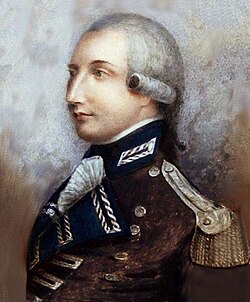
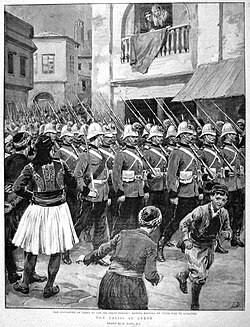
The Royal Marines have been central to British military efforts since the 17th century. Their early history was defined by the expansion of the British Empire, serving in conflicts such as the Second and Third Anglo-Dutch Wars, the Seven Years' War, and the Napoleonic Wars.
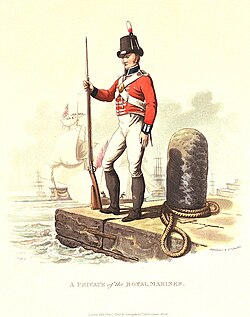
During the 19th century, the corps expanded its reach, engaging in the Crimean War, the Opium Wars in China, and various campaigns across Africa and Asia. Their versatility allowed them to transition seamlessly between naval duties and land-based combat.
The World Wars and the Birth of the Commandos
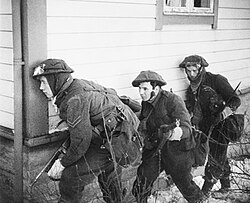
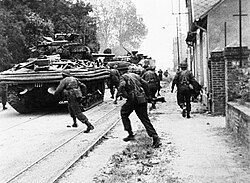
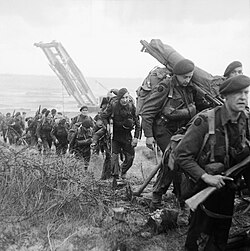
The 20th century marked a pivotal shift in the role of the Royal Marines. During the Second World War, the need for specialized raiding forces led to the creation of the Commandos—elite, highly trained units capable of rapid, surprise attacks. The Royal Marines became the backbone of these units, participating in critical operations such as the invasion of Normandy on June 6, 1944.
Post-War and Modern Era
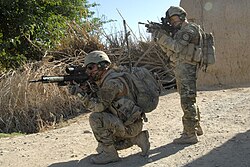
Following 1945, the Royal Marines continued to serve in Cold War hotspots and post-colonial conflicts, including the Korean War, the Suez Crisis, and the Malayan Emergency. In more recent decades, they have played vital roles in the Falklands War, the Gulf War, and operations in Afghanistan and Iraq.
Organization and Command Structure
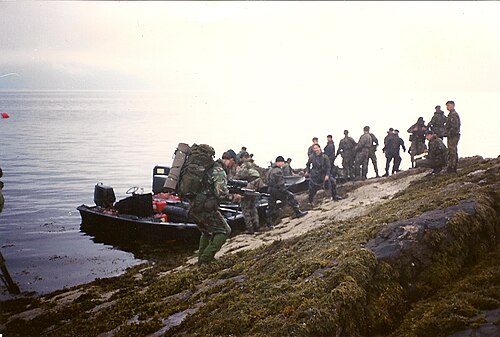
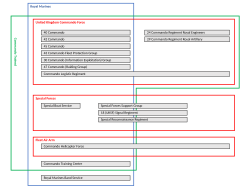
The modern Royal Marines are organized to provide rapid response and specialized capabilities. The UK Commando Force is the primary operational arm, centered around 3 Commando Brigade.
Commando Units
- 40 Commando: Based at RM Norton Manor, Taunton.
- 42 Commando: Based at RM Bickleigh, Plymouth; focuses on maritime security.
- 45 Commando: Based at RM Condor, Arbroath.
- 30 Commando Information Exploitation Group: Specializes in intelligence, surveillance, and target acquisition.
- 47 Commando (Raiding Group): Specializes in raiding operations.
- 48 Commando Support Group: Provides essential logistic support.
Specialized Support and Training
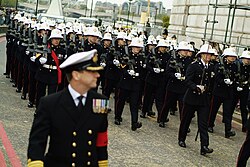
Beyond the frontline commandos, the corps includes the Commando Training Centre Royal Marines in Lympstone, where all recruits undergo the rigorous selection process. Additionally, the Royal Marines Band Service provides musical support and ceremonial duties across several locations, including Portsmouth and Scotland.
Equipment and Capabilities
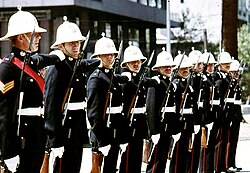
To maintain their edge in amphibious warfare, the Royal Marines utilize a diverse array of specialized equipment designed for versatility and stealth.
Weaponry and Aviation
The corps employs a range of light weapons and precision tools, including the L115A1 sniper rifle for long-range engagements. Their mobility is supported by the Commando Helicopter Force, utilizing aircraft such as the Gazelle and Lynx.
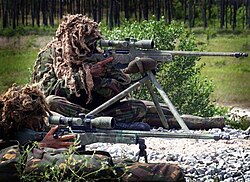
Vehicles and Vessels
For land mobility, especially in harsh terrains, the Royal Marines use BvS 10 Vikings. Their amphibious capabilities are enabled by various landing craft, including the Landing Craft Utility (LCU) Mk10 and the Landing Craft Air Cushion (LCAC).
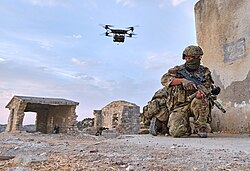
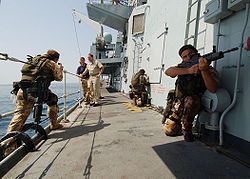
Summary of Royal Marines Personnel and Structure
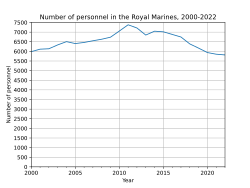
| Category | Detail |
|---|---|
| Total Personnel | 5,820 |
| Officers | 770 |
| Other Ranks | 5,050 |
| Primary Brigade | 3 Commando Brigade |
| Key Specializations | Amphibious Warfare, Raiding, Intelligence |
Frequently Asked Questions
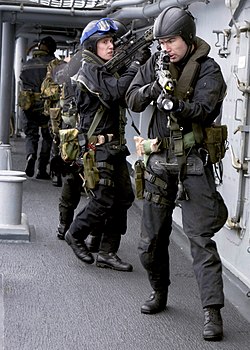
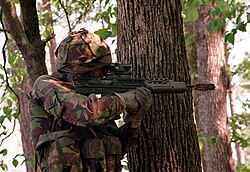
What is the difference between a Royal Marine and a regular soldier?
While both are infantry, Royal Marines are specifically trained for amphibious warfare, meaning they specialize in transitioning from sea to land to conduct operations, whereas regular army soldiers typically focus on land-based warfare.
What does "Per Mare, Per Terram" mean?
It is Latin for "By Sea, By Land," which summarizes the Royal Marines' capability to operate in both maritime and terrestrial environments.
Who is the Captain General of the Royal Marines?
King Charles III serves as the Captain General of the Royal Marines.
What is the role of the Commando Training Centre?
Located in Lympstone, it is the central training unit for the entire corps, responsible for the rigorous selection and training of all Royal Marine recruits.
Which units make up the UK Commando Force?
The force primarily consists of 40, 42, and 45 Commandos, along with the 30 Commando Information Exploitation Group, 47 Commando (Raiding Group), and 48 Commando Support Group.