Royal Astronomical Society: A Legacy of Astronomy and Geophysics
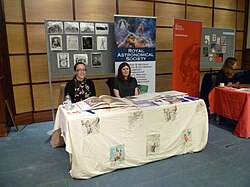
The Royal Astronomical Society (RAS) is a prestigious learned society and registered charity dedicated to the promotion of astronomy, solar-system science, geophysics, and related scientific disciplines. Based in the historic Burlington House on Piccadilly in London, the RAS serves as a global hub for professional researchers, postgraduate students, and dedicated amateurs.
With a membership of over 4,000 fellows—approximately a quarter of whom reside outside the United Kingdom—the society acts as the UK's adhering organization to the International Astronomical Union and is a member of the UK Science Council. Its mission extends beyond research to include public outreach and providing expert advice to the UK government regarding astronomy education.
Key Facts
- Founded: 10 March 1820.
- Headquarters: Burlington House, Piccadilly, London.
- Patron: King Charles III.
- Membership: Over 4,000 Fellows (FRAS).
- Primary Focus: Astronomy and Geophysics.
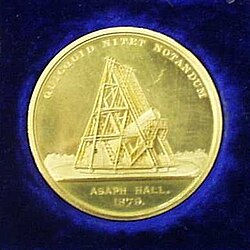
- Highest Honor: The Gold Medal of the Royal Astronomical Society.
History and Evolution
Founding and Early Years
The RAS was born from a desire for a dedicated astronomical body, as many 19th-century astronomers felt the Royal Society was too focused on botany and natural history. On 12 January 1820, fourteen individuals, including Charles Babbage and John Herschel, met at the Freemasons' Tavern in London to establish the society. Originally named the Astronomical Society of London, it held its first council meeting on 10 March 1820.
The society adopted the motto Quicquid nitet notandum ("whatever shines should be observed"), a phrase chosen by William Herschel. Early goals focused on improving astronomical calculations, observations, and practical applications like navigation.
Royal Charter and Growth
The organization received a Royal Charter from William IV on 7 March 1831, officially becoming the Royal Astronomical Society. This period saw the launch of critical publications, including the Memoirs of the Royal Astronomical Society (1822) and the Monthly Notices of the Royal Astronomical Society (1827).
In 1846, the RAS expanded its resources by absorbing the Spitalfields Mathematical Society, inheriting its extensive library in exchange for granting its remaining nineteen members lifetime fellowship.
The Struggle for Gender Equality
For nearly a century, fellowship was restricted to men due to the wording of the Royal Charter. While women like Caroline Herschel and Mary Somerville were granted honorary memberships as early as 1835, and Caroline Herschel became the first woman to receive the Gold Medal in 1828, full fellowship remained elusive.
This changed with a Supplemental Charter in 1915. On 14 January 1916, the first five women—Mary Adela Blagg, Ella K Church, A Grace Cook, Irene Elizabeth Toye Warner, and Fiammetta Wilson—were elected as Fellows. In 1994, Dame Carole Jordan became the first woman to serve as President of the society.
Scientific Contributions and Impact
General Relativity and Geophysics
The RAS played a pivotal role in one of the 20th century's greatest scientific breakthroughs: the 1919 test of general relativity. By coordinating expeditions to Príncipe and Sobral, Brazil, the society helped confirm Albert Einstein's prediction regarding the gravitational deflection of starlight.
Over time, the society formally integrated geophysics (the study of the Earth's physical properties and processes) into its scope. This led to the creation of the Geophysical Journal International, reflecting the interdisciplinary nature of the society's research.
Awards and Recognition
The society recognizes excellence through various annual prizes. The most prestigious is the Gold Medal, typically awarded for extraordinary lifetime achievement. Notable recipients include Albert Einstein (1926) and Stephen Hawking (1985).
Institutional Resources and Membership
Publications and Library
The RAS is a major publisher of refereed scientific journals. Its current portfolio includes:
- Monthly Notices of the Royal Astronomical Society (MNRAS): Focused on astronomy.
- Geophysical Journal International: Focused on geophysics.
- RAS Techniques & Instruments: Focused on research methods.
- Astronomy & Geophysics: A trade magazine for members.
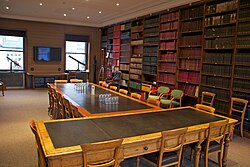
The society also maintains a world-class research library containing over 10,000 books and 300 current periodicals, boasting one of the UK's most significant collections of rare astronomical texts.
Fellowship and Community
Full members are known as Fellows and use the post-nominal letters FRAS. Fellowship is open to those over 18 with a professional or demonstrated amateur commitment to the field. For those without professional qualifications, the society offers the "Friends of the RAS" initiative, providing access to popular talks and social events.
| Category | Details |
|---|---|
| Legal Status | NGO / Registered Charity |
| Current President | Jim Wild (Term started May 2026) |
| Executive Director | Ian Russell |
| Key Events | National Astronomy Meeting (Annual) |
| Associated Groups | Astrobiology Society of Britain, UK Planetary Forum, etc. |
Frequently Asked Questions
What does FRAS stand for?
FRAS stands for Fellow of the Royal Astronomical Society, a title used by full members of the society.
Who is the current patron of the RAS?
The current patron of the Royal Astronomical Society is King Charles III.
What is the highest award given by the RAS?
The highest award is the Gold Medal of the Royal Astronomical Society, which recognizes extraordinary lifetime achievement in astronomy or geophysics.
Can non-professionals join the society?
Yes. While Fellowship is open to those with a demonstrated commitment to the field, the "Friends of the RAS" initiative is specifically designed for those interested in astronomy and geophysics without professional qualifications.
Where is the RAS headquartered?
The society is headquartered at Burlington House on Piccadilly in London.