Robert Bradfield: The Most Prolific Comet Hunter of the 20th Century
In an era of computerized surveys and digital imaging, the story of Robert Bradfield stands as a testament to patience, precision, and the power of visual observation. A rocket propulsion engineer by trade and an astronomer by passion, Bradfield became the most successful comet hunter of the 20th century, discovering 18 comets through sheer dedication and a homemade telescope.
Early Life and Professional Career
Born on 20 June 1927 in Levin, New Zealand, Bradfield's fascination with the heavens began on a dairy farm. By the age of 15, he had acquired his first small telescope, sparking a lifelong interest in astronomy and rocketry. He pursued this passion academically at the University of New Zealand, where he earned a bachelor's degree in Mechanical Engineering.
Bradfield's professional journey took him to England for a two-year residency in rocket propulsion before he relocated to Adelaide, Australia, in 1953. For over three decades, he served as a research scientist and rocket propulsion engineer for the Australian Department of Defence, a career he maintained until his retirement in 1986. During his time in Adelaide, he married his wife, Eileen, in 1957, and together they raised three daughters.
The Journey to Comet Hunting
While his professional life was rooted in engineering, Bradfield's passion for the stars intensified in 1970 when he joined the Astronomical Society of South Australia (ASSA). In 1971, he began his quest to find comets using a second-hand telescope purchased from a fellow ASSA member.
The effort required immense patience. After spending 260 hours searching the skies over the course of just over a year, he discovered his first comet, C/1972 E1 (Comet Bradfield). This success ignited a prolific period of discovery; he found six comets within his first six years of hunting.
Mastery of Visual Observation
What made Bradfield's achievements truly remarkable was his methodology. Unlike modern astronomers who rely on photographic or computerized detection equipment, Bradfield used visual sweeping—the process of manually scanning the sky through an eyepiece to spot anomalies.
His equipment was a blend of the antique and the artisanal. He utilized a 100-year-old lens paired with modern eyepieces, while the rest of the telescope was homemade. Despite the lack of high-tech sensors, his custom setup was perfectly optimized for spotting the faint, fuzzy signatures of comets.
A Legacy of Discovery
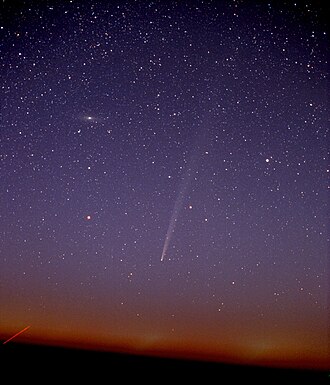
By 1987, Bradfield discovered his 13th comet, officially making him the most prolific comet hunter of the 20th century. Over the course of his life, he dedicated 3,500 hours to searching the night sky, eventually bringing his total to 18 discovered comets. His final discovery occurred on 23 March 2004, when he was 76 years old.
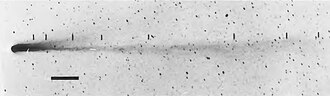
Bradfield's discoveries had a global impact. Whenever he reported a find to the International Astronomical Union (IAU)—the global authority for naming and cataloging celestial bodies—it triggered immediate worldwide observation. For example, within 14 hours of reporting his 17th comet in 1995, more than 20 observers had already tracked it, including the European Southern Observatory (ESO) using a 1-meter Schmidt telescope in La Silla, Chile.
Contributions to the Astronomical Community
Beyond his discoveries, Bradfield was a pillar of the Astronomical Society of South Australia. He served as the society's President from 1977 to 1979 and was named an honorary Life Member in 1989. In recognition of his extraordinary contributions to astronomy, he was inducted into the ASSA Hall of Fame in 2013.
Robert Bradfield passed away on 9 June 2014 at the age of 86, leaving behind a legacy of curiosity and perseverance.
| Category | Detail |
|---|---|
| Total Comets Discovered | 18 |
| Total Search Time | 3,500 hours |
| First Discovery | C/1972 E1 (Comet Bradfield) |
| Final Discovery Date | 23 March 2004 |
| Primary Method | Visual sweeping (non-computerized) |
| Equipment | Homemade telescope with 100-year-old lens |
Key Facts
- Prolific Record: Bradfield was the most successful comet hunter of the 20th century.
- Manual Detection: He discovered all 18 comets visually, without the aid of computers or photography.
- Engineering Background: He worked as a rocket propulsion engineer for the Australian Department of Defence.
- Dedication: He spent 3,500 hours of active searching to reach his final count of 18 comets.
- Community Leadership: He served as President of the Astronomical Society of South Australia from 1977 to 1979.
Frequently Asked Questions
How many comets did Robert Bradfield discover?
Robert Bradfield discovered a total of 18 comets over the course of his lifetime.
What equipment did Bradfield use to find comets?
He used a homemade telescope featuring a 100-year-old lens and modern eyepieces, relying entirely on visual observation rather than digital or photographic tools.
What was Robert Bradfield's professional career?
He was a mechanical engineer who worked as a research scientist and rocket propulsion engineer for the Australian Department of Defence until 1986.
How did the scientific community react to his discoveries?
His reports to the International Astronomical Union (IAU) triggered rapid global action; for instance, his 17th comet was observed by over 20 different observers within 14 hours of being reported.
When was his final comet discovered?
His 18th and final comet discovery took place on 23 March 2004, when he was 76 years old.