Ribosomes: The Molecular Machines of Protein Synthesis
In the complex ecosystem of a living cell, the ribosome serves as the essential factory responsible for creating proteins. These intricate molecular machines read genetic instructions and assemble amino acids into the precise sequences required for life. Without ribosomes, the genetic code stored in DNA would remain a blueprint without a builder.
Ribosomes are found in every living cell, from the simplest bacteria to the most complex human tissues. They operate through a process called translation, where the sequence of a messenger RNA (mRNA) molecule is converted into a polymeric protein molecule.
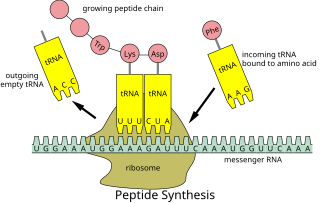
Key Facts
- Primary Function: Assembling amino acids into polypeptide chains based on mRNA sequences.
- Composition: Made of ribosomal RNA (rRNA) and proteins.
- Structure: Composed of two distinct parts: a small subunit and a large subunit.
- Types: Prokaryotes typically use 70S ribosomes, while eukaryotes use 80S ribosomes in their cytosol.
- Location: Can be found floating freely in the cytosol or bound to the rough endoplasmic reticulum.
The Structure of Ribosomes
Regardless of the organism, all ribosomes consist of two main components: a small subunit and a large subunit. These subunits remain separate in the cytosol until they bind to an mRNA molecule to begin protein synthesis.
Prokaryotic Ribosomes (70S)
Prokaryotes, such as bacteria and archaea, possess 70S ribosomes. In E. coli, the small 30S subunit consists of a 16S RNA (1,540 nucleotides) bound to 21 proteins. The large 50S subunit is more complex, containing a 5S RNA (120 nucleotides), a 23S RNA (2,900 nucleotides), and 31 proteins.
![Molecular structure of the 30S subunit from Thermus thermophilus.[20] Proteins are shown in blue and the single RNA chain in brown.](/images/48/03/480354681216faa05f9a078d84a1ee4f0a5d0729defc95b52b2facc7bad7f269.gif)
Archaeal ribosomes also follow the 70S pattern but differ in their specific molecular makeup. For example, in Pyrococcus furiosus, the 50S subunit contains a 23S RNA of 3,049 nucleotides and 42 proteins, while the 30S subunit contains a 16S RNA of 1,495 nucleotides and 26 proteins.
Eukaryotic Ribosomes (80S)
Eukaryotic cells utilize larger 80S ribosomes in their cytosol. The small 40S subunit contains an 18S RNA (1,900 nucleotides) and 33 proteins. The large 60S subunit is significantly more elaborate, comprising a 5S RNA (120 nucleotides), a 28S RNA (4,700 nucleotides), a 5.8S RNA (160 nucleotides), and 49 proteins.
![Figure 4: Atomic structure of the 50S subunit from Haloarcula marismortui. Proteins are shown in blue and the two RNA chains in brown and yellow.[45] The small patch of green in the center of the subunit is the active site.](/images/d9/92/d992d93cc65d7f77caf94d607da330ff41b5bf84af6039340d372e1e3e943ea9.gif)
How Ribosomes Work: The Process of Translation
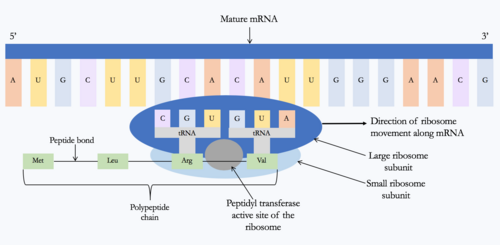
The primary role of the ribosome is translation. This is the process of turning the nucleotide sequence of mRNA into a chain of amino acids, known as a polypeptide.
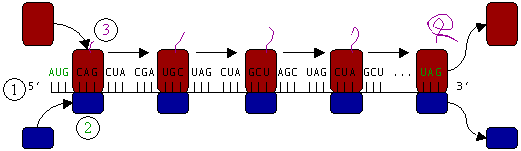
The process begins when the ribosome identifies the start codon (AUG) on the mRNA. Transfer RNA (tRNA) molecules, each carrying a specific amino acid, enter the ribosome and align with the corresponding mRNA triplet. The ribosome then catalyzes the addition of the amino acid to the growing protein chain.
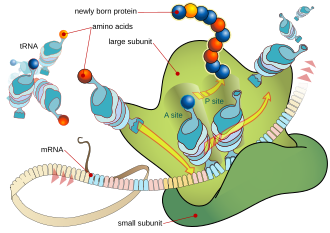
This cycle continues until the ribosome reaches a stop codon (such as UAG), signaling the completion of the protein. Some proteins are released directly into the cytosol, while others are secreted into the endoplasmic reticulum via specific protein domain dynamics.
Ribosome Distribution and Variation
Ribosomes are strategically located within the cell depending on the destination of the protein they are producing:
- Free Ribosomes: These float in the cytosol and typically produce proteins that function within the cytoplasm.
- Membrane-bound Ribosomes: These are attached to the rough endoplasmic reticulum and generally produce proteins destined for secretion or for use in cell membranes.
Beyond the cytosol, specialized ribosomes also exist within organelles, such as mitoribosomes (mitochondria) and plastoribosomes (chloroplasts), which have their own distinct structural properties.
Summary of Ribosomal Components
| Organism Type | Total Size | Small Subunit | Large Subunit | Key RNA Components |
|---|---|---|---|---|
| Bacteria (e.g., E. coli) | 70S | 30S | 50S | 16S, 23S, 5S |
| Archaea (e.g., P. furiosus) | 70S | 30S | 50S | 16S, 23S, 5S |
| Eukaryotes (Cytosolic) | 80S | 40S | 60S | 18S, 28S, 5.8S, 5S |
Frequently Asked Questions
What is the difference between 70S and 80S ribosomes?
The "S" refers to Svedberg units, a measure of sedimentation rate. 70S ribosomes are smaller and found in prokaryotes (bacteria and archaea), while 80S ribosomes are larger and found in the cytosol of eukaryotic cells.
What are the two subunits of a ribosome?
A ribosome consists of a small subunit, which binds to the mRNA, and a large subunit, which catalyzes the formation of peptide bonds between amino acids.
What is the role of rRNA in the ribosome?
Ribosomal RNA (rRNA) provides the structural framework for the ribosome and acts as a ribozyme, meaning it possesses the catalytic activity necessary to link amino acids together.
Where are ribosomes located in an animal cell?
They are found either floating freely in the cytosol or attached to the surface of the rough endoplasmic reticulum.
How does a ribosome know when to stop building a protein?
The ribosome continues translation until it encounters a stop codon (such as UAG) on the mRNA sequence, which signals the release of the completed polypeptide chain.