Molecular Biology: The Chemical Foundations of Life
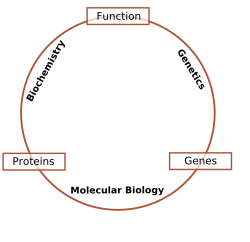
Molecular biology is the scientific study of the molecular structures and chemical processes that drive biological activity within and between cells. While classical biology examines organisms at larger scales, molecular biology zooms in to the microscopic level, focusing primarily on the interactions between nucleic acids—such as DNA and RNA—and proteins.
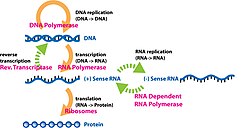
This multidisciplinary field integrates principles from biochemistry, genetics, physics, mathematics, and bioinformatics (the application of computer science to biological data) to understand how macromolecules orchestrate essential life processes. These include replication (copying DNA), transcription (converting DNA to RNA), and translation (synthesizing proteins from RNA).
Key Facts
- Core Focus: The structure, function, and interactions of DNA, RNA, and proteins.
- The Genetic Code: A triplet code where three sequential DNA bases (a codon) specify one amino acid.
- Landmark Discovery: The 1953 double helix model of DNA provided the physical basis for biological inheritance.
- Medical Application: Molecular biology enables targeted drug design, disease diagnosis, and gene therapy.
- Interdisciplinary Nature: Combines biology with physics, chemistry, and computational science.
The Evolution of Molecular Biology
Although microscopic structures were observed as early as the 18th century, the field of molecular biology only crystallized in the 20th century as physics and chemistry tools became sophisticated enough for biological application. The term was first coined in 1945 by physicist William Astbury to describe an approach that seeks the physical and chemical underpinnings of biological phenomena.
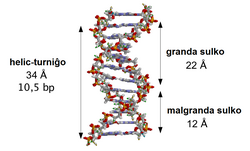
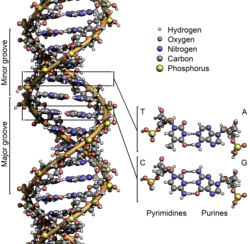
A pivotal moment occurred in 1953 when Francis Crick, James Watson, Rosalind Franklin, and their colleagues at the Cavendish Laboratory described the double helix model of deoxyribonucleic acid (DNA). This model, supported by Franklin's research and conveyed via Maurice Wilkins and Max Perutz, transformed the understanding of how genetic information is stored and passed on.
Defining the Genetic Code
By 1961, researchers demonstrated that the genetic code is a non-overlapping triplet code. This means that every three bases in a DNA sequence, known as a codon, correspond to a specific amino acid in a protein. Between 1962 and 1964, studies using bacterial virus mutants further clarified how proteins manage DNA replication, repair, and recombination.
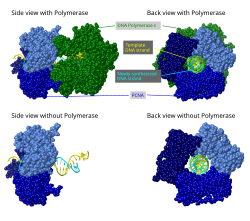
Foundational Experiments in Genetics
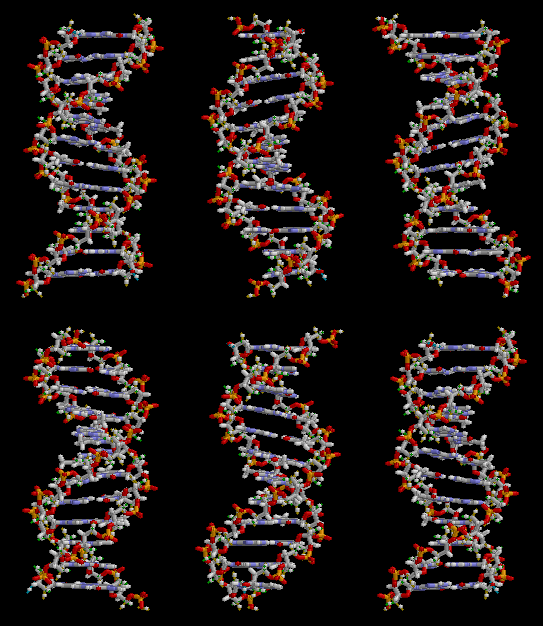
The shift from believing proteins carried genetic information to identifying DNA as the hereditary material was driven by several landmark experiments:
- Griffith's Experiment (1928): Demonstrated that a "transforming principle" could turn non-virulent bacteria into virulent ones.
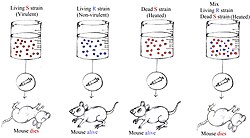
Griffith's experiment - Avery–MacLeod–McCarty Experiment (1944): Proved that DNA, not protein, was the substance responsible for bacterial transformation.
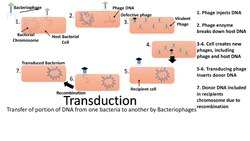
- Hershey–Chase Experiment: Further confirmed DNA as the genetic material.
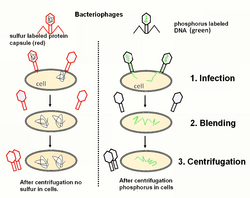
Hershey–Chase experiment - Meselson–Stahl Experiment: Provided evidence for how DNA replicates.
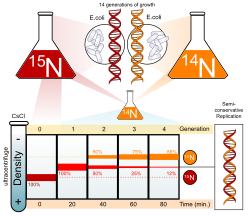
Meselson-Stahl experiment
Essential Molecular Biology Techniques
Modern molecular biology relies on a suite of specialized techniques to analyze and manipulate biological molecules. These tools are critical for molecular medicine—the application of molecular cell biology to clinical practice.
Protein Quantitation: The Bradford Assay
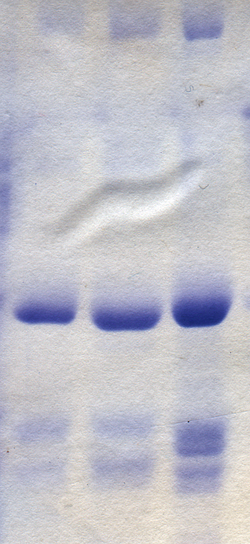
The Bradford assay is used for the fast and accurate measurement of protein concentrations. It utilizes Coomassie Brilliant Blue G-250, a dye that shifts from reddish-brown (465 nm) to bright blue (595 nm) upon binding to proteins in an acidic solution. This color change is measured using a visible light spectrophotometer.
Analysis via Blotting and Electrophoresis
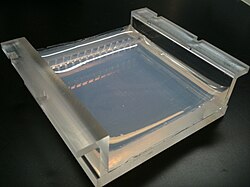
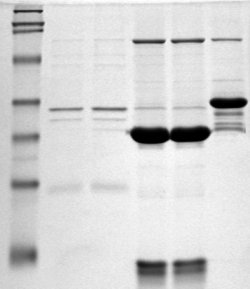
Scientists use various "blotting" techniques to identify specific macromolecules. These often involve gel electrophoresis—a process that separates molecules by size using an electric field—followed by transferring the molecules to a membrane for probing.
- Southern Blotting: Used for DNA detection.
- Northern Blotting: Used for RNA detection.
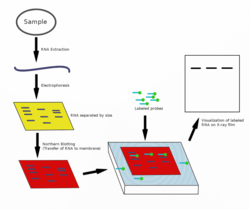
Northern blot diagram - Western Blotting: Used for protein detection.
- Eastern Blotting: Used for analyzing protein post-translational modifications.
DNA Microarrays and Gene Expression
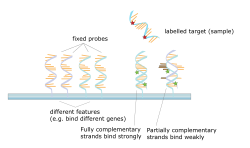
A DNA microarray consists of thousands of single-stranded DNA oligonucleotides attached to a solid support (like a silicon chip or glass slide). By hybridizing labeled cDNA to these spots, researchers can perform expression profiling, comparing which genes are active in different tissues—such as comparing healthy tissue to cancerous tissue.
Summary of Molecular Biology Components
| Component | Primary Function | Key Analytical Technique |
|---|---|---|
| DNA | Genetic information storage | Southern Blotting / Microarrays |
| RNA | Information transfer (Messenger) | Northern Blotting |
| Proteins | Biological activity and structure | Western Blotting / Bradford Assay |
Frequently Asked Questions
What is the difference between molecular biology and biochemistry?
While they overlap significantly, biochemistry focuses on the chemical processes and substances within living organisms, whereas molecular biology specifically emphasizes the molecular basis of genetic information and its flow (DNA → RNA → Protein).
What is a codon?
A codon is a sequence of three sequential DNA or RNA bases that specifies a particular amino acid to be added to a protein chain during translation.
How does a DNA microarray work?
It uses a grid of complementary DNA probes. When a sample's cDNA is applied to the array, it binds (hybridizes) to its matching probe, allowing scientists to see which genes are being expressed in a sample.
Why was the Avery–MacLeod–McCarty experiment important?
It provided the first definitive evidence that DNA, rather than protein, is the material that carries genetic information, overturning the prevailing scientific belief of the 1940s.
What is the purpose of the Bradford assay?
The Bradford assay is used to determine the concentration of protein in a solution by measuring the color shift of Coomassie Brilliant Blue dye when it binds to proteins.