Nucleic Acid Sequences: The Biological Blueprint of Life
At the heart of every living organism lies a complex code that dictates how life functions, grows, and reproduces. This code is written in nucleic acid sequences—the specific order of nucleotides that form the building blocks of DNA and RNA. By understanding these sequences, scientists can unlock the mysteries of genetics, from the fundamental mechanics of a single cell to the evolutionary history of entire species.
A nucleic acid sequence is a succession of bases within the nucleotides that form alleles. In DNA, these bases are represented by the letters G, A, C, and T, while RNA uses G, A, C, and U. Because nucleic acids are typically linear, unbranched polymers, defining the sequence is essentially defining the primary structure, or the covalent structure, of the entire molecule.
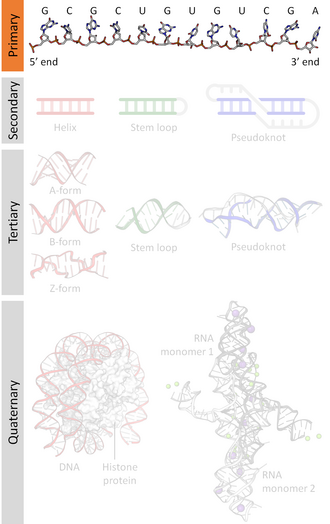
The Building Blocks: Nucleotides and Bases
Nucleic acids are composed of long chains of linked units called nucleotides. Each individual nucleotide is made up of three distinct subunits: a phosphate group, a sugar, and a nucleobase. The type of sugar determines the type of nucleic acid: deoxyribose is found in DNA, while ribose is found in RNA. These sugars form the backbone of the strand, with the nucleobases attached to them.
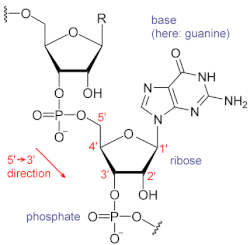
The nucleobases are critical because they facilitate base pairing, which allows the molecules to form higher-level secondary and tertiary structures, such as the iconic DNA double helix. In DNA, the four primary bases are adenine (A), cytosine (C), guanine (G), and thymine (T). In RNA, thymine is replaced by uracil (U).
Complementary Strands and Directionality
DNA is double-stranded, meaning it consists of two strands that are complementary to one another. This means that if one strand has an adenine (A), the corresponding position on the other strand will have a thymine (T). Sequences are conventionally read and written from the 5' end to the 3' end. In a double-stranded molecule, the strand that carries the coding information is known as the sense strand, while its partner is the antisense strand.
The Genetic Code and Protein Synthesis
The biological significance of these sequences lies in their ability to provide instructions for building proteins. This process is described by the central dogma of molecular biology: DNA is transcribed into messenger RNA (mRNA), which then travels to a ribosome to serve as a template for protein construction.
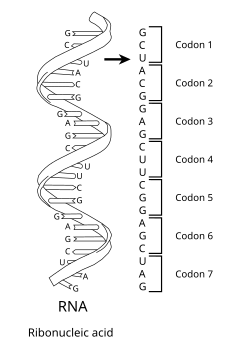
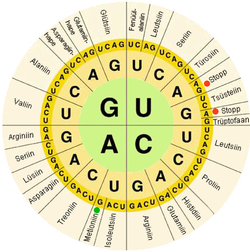
The translation of nucleic acids into proteins relies on the genetic code. This code is organized into groups of three bases known as codons. Each specific codon corresponds to a single amino acid. By arranging these codons in a specific order, the cell can construct complex protein strands that perform vital biological functions.
Understanding IUPAC Notation and Ambiguity
In scientific research, sequences are not always perfectly clear. Sometimes, a position in a sequence might be occupied by more than one possible nucleotide. To account for this, the International Union of Pure and Applied Chemistry (IUPAC) uses specific symbols to represent these ambiguities.
| Symbol | Meaning/Derivation | Possible Bases | Complement |
|---|---|---|---|
| A | Adenine | A | T (or U) |
| C | Cytosine | C | G |
| G | Guanine | G | C |
| T | Thymine | T | A |
| U | Uracil | U | A |
| W | Weak | A, T | W |
| S | Strong | C, G | S |
| M | Amino | A, C | K |
| K | Keto | G, T | M |
| R | Purine | A, G | Y |
| Y | Pyrimidine | C, T | R |
| N | Any Nucleotide | A, C, G, T | N |
Sequence Determination and Digital Analysis
DNA sequencing is the laboratory process used to determine the exact order of nucleotides in a DNA fragment. This technology is foundational to modern medicine, allowing researchers to identify genetic diseases and develop targeted treatments. While DNA is sequenced directly, RNA must first be converted into DNA using an enzyme called reverse transcriptase before it can be sequenced.
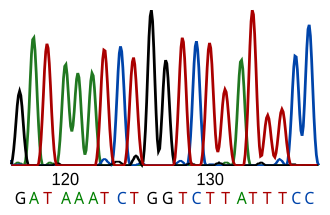
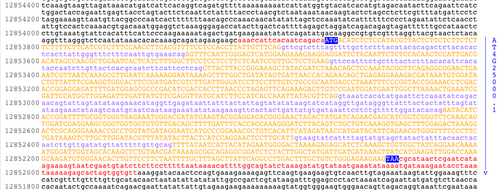
Once a sequence is determined, it is stored in silico (in a digital format). These digital sequences can be stored in massive databases, analyzed using bioinformatics tools, or even used as templates for artificial gene synthesis to create new DNA.
Key Facts
- Primary Structure: The linear sequence of nucleotides that defines the covalent structure of a nucleic acid.
- Codons: Sets of three nucleotides that correspond to a specific amino acid during protein synthesis.
- Directionality: Sequences are standardly read from the 5' end to the 3' end.
- Complementarity: DNA strands pair specifically (A with T, C with G).
- Bioinformatics: The use of computational tools to analyze digital genetic sequences.
- Genetic Testing: The analysis of DNA to diagnose inherited disorders or determine ancestry.
Frequently Asked Questions
What is the difference between DNA and RNA sequences?
The primary difference lies in the sugar and the bases used. DNA contains deoxyribose and the base thymine (T), whereas RNA contains ribose and uses uracil (U) instead of thymine.
How is the percentage difference between two sequences calculated?
To find the percent difference, you line up the two sequences and count the number of differences between the bases. You then divide that number by the total number of nucleotides in the sequence.
What is sequence alignment in bioinformatics?
Sequence alignment is the process of arranging DNA, RNA, or protein sequences to identify regions of similarity. These similarities can reveal functional, structural, or evolutionary relationships between different organisms.
What are sequence motifs?
Sequence motifs are specific patterns within a primary structure that are often critical for biological function, such as the Shine-Dalgarno sequence or the Kozak consensus sequence.
Why is DNA sequencing important for medicine?
Sequencing allows doctors and researchers to identify mutations associated with genetic diseases, diagnose vulnerabilities to inherited disorders, and develop new treatments for both genetic and contagious diseases.