Genome Science: The Blueprint of Life and Genetic Information
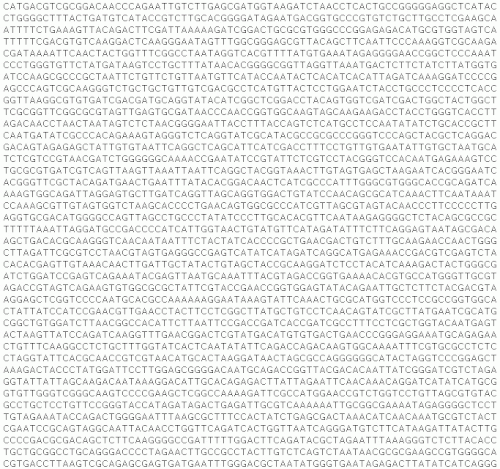
In the complex fields of molecular biology and genetics, a genome represents the complete set of genetic instructions required for an organism to function, develop, and reproduce. This biological blueprint consists of nucleotide sequences found in DNA, or in the case of certain viruses, RNA. By studying these sequences, scientists can uncover the fundamental mechanisms that drive life itself.
The study of these entire genetic sets is known as genomics. While early research focused on individual genes, modern genomics allows researchers to analyze entire genomes, providing insights into everything from evolutionary history to the potential for disease.
Key Facts
- A genome contains all the genetic information of an organism, including coding and non-coding regions.
- The first DNA genome sequence was the bacteriophage $\phi$X174, completed in 1977.
- Eukaryotic genomes are composed of one or more linear DNA chromosomes.
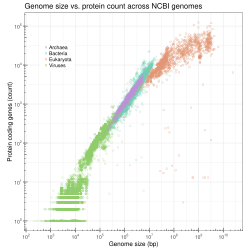
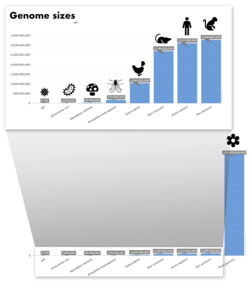
- Genome size does not necessarily correlate with an organism's morphological complexity.
- Transposable elements and repetitive DNA are major drivers of variation in genome size.
The Structure of Genomes
Genomes are categorized based on the type of organism they belong to, with distinct structural differences between viruses, prokaryotes, and eukaryotes.
Viral and Prokaryotic Genomes
Viral genomes can consist of either DNA or RNA. In the history of sequencing, the first complete nucleotide sequence of a viral RNA genome (Bacteriophage MS2) was established by Walter Fiers in 1976. Following this, the first DNA genome sequence, the phage $\phi$X174, was completed by Fred Sanger in 1977.
Prokaryotic genomes—belonging to organisms like bacteria and archaea—are generally simpler. The first bacterial genome, Haemophilus influenzae, was sequenced in 1995, and the first archaeon, Methanococcus jannaschii, was completed in 1996.
Eukaryotic Genomes
Eukaryotic genomes, which include plants, animals, and fungi, are typically composed of one or more linear DNA chromosomes. These organisms often possess a nuclear genome containing protein-coding and non-coding genes, as well as specialized genomes in organelles. For instance, most eukaryotes contain mitochondria with a small mitochondrial genome, and plants and algae contain chloroplasts with their own chloroplast genomes.
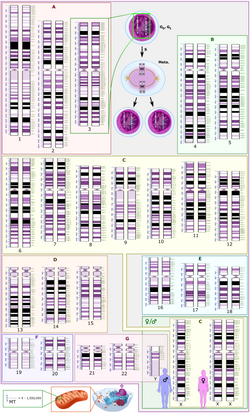
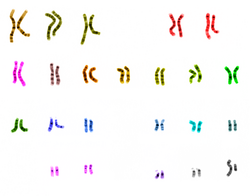
The complexity of eukaryotic chromosomes varies significantly. While some species like Jack jumper ants have only one pair of chromosomes, certain ferns possess as many as 720 pairs. In humans, the nuclear genome is divided into 24 linear molecules (chromosomes), ranging from 45 million to 248 million nucleotides in length.
Genome Composition: Coding vs. Non-coding DNA
A common misconception is that the genome's primary purpose is solely to provide instructions for proteins. However, a substantial portion of the genome consists of non-coding DNA. This includes regulatory sequences that control gene expression and large sections of repetitive DNA.
Tandem Repeats
Tandem repeats are short, non-coding sequences that repeat head-to-tail. These are categorized by their length:
- Microsatellites: 2–5 basepair repeats.
- Minisatellites: 30–35 basepair repeats.
These repeats can serve functional roles; for example, telomeres—the protective caps at the ends of chromosomes—are composed of the tandem repeat TTAGGG in mammals.
Transposable Elements
Transposable elements (TEs) are DNA sequences that can move within a genome. They are a major reason why eukaryotic genome sizes vary so widely. There are two main types of retrotransposons:
- LINEs (Long Interspersed Elements): These are autonomous elements that encode proteins like reverse transcriptase to facilitate their own movement. They make up approximately 17% of the human genome.
- SINEs (Short Interspersed Elements): These are non-autonomous and rely on LINEs to move. The Alu element is the most common SINE in primates, occupying about 11% of the human genome.
The Evolution of Genome Sequencing
The ability to map and sequence genomes has transformed biological science. A landmark achievement was the Human Genome Project, which began in 1990 and produced the first draft sequences in 2003. Recent technological advancements have made sequencing faster and more affordable, allowing for the sequencing of diverse species such as rice, mice, and even the extinct Neanderthal genome, which was extracted from a 130,000-year-old bone in 2013.
Summary of Genomic Milestones and Components
| Milestone/Component | Description/Year | Significance |
|---|---|---|
| Bacteriophage MS2 | 1976 | First complete viral RNA genome sequence |
| Phage $\phi$X174 | 1977 | First complete DNA genome sequence |
| Haemophilus influenzae | 1995 | First prokaryotic genome sequenced |
| Saccharomyces cerevisiae | 1996 | First eukaryotic genome sequenced |
| Human Genome Project | 1990–2003 | First draft of the human genome reported |
| LINEs | ~17% of human genome | Autonomous transposable elements |
Frequently Asked Questions
What is the difference between a genome and a gene?
A gene is a specific segment of DNA that contains the instructions for making a protein or performing a biological function. A genome is the entire collection of all genetic material within an organism, including all of its genes and non-coding sequences.
Why do some organisms have much larger genomes than others?
Genome size is not determined by how complex an organism is. Instead, size is largely driven by the expansion and contraction of repetitive DNA elements and transposable elements.
What is non-coding DNA?
Non-coding DNA refers to the parts of the genome that do not provide instructions for making proteins. This includes regulatory sequences that turn genes on or off, as well as repetitive sequences like tandem repeats and transposable elements.
What are transposable elements?
Transposable elements, often called "jumping genes," are DNA sequences that can move from one location to another within a genome. They play a significant role in driving genomic evolution and variation in genome size.
What is the role of mitochondria in the genome?
In most eukaryotes, mitochondria contain their own small, specialized genome that is separate from the main nuclear genome.