Molecular Genetics: The Science of DNA, Heredity, and Genomic Engineering
Molecular genetics is a specialized branch of biology that examines how the structure and expression of DNA molecules create variation among living organisms. By employing an investigative approach, scientists use genetic screens to determine the specific functions and structures of genes within a genome.
This multidisciplinary field emerged from the integration of several biological sciences, including classical Mendelian inheritance, cellular biology, molecular biology, biochemistry, and biotechnology. Together, these disciplines allow researchers to explore the molecular mechanisms behind gene regulation, expression, and the fundamental processes of life.
One of the primary objectives of molecular genetics is the identification and study of genetic mutations. By searching for existing mutations or inducing new ones, researchers can link a specific gene sequence to a phenotype (the observable physical characteristics of an organism). This methodology is critical for connecting mutations to genetic conditions, which ultimately aids in the development of treatments for various genetic diseases.
Key Facts
- Core Focus: Investigates how DNA structure and expression lead to biological variation.
- Foundation: Combines biochemistry, biotechnology, and cellular biology to study heredity.
- Primary Goal: Linking specific gene sequences to observable phenotypes to treat genetic diseases.
- Key Tools: Utilizes techniques like PCR, CRISPR/Cas9, and DNA sequencing.
- Modern Scope: Extends into genomics (whole genome study) and bioinformatics (computational analysis of genes).
The Evolution of Molecular Genetics
Early Discoveries and the Blueprint of Life
The journey toward understanding DNA began in 1869 when chemist Johann Friedrich Miescher isolated a molecule he called "nuclein" from white blood cells. He identified it as being composed of phosphorus, nitrogen, oxygen, and hydrogen. Later, Albrecht Kossel identified this as a nucleic acid, naming it deoxyribonucleic acid (DNA), and isolated the five essential nucleotides: adenine, guanine, thymine, cytosine, and uracil.
While Gregor Mendel established the principles of dominant and recessive inheritance using pea plants in the early 1800s, he did not know the chemical composition of genes. Later, Walther Flemming discovered chromosomes and the process of mitosis, which, along with the work of Theodor Boveri, led to the chromosomal theory of inheritance.
The Path to the Double Helix
A pivotal moment occurred in 1944 when Avery, McLeod, and McCarthy demonstrated that DNA was the material responsible for transformation—the process where bacteria take up and express foreign DNA. This suggested that DNA, not protein, was the genetic material of bacteria.
In 1950, Erwin Chargaff established that the amount of adenine equals thymine and guanine equals cytosine, and that base composition varies by species. Using these rules and X-ray crystallography data from Rosalind Franklin and Maurice Wilkins, James Watson and Francis Crick derived the 3-D double helix structure of DNA in 1953.
The Phage Group and the Sequence Hypothesis
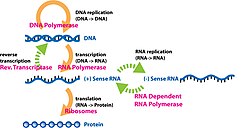
Between 1945 and 1970, an informal network known as the "phage group," led by Max Delbrück, used bacteriophages (viruses that infect bacteria) as model organisms. Their research elucidated how proteins function in DNA replication and repair. Notably, Sydney Brenner's work with "amber" mutants provided evidence for the sequence hypothesis, proving that the nucleotide sequence of a gene specifies the amino acid sequence of a protein.
Technological Breakthroughs in Genetic Engineering
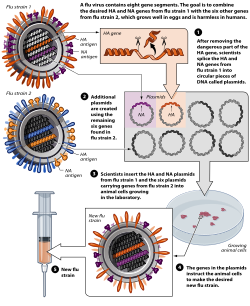
The field shifted toward active manipulation in 1969 with the discovery of restriction endonucleases (enzymes that cut DNA) by Arber and Linn. This enabled the use of electrophoresis and Southern blotting to identify specific DNA segments. By 1971, Paul Berg created the first recombinant DNA molecule, and by 1972, Cohen and Boyer produced the first recombinant DNA organism by inserting plasmids into E. coli.
The late 1970s saw the advent of DNA sequencing by Maxam, Gilbert, and Frederick Sanger, allowing scientists to relate genotypic sequences to phenotypes. In 1985, Kary Mullis invented the Polymerase Chain Reaction (PCR), which allows for the creation of millions of copies of a specific DNA sequence.
These advancements culminated in the sequencing of the first whole genome (Haemophilus influenzae) and the completion of the Human Genome Project in 2001. This gave rise to genomics and bioinformatics, the latter using computer analysis to compare genes across different species on an evolutionary scale.
Core Methodologies and Tools
Forward and Reverse Genetics
Forward genetics starts with a phenotype and works backward to find the responsible gene. Researchers use mutagens (chemicals or radiation) to create random mutations and then screen for the desired trait. In some cases, fluorescent reporters or antibiotic resistance genes are used to select specific mutants.
![An example of forward genetics in C. elegans (a nematode) using mutagenesis[34]](/images/32/d1/32d12d8e1a904d8e6fecb34230ecd621b79c4db1a848d620d0db38035afb4d64.jpg)
Conversely, reverse genetics begins with a known gene and alters it to observe what phenotype results. This is often used to determine the function of a specific DNA sequence.
Genetic Markers and Mapping
Microsatellites, also known as single sequence repeats (SSRs), are short segments of DNA (usually 6 nucleotides) that repeat at specific genomic locations. Because these repeats are highly unique to individuals and families, they are used in DNA fingerprinting, paternity testing, and constructing genetic maps to locate disease-causing mutations.
Modern Applications of Molecular Genetics
Genetic Engineering and Gene Editing
Modern science leverages molecular genetics to create genetically modified organisms for medicine, agriculture, and industry. A breakthrough in this area is CRISPR/Cas9, a technique adapted from bacterial immune systems. It uses a guide RNA to direct the Cas9 protein to a specific DNA location, where it makes a precise cut. Scientists then use the cell's own repair pathways to edit the genome.
Personalized Medicine and Forensics
The ability to analyze individual genomes has led to personalized medicine, where treatments are tailored to a patient's genetic makeup. Additionally, forensic genetics utilizes DNA profiling to identify individuals in legal investigations.
| Era/Year | Discovery/Technique | Key Figure(s) | Impact |
|---|---|---|---|
| 1869 | Isolation of Nuclein | J.F. Miescher | First discovery of DNA molecule |
| 1953 | Double Helix Structure | Watson & Crick | Revealed how DNA stores information |
| 1970s | DNA Sequencing | Sanger, Maxam, Gilbert | Enabled reading of genetic codes |
| 1985 | PCR | Kary Mullis | Mass amplification of DNA sequences |
| 2001 | Human Genome Project | International Consortium | Mapped the entire human genetic blueprint |
| Modern | CRISPR/Cas9 | Various | Precise, targeted genome editing |
Frequently Asked Questions
What is the difference between forward and reverse genetics?
Forward genetics starts with an observed physical trait (phenotype) and seeks to identify the gene responsible for it. Reverse genetics starts with a known gene and modifies it to see how that change affects the organism's traits.
How does CRISPR/Cas9 work?
CRISPR/Cas9 uses a specialized RNA guide sequence to lead the Cas9 protein to a specific location in the genome. The protein then cuts the DNA, allowing scientists to use the cell's natural repair mechanisms to delete or insert genetic material.
What are microsatellites used for?
Microsatellites are short, repeating DNA sequences that vary significantly between individuals. They are used as genetic markers for DNA fingerprinting, paternity tests, and mapping genes associated with specific diseases.
What is the role of bioinformatics in genetics?
Bioinformatics is the use of computer science and software to analyze and compare large sets of genetic data. It allows researchers to study evolutionary relationships and identify mutations across different species.
What was the significance of the Phage Group?
The Phage Group used bacteriophages to understand the molecular basis of DNA replication, repair, and recombination, and they provided critical evidence that the nucleotide sequence of a gene determines the amino acid sequence of a protein.