Rhenium: The Rare Metal Powering Modern Aviation
Rhenium is a rare, silvery-grayish transition metal known for its extraordinary heat resistance and density. Positioned in group 7 and period 6 of the periodic table, it is one of the most elusive stable elements in nature. While it may not be a household name, rhenium is critical to the aerospace industry and the production of high-octane fuels, making it a cornerstone of modern industrial engineering.
Because of its scarcity and the difficulty of its extraction, rhenium is one of the most expensive elements on Earth. Its value fluctuates based on demand from the aviation sector and the efficiency of recycling programs.

Key Facts
- Atomic Number: 75
- Symbol: Re
- Melting Point: 3,186 °C (one of the highest of all elements)
- Primary Use: Nickel-based superalloys for jet engines
- Natural Occurrence: Primordial; often found in molybdenite
- Discovery: Rediscovered in 1925 by Walter Noddack, Ida Noddack, and Otto Berg
History and Discovery
The history of rhenium is marked by a notable scientific error. It was first discovered in 1908 by Masataka Ogawa, who mistakenly identified it as element 43 (technetium) and named it "nipponium." It wasn't until 1925 that Walter Noddack, Ida Noddack, and Otto Berg correctly identified it as element 75.
The element was named after the river Rhine (Latin: Rhenus), as the earliest commercial samples were obtained from that region. The researchers found rhenium in platinum ore, columbite, gadolinite, and molybdenite. To illustrate the rarity of the metal, the team had to process 660 kg of molybdenite just to extract a single gram of rhenium in 1928.
Physical and Chemical Properties
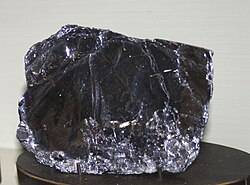
Rhenium is a refractory metal, meaning it possesses an extremely high melting point (3,459 K), allowing it to maintain structural integrity at temperatures that would melt most other metals. In its commercial form, it is typically a powder that can be consolidated through pressing and sintering in a vacuum or hydrogen atmosphere.
When annealed, the metal becomes highly ductile, allowing it to be rolled, coiled, or bent. It also exhibits superconductivity (the ability to conduct electricity without resistance) at 1.697 K. When alloyed with molybdenum or tungsten, the superconductive threshold shifts to between 4 K and 10 K.
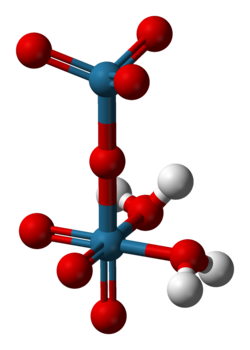
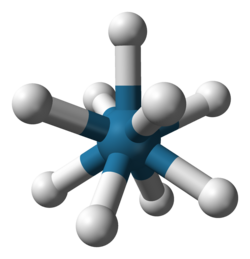
Chemically, rhenium is versatile, with common oxidation states of +4 and +7. Its most common oxide is the volatile yellow Re2O7, while the red rhenium trioxide (ReO3) features a perovskite-like structure.
Atomic and Physical Specifications
| Property | Value |
|---|---|
| Standard Atomic Weight | 186.207 ± 0.001 u |
| Density (at 20°C) | 21.010 g/cm³ |
| Melting Point | 3,186 °C (5,767 °F) |
| Boiling Point | 5,630 °C (10,170 °F) |
| Mohs Hardness | 7.0 |
| Crystal Structure | Hexagonal close-packed (hcp) |
Industrial Applications
Aerospace Superalloys
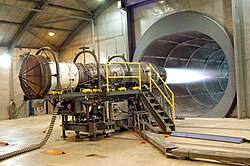
The most significant use of rhenium is in the creation of nickel-based superalloys. These materials are engineered to withstand the extreme heat and mechanical stress found in jet engines. Rhenium is added (up to 6% by weight) to combustion chambers, turbine blades, and exhaust nozzles to prevent deformation at high temperatures.

Chemical Catalysis
Rhenium serves as an exceptional catalyst for hydrogenation (adding hydrogen to a molecule) and isomerization (rearranging the structure of a molecule). A primary example is the "rheniforming process," where rhenium is used in the catalytic reforming of naphtha to produce high-quality gasoline.
Safety and Toxicity
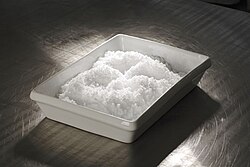
Because rhenium is used in such small quantities, comprehensive toxicity data is limited. However, tests on rats indicate that soluble salts vary in toxicity. Potassium perrhenate showed very low toxicity (LD50 of 2800 mg/kg), comparable to table salt, while rhenium trichloride was more potent with an LD50 of 280 mg/kg.
Frequently Asked Questions
Why is rhenium so expensive?
Rhenium is expensive due to its extreme rarity in the Earth's crust and the labor-intensive process required to extract it from minerals like molybdenite. High demand from the aerospace industry further drives its price.
What is the primary use of rhenium in jet engines?
It is used in nickel-based superalloys to enhance the heat resistance and strength of turbine blades and combustion chambers, allowing engines to operate at higher, more efficient temperatures.
How was rhenium discovered?
It was first misidentified as element 43 by Masataka Ogawa in 1908. It was correctly identified as element 75 in 1925 by Walter Noddack, Ida Noddack, and Otto Berg.
Is rhenium toxic?
Very little is known about its overall toxicity, but specific compounds vary; potassium perrhenate is considered to have very low toxicity, while rhenium trichloride is more toxic.
What is the rheniforming process?
Rheniforming is a catalytic reforming process that uses rhenium to convert naphtha into high-octane gasoline components through hydrogenation and isomerization.