Ethanol: Properties, Production, and Global Applications
Ethanol, also known as ethyl alcohol or grain alcohol, is a versatile organic compound that plays a critical role in modern industry, medicine, and energy. A colorless liquid with a characteristic wine-like, pungent odor, ethanol is a fundamental building block in organic chemistry and a primary component in many consumer products.
Whether it is being used as a fuel additive to reduce reliance on pure petroleum, a disinfectant in medical settings, or a solvent in chemical synthesis, ethanol's unique physical and chemical properties make it indispensable. This article examines the science behind ethanol, how it is produced, and its diverse range of applications.

Key Facts
- Chemical Formula: C₂H₆O
- Molar Mass: 46.069 g/mol
- Primary Production Methods: Fermentation of sugars and ethylene hydration.
- Global Fuel Production: Approximately 112.0 gigalitres as of 2023.
- Major Producers: The United States (51%) and Brazil (26%).
- Solubility: Completely miscible in water.
Chemical Structure and Physical Properties
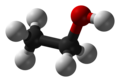
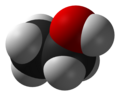
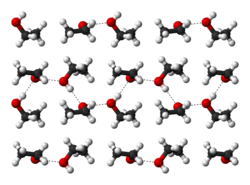
At its molecular core, ethanol consists of two carbon atoms, six hydrogen atoms, and one oxygen atom. Its structure allows for hydrogen bonding, a type of intermolecular force that significantly influences its boiling point and solubility.

Physically, ethanol is a liquid at room temperature with a boiling point of approximately 78.23 °C. It is slightly more refractive than water and possesses a density of 0.78945 g/cm³ at 20 °C. One of its most notable chemical characteristics is its ability to form an azeotrope with water. An azeotrope is a mixture of liquids that maintains a constant boiling point and composition throughout distillation; for ethanol and water, this occurs at roughly 95.6% ethanol by mass.
Summary of Physical Constants
| Property | Value |
|---|---|
| Molar Mass | 46.069 g/mol |
| Boiling Point | 78.23 °C |
| Melting Point | −114.14 °C |
| Density (at 20 °C) | 0.78945 g/cm³ |
| Flash Point (Absolute) | 14 °C |
| Refractive Index | 1.3611 |
Production Methods
Ethanol is produced through two primary industrial pathways: biological fermentation and chemical hydration.
Fermentation
The most common method for producing ethanol is fermentation. This biological process involves culturing yeast under controlled thermal conditions (typically 35–40 °C). The yeast consumes sugars, converting them into ethanol and carbon dioxide. Because ethanol is toxic to yeast at high concentrations, the process is usually limited to about 18% ethanol by volume, after which distillation is required to increase purity.
Ethylene Hydration
In industrial petrochemical settings, ethanol can be synthesized via the hydration of ethylene (C₂H₄). This process involves reacting ethylene with water, often using an acid catalyst like sulfuric acid, to produce ethanol directly.
Diverse Applications of Ethanol
The utility of ethanol spans several major sectors, from energy to healthcare.
Energy and Fuel
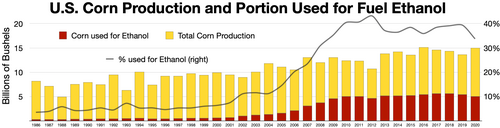
Ethanol is a significant renewable energy source. It is frequently blended with gasoline to create mixtures such as E10 (10% ethanol) or E85 (85% ethanol). As of 2023, global ethanol fuel production reached 112.0 gigalitres, with the U.S. and Brazil leading the market. In the United States, a significant portion of corn production is dedicated to ethanol manufacturing.
Medical and Laboratory Use
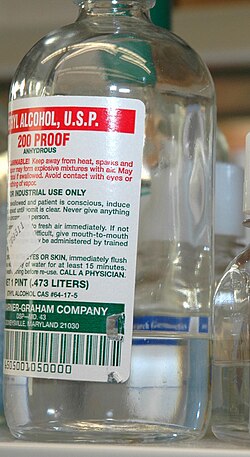
In medicine, ethanol serves as an antiseptic and disinfectant due to its ability to kill microorganisms. It is also used as a solvent for various medications and acts as a critical antidote in cases of methanol or ethylene glycol poisoning. High-purity grades, such as USP grade ethanol, are essential for laboratory and pharmaceutical applications.
Chemical Synthesis
Chemists use ethanol as a solvent and a reagent in the synthesis of organic compounds. It can undergo various reactions, including esterification (reacting with carboxylic acids to form esters) and dehydration (to produce ethylene).
Safety and Hazards
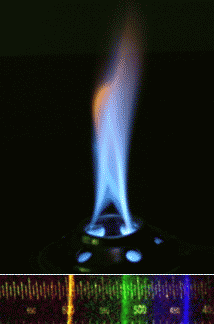
While widely used, ethanol is classified as a flammable liquid. It has a relatively low flash point (14 °C for absolute ethanol), meaning it can ignite easily at or below room temperature if an ignition source is present. Safety protocols, such as the NFPA 704 diamond, are used to communicate its fire hazard (rated 3) and health risks.

Frequently Asked Questions
What is the difference between absolute ethanol and denatured ethanol?
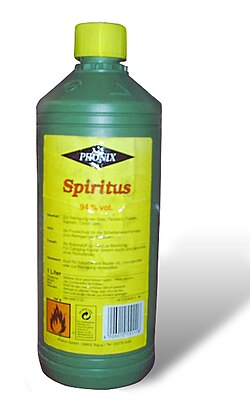
Absolute ethanol is highly pure, whereas denatured ethanol has additives (denaturants) mixed in to make it unfit for human consumption, often for tax or safety reasons in household products.
How is ethanol purified beyond 95.6%?
Since ethanol and water form an azeotrope at 95.6%, standard distillation cannot reach higher purity. To obtain absolute ethanol, an entraining agent like benzene or cyclohexane is added to form a new ternary azeotrope, which is then removed.
Is ethanol a renewable resource?
Yes, when produced via the fermentation of crops like corn or sugarcane, ethanol is considered a renewable biofuel.
What are the main hazards associated with ethanol?
The primary hazards are its high flammability and its potential to cause eye irritation. It is classified as a Class 3 Hazardous Material in concentrations above 2.35% by mass.
Can ethanol be used as a fuel in cars?
Yes, many countries use ethanol-gasoline blends like E10 or E85. Some vehicles, such as the original Ford Model T, were designed to run on ethanol or petrol.