Reutlingen: The Gateway to the Swabian Jura
Nestled in the southwest corner of Germany, Reutlingen serves as the capital of its eponymous district in the state of Baden-Württemberg. Known as the "Gateway to the Swabian Jura" (Das Tor zur Schwäbischen Alb), this vibrant city blends a rich industrial heritage with medieval charm. From its world-record-breaking narrow street to its prestigious university, Reutlingen is a key center of the Neckar-Alb region.
The city is strategically located approximately 35 km south of Stuttgart, the state capital. The Echaz river, a tributary of the Neckar, winds through the city center, providing a scenic backdrop to a town that has evolved from a medieval settlement into a modern hub of machinery, steel, and leather manufacturing.
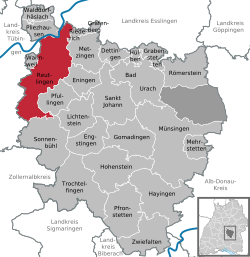
Key Facts
- World Record: Home to Spreuerhofstraße, the narrowest street in the world (31 cm wide).
- Population: Approximately 118,852 as of December 31, 2024.
- Education: Host to Reutlingen University, a university of applied sciences founded in 1855.
- Industry: A historic center for textiles, machinery, and steel production.
- Geography: Situated at an elevation of 382 meters, adjacent to the Swabian Jura.
Geography and Climate
Reutlingen is a pivotal part of the larger Stuttgart Metropolitan Region. Its proximity to the Swabian Jura mountains defines much of its character and landscape. Together with the nearby university town of Tübingen, it forms the heart of the Neckar-Alb region.
The local climate is temperate, with an average annual temperature of 10.1°C. The city experiences its warmest months in July and August, while precipitation is relatively evenly distributed throughout the year, totaling approximately 770.3 mm annually.
| Metric | Winter (Jan) | Spring (Apr) | Summer (Jul) | Autumn (Oct) | Annual Average |
|---|---|---|---|---|---|
| Mean Temp (°C) | 1.2 | 10.0 | 19.4 | 10.0 | 10.1 |
| Precipitation (mm) | 43.3 | 48.8 | 96.0 | 60.4 | 770.3 |
| Sunshine Hours | 61.2 | 179.9 | 240.1 | 113.1 | 1,754 |
A Journey Through History
The roots of Reutlingen stretch back to the 4th or 5th century. By 1030, Count Egino established a castle atop the Achalm, one of the district's highest peaks. The city's name first appeared in the Bempflingen Treaty around 1089–90, an inheritance agreement involving the Zwiefalten Monastery.
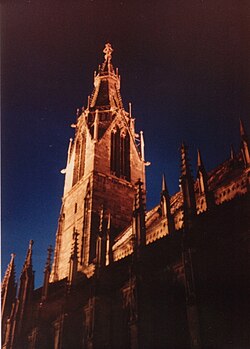
Reutlingen grew rapidly in the 12th century, receiving market privileges from Frederick Barbarossa in 1180. By the mid-13th century, it attained city status, leading to the construction of defensive walls and the iconic St. Mary's Church (Marienkirche), built between 1247 and 1343.
The city's political history is marked by its struggle for independence. After victories by the Swabian League, Reutlingen became an Imperial City of the Holy Roman Empire, free from the rule of the Duke of Württemberg. However, this independence ended in 1803 during the German Mediatisation following the French Revolutionary Wars.
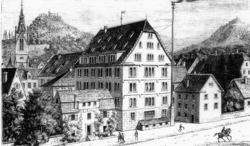
Tragedy struck in 1726 when a devastating fire destroyed 80% of residential homes and nearly all public buildings over three days. In more recent history, the city was a target of Allied bombing raids during World War II due to the manufacture of V-1 flying bomb wings. Post-war reconstruction was led by Oskar Kalbfell, the city's first democratically elected mayor after the war.
City Highlights and Culture
Architectural Landmarks
Visitors to Reutlingen can explore a variety of historic sites, including the Gothic Church of the Virgin Mary and the 16th-century Marktbrunnen (Market Fountain). The Spitalhof, originally a 14th-century hospital, and the 14th-century Church of St. Nicholas further showcase the city's medieval heritage.
The most unique attraction is Spreuerhofstraße, officially recognized as the narrowest street in the world, measuring only 31 centimeters at its tightest point.
Local Traditions and Education
Reutlingen maintains a unique cultural tradition called Mutscheltag (the first Thursday after Epiphany). During this event, citizens gather to play dice games for "Mutschel" loaves of bread, a custom found nowhere else.
In the realm of education, Reutlingen University stands as a pillar of the community. Founded in 1855 as a weavers' school, it has evolved into a globally connected university of applied sciences. It is particularly renowned for its focus on practical learning, requiring mandatory internships for all business majors.
Transport and Infrastructure
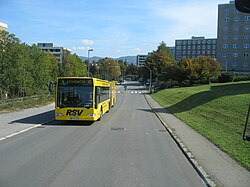
The city is well-connected via the Reutlinger Stadtverkehr (RSV) bus system. Rail services are provided by Deutsche Bahn and Abellio Rail Baden-Württemberg, with key stations located at Reutlingen Hauptbahnhof, Reutlingen West, Sondelfingen, and Betzingen.
Frequently Asked Questions
What is the narrowest street in the world?
The narrowest street in the world is Spreuerhofstraße, located in Reutlingen, Germany, with a minimum width of 31 cm.
What is Reutlingen University known for?
Reutlingen University is a university of applied sciences that began as a weavers' school in 1855. It is known for its practical approach to education and its extensive international cooperation network.
What is Mutscheltag?
Mutscheltag is a unique local tradition celebrated on the first Thursday after Epiphany, where residents play dice games to win Mutschel loaves of bread.
What is the "Gateway to the Swabian Jura"?
This is a nickname for Reutlingen because of its geographical position immediately adjacent to the Swabian Jura (Schwäbische Alb) mountain range.
Which major historical event devastated the city in 1726?
A massive fire swept through the city in 1726, lasting three days and destroying 80% of residential houses and most public buildings.