Republic of the Congo
The Republic of the Congo, often referred to as Congo-Brazzaville to distinguish it from its larger neighbor, is a nation located in Central Africa. Defined by its lush landscapes and complex political history, the country is a unitary semi-presidential republic. With its capital in Brazzaville, the nation serves as a vital hub in the heart of the continent, blending a rich indigenous heritage with a colonial legacy from France.
From the ancient kingdoms of the western Congo Basin to its modern status as an oil-producing state, the Republic of the Congo has navigated a turbulent path toward stability and development.
Key Facts
- Capital: Brazzaville
- Official Language: French (National languages include Lingala and Kituba)
- Government: Unitary semi-presidential republic
- Currency: Central African CFA franc (XAF)
- Population: Approximately 6.2 million (2023 estimate)
- Major Ethnic Groups: Bakongo (41%), Bateke (16.9%), and Mbochi (13.1%)
History and Political Evolution
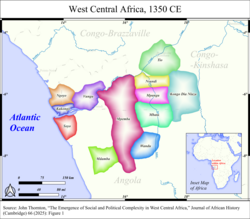
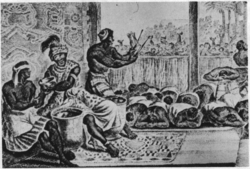
The region's history is marked by the rise and fall of various states, including the Kingdom of Loango (c. 1550 – c. 1883). By 1882, the area became French Congo, later being administered under French Equatorial Africa from 1910 until 1958.
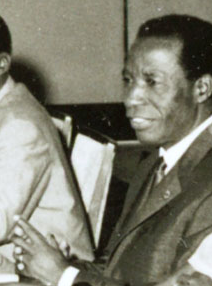
The Republic was officially established on November 28, 1958. However, the following decades were characterized by political volatility. A coup in 1968 led to the establishment of the People's Republic of the Congo on December 31, 1969, which adopted a political economic strategy known as scientific socialism—a Marxist-Leninist approach to state planning.
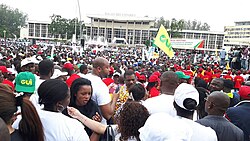
The People's Republic was disestablished in March 1992, but the transition to a new system was marred by two major civil wars: the first from 1993 to 1994 and the second from 1997 to 1999. More recently, the country adopted a new constitution in 2015 following a referendum, though the process was met with disputes and demonstrations.
Geography and Biodiversity
Covering a total area of 342,000 square kilometers, the Republic of the Congo is characterized by its dense rainforests and river systems. Water makes up approximately 3.3% of its total land area. The climate is typically tropical, as seen in the weather patterns of the capital city.
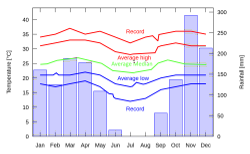
The nation is a biodiversity hotspot, most notably home to the Forest Massif of Odzala-Kokoua, a UNESCO World Heritage site. These forests provide critical habitats for various species, including significant populations of gorillas.
Government and Administration
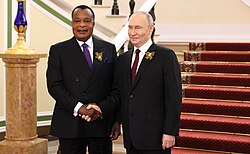
The current government is led by President Denis Sassou Nguesso and Prime Minister Anatole Collinet Makosso. The legislative branch is a bicameral Parliament consisting of the Senate (upper house) and the National Assembly (lower house).
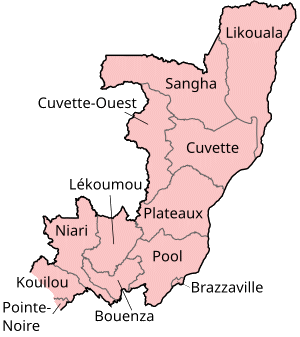
Administratively, the country is divided into 12 departments, which facilitate local governance across its diverse terrain.
Economy and Demographics
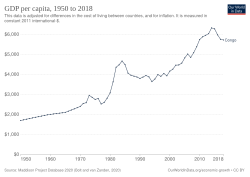
The economy of the Republic of the Congo is heavily influenced by its natural resources. While the GDP per capita has seen fluctuations over the decades, the nation continues to rely on its extractive industries.
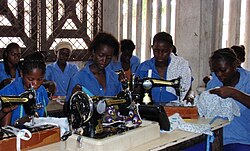
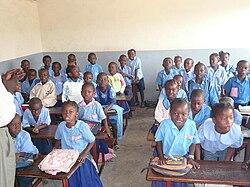
The population is diverse, with the Bakongo being the largest ethnic group. Religion plays a central role in social life, with Christianity (predominantly Catholic and Protestant) practiced by 87.1% of the population. Education and vocational training, such as sewing and primary schooling, remain key focuses for national development.
| Category | Detail |
|---|---|
| Total Area | 342,000 km² |
| GDP (Nominal 2025 Est.) | $15.281 billion |
| GDP per capita (Nominal 2025 Est.) | $2,360 |
| HDI (2023) | 0.649 (Medium) |
| Population Density | 19/km² |
Frequently Asked Questions
What are the official and national languages of the Republic of the Congo?
French is the official language, while Lingala and Kituba are the recognized national languages.
Who is the current President of the Republic of the Congo?
The current President is Denis Sassou Nguesso.
What is the currency used in the Republic of the Congo?
The country uses the Central African CFA franc (XAF).
Which are the largest cities in the country?
The largest city is the capital, Brazzaville, followed by Pointe-Noire.
What is the primary religion in the Republic of the Congo?
Christianity is the primary religion, practiced by 87.1% of the population, with Catholicism being the most prominent denomination.