Louisiana Voodoo: The History and Traditions of a Syncretic Faith
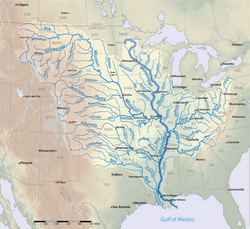
Louisiana Voodoo, often referred to as New Orleans Voodoo, was a complex African diasporic religion that flourished in Louisiana and the broader Mississippi River valley from the 18th century through the early 20th century. Rather than a monolithic faith, it emerged as a result of syncretism—the blending of different beliefs—combining traditional West and Central African religions, Haitian Vodou, and Roman Catholicism.
Unlike many organized religions, Louisiana Voodoo had no central governing authority. Instead, it operated through autonomous, independent groups, each maintaining its own unique approach to spirituality and ritual.
Key Facts
- Origins: Formed from the blending of Bambara and Bakongo traditions, Catholicism, and Haitian Vodou.
- Geography: Centered in New Orleans but spread as far north as St. Joseph, Missouri.
- Leadership: Primarily led by priestesses, most notably the famous Marie Laveau.
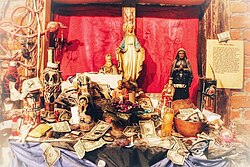
- Core Practices: Included the use of altars, animal sacrifices, and the creation of gris-gris (material charms).
- Timeline: Active from the 1700s until its decline in the early 20th century.
The Evolution of a Diaspora Faith
African Roots and Colonial Influence
The foundations of the religion were laid in the early 18th century when enslaved West and Central Africans—predominantly from the Bambara and Bakongo peoples—were brought to the French colony of Louisiana. These practitioners merged their ancestral beliefs with the Catholicism of the French colonists. This spiritual evolution continued as the region transitioned to Spanish control and eventually became part of the United States in 1803.
The Haitian Influence
A pivotal shift occurred in the early 19th century following the Haitian Revolution. Between 15,000 and 20,000 migrants from Saint-Domingue (modern-day Haiti) arrived in the Mississippi River Valley. These refugees, comprising African, European, and mixed-descent individuals, brought with them Haitian Vodou, which significantly reinforced and shaped the existing Voodoo practices in Louisiana.
Later in the 1840s, the religion was further influenced by Spiritualism from the northeastern United States, leading to the adoption of the term "séance" for certain Voodoo ceremonies.
Beliefs, Deities, and Rituals
The Pantheon and Catholic Syncretism
Because practitioners were often forced to adopt Catholicism, they associated African deities with Catholic saints based on shared characteristics. For example, Papa Lébat, a deity seen as an opener of ways, was linked to Saint Peter, who is traditionally depicted holding the keys to heaven. Similarly, Mama You was associated with the Virgin Mary.
Other prominent deities included Blanc Dani and the Grand Zombi. In the late 19th century, supplications to saints became a primary focus, with Saint Anthony of Padua being particularly popular among the Bakongo-descended population.
Ritual Practices and Gris-Gris
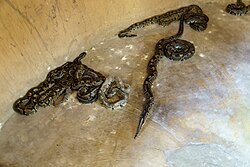
Voodoo was practiced through independent groups led by a priest or, more commonly, a priestess. Membership was typically granted through an initiation ceremony. Rituals often took place at altars involving animal sacrifices and, in some cases, the use of live snakes.
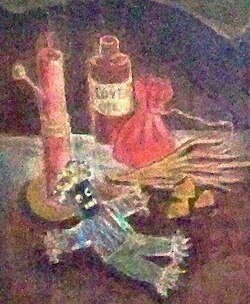
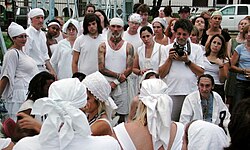
A central element of the practice was the creation of gris-gris—material charms used for various purposes, ranging from healing the sick to casting curses. Major communal celebrations were held on Saint John's Eve (June 23 or 24), which often involved large gatherings on the shores of Lake Pontchartrain.
Social Dynamics and Persecution
The Role of Women and Marie Laveau
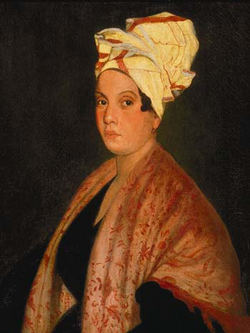
Free women of color held the most significant leadership roles in New Orleans Voodoo. The most famous of these was Marie Laveau, known as "the Voodoo Queen." Laveau was a powerful figure who balanced her Voodoo leadership with her Catholic faith. Her influence was vast; in 1874, one of her rites on Lake Pontchartrain attracted approximately 12,000 attendees of both Black and white descent.
Legal Restrictions and Decline
While Voodoo was never explicitly banned, the government used restrictive laws to hinder its practice. In 1817, an ordinance prohibited enslaved people from dancing except on Sundays and in designated areas, such as Congo Square. By the mid-19th century, fear of slave rebellions led to increased police disruption and the arrest of several female practitioners.
The religion began to decline in the late 19th century. By the early 20th century, public practitioners had vanished, and by the 1940s, there was little evidence of the religion being actively practiced as an organized system. Some elements survived, however, through the tradition of hoodoo.
Legacy and Modern Tourism
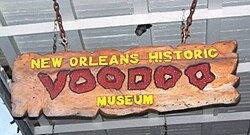
Following the civil rights movement of the 1950s and 60s, New Orleans began to embrace African American culture as a key part of its heritage. This led to the commercialization of Voodoo for tourism. In 1972, the New Orleans Historic Voodoo Museum was established, and various shops in the French Quarter began selling Voodoo-themed paraphernalia.
| Feature | Details |
|---|---|
| Primary Influences | West/Central African (Bambara, Bakongo), Haitian Vodou, Catholicism |
| Key Figures | Marie Laveau (The Voodoo Queen) |
| Key Deities | Blanc Dani, Papa Lébat, Grand Zombi |
| Sacred Sites | Lake Pontchartrain, Bayou St. John, Congo Square |
| Core Artifacts | Gris-gris (charms), Altars |
| Peak Period | 1820s–1830s (Economic boom of New Orleans) |
Frequently Asked Questions
Was Louisiana Voodoo the same as Haitian Vodou?
No, although they are closely related. Louisiana Voodoo was a distinct syncretic blend that included West and Central African traditions and Catholicism. However, it was heavily influenced by Haitian Vodou when thousands of migrants arrived from Saint-Domingue in the early 19th century.
Who was Marie Laveau?
Marie Laveau was the most prominent "Voodoo Queen" of 19th-century New Orleans. A free woman of color and a baptized Catholic, she led a powerful religious following and was known for her charms and large-scale rites on Lake Pontchartrain.
What is a gris-gris?
A gris-gris is a material charm produced within the Voodoo tradition. These objects were used by practitioners for various spiritual purposes, most commonly for healing or for casting curses.
Why did Louisiana Voodoo decline?
The decline was caused by a combination of factors, including legal restrictions on gatherings, public opposition, the influence of Christianity, and systemic suppression by the legal system.
Did white people practice Louisiana Voodoo?
Yes. While primarily practiced by Black people, historical records and police raids indicate that Voodoo groups were often racially integrated, and many of Marie Laveau's clients were white.