Pointe-Noire: The Economic Powerhouse of the Republic of the Congo
Situated on a strategic headland between the Atlantic Ocean and Pointe-Noire Bay, Pointe-Noire serves as the second largest city and the primary economic engine of the Republic of the Congo. Known locally in Kongo as Njinji, this coastal hub is more than just a port; it is an autonomous department and commune that bridges the gap between the interior of Central Africa and global trade networks.
With a population of 1,420,612 as of the 2023 census, the city is a melting pot of cultures, predominantly inhabited by the Bakongo people, specifically the Bavili. Its strategic location near the border with Angola has historically made it a focal point for exploration, trade, and industrial development.
Key Facts
- Population: 1,420,612 (2023 Census)
- Status: Autonomous department and commune
- Primary Industry: Oil and gas production
- Official Language: French (National language: Kituba)
- Founded: 1883
- HDI: 0.692 (Medium), ranking 2nd out of 12 departments
Historical Evolution
Before European arrival, the area was centered around the fishing village of Ndji-Ndji under the dominion of the Kingdom of Loango. The name "Pointe-Noire" (Black Point) was coined by Portuguese navigators in 1484, who observed black rock outcroppings on the headland.
France acquired the land on March 12, 1883, through a treaty with King Manimacosso-Chicusso, officially founding the city that year. A pivotal moment in the city's growth occurred in 1923 when it was selected as the terminus for the Congo-Ocean Railway. This railway was designed to connect the Atlantic coast with Brazzaville, bypassing the impassable rapids of the Congo River. The project was completed in 1934, cementing the city's role as a logistics hub.
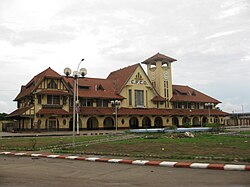
Throughout the mid-20th century, the city expanded rapidly. It briefly served as the capital of the Middle Congo in 1950 before the capital was transferred back to Brazzaville in 1958 due to political tensions. Following independence in 1960, the discovery of oil around 1980 triggered an economic boom, attracting international firms like Elf-Aquitaine and causing the population to surge.
Administration and Urban Structure
Pointe-Noire is organized as a commune divided into six urban boroughs, known as arrondissements:
- Lumumba: The oldest district and the city's administrative and commercial heart.
- Mvoumvou
- Tié-Tié
- Loandjili
- Mongo-Mpoukou
- Ngoyo
As a department, its jurisdiction also includes the district of Tchiamba-Nzassi, which was integrated in 2011.
Economy and Infrastructure
The economy of Pointe-Noire is dominated by the oil industry, making it a critical center for one of Central Africa's leading oil producers. While oil drives the wealth, the city also maintains a significant fishing industry, though this sector often faces challenges due to overfishing and competition with oil development.
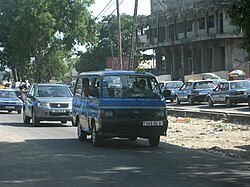
Transportation is a cornerstone of the city's functionality. The Port Autonome de Pointe-Noire is a member of the International Association of Ports and Harbors (IAPH) and handles the bulk of the region's maritime trade. For air travel, the Agostinho-Neto International Airport provides direct connections to major cities including Paris, Istanbul, Addis Ababa, and Luanda.
Education and Research
The city is a regional center for higher learning, offering a mix of public and private institutions. Notable schools include the Lycée Français Charlemagne and Connie's Academy. Specialized higher education is provided by the École Supérieure de Technologie du Littoral and the Loango Institute of Advanced Technology, which focuses on computer science, artificial intelligence, and cybersecurity.
Climate and Geography
Pointe-Noire features a tropical savanna climate. The year is split into a wet season (October to April) and a dry season (May to September). The city receives approximately 1,000mm to 1,304mm of annual precipitation.
| Season | Avg Max Temp | Avg Min Temp | Precipitation |
|---|---|---|---|
| Wet Season (Oct-Apr) | ~30°C | ~24°C | High (Peak Feb) |
| Dry Season (May-Sep) | ~26°C | ~22°C | Low (Min Jul) |
Frequently Asked Questions
Why is Pointe-Noire economically important to the Congo?
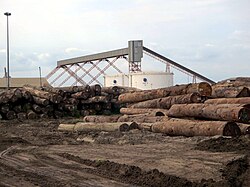
It is the essential center of the Republic of Congo's oil industry and hosts the country's primary deep-sea port, facilitating the export of oil and timber.
What is the significance of the Congo-Ocean Railway?
The railway connects the Atlantic coast at Pointe-Noire to the capital, Brazzaville, overcoming the natural barrier of the Congo River's rapids.
What are the primary languages spoken in the city?
French is the official language, while Kituba is the national language spoken by the population.
Which ethnic group is most prominent in Pointe-Noire?
The city is mostly inhabited by the Bakongo people, with a particular prevalence of the Bavili subgroup.
What is the weather like in Pointe-Noire?
The city has a tropical savanna climate with a distinct wet season from October to April and a cooler, drier season from May to September.