Renaissance Reenactment: Bringing the Age of Exploration to Life
Renaissance reenactment is the practice of recreating historical events from the Renaissance period and the European Age of Exploration. This immersive form of living history allows participants and spectators to step back in time, bridging the gap between modern life and the transformative eras that shaped the Western world.
In its broadest application, this practice encompasses a wide chronological range, typically spanning from the early 15th century through the mid-18th century. To maintain historical clarity, events occurring before this window are generally classified as medieval reenactment, while those occurring after are categorized as modern reenactment.
Regional Focus and Historical Events
Because the Renaissance and the Age of Exploration affected different nations in unique ways, the focus of reenactments varies significantly by region. These events often center on pivotal conflicts, political shifts, and the early stages of global colonization.
- United Kingdom: Focuses heavily on the English Civil War.
- Low Countries (Netherlands): Centers on the Eighty Years' War.
- Switzerland: Commemorates L'Escalade.
- Eastern Europe: Highlights the Polish–Lithuanian Commonwealth.
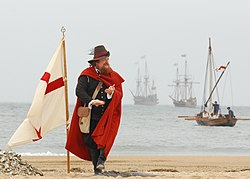
- North America: Focuses on the early colonial period in the United States and Canada.
These reenactments serve as educational tools, utilizing costumes, weaponry, and period-accurate behaviors to illustrate the complexities of the era.
Renaissance Fairs and Authenticity
A prominent aspect of this movement, particularly in the United States, is the Renaissance fair. While these fairs are often considered part of Renaissance reenactment when they are grounded in historical fact, they occupy a unique space in the hobby.
There is often a distinction between strict historical reenactment and the fair atmosphere. While some events prioritize rigorous authenticity, other fairs favor entertainment and spectacle over historical accuracy, blending factual elements with fantasy or theatrical performances.
Key Facts
- Timeframe: Covers the early 15th century to the mid-18th century.
- Scope: Includes both the Renaissance and the European Age of Exploration.
- Regionality: Events are tailored to national histories, such as the English Civil War in the UK or L'Escalade in Switzerland.
- Distinction: Differentiated from medieval reenactment (earlier) and modern reenactment (later).
- Cultural Impact: Renaissance fairs are a primarily American phenomenon that vary in their level of historical authenticity.
| Region/Nation | Primary Historical Focus |
|---|---|
| United Kingdom | English Civil War |
| Low Countries (Netherlands) | Eighty Years' War |
| Switzerland | L'Escalade |
| Eastern Europe | Polish–Lithuanian Commonwealth |
| United States & Canada | Early Colonial Period |
Frequently Asked Questions
What is the time period covered by Renaissance reenactment?
It generally encompasses events from the early 15th century through the mid-18th century, including the Renaissance and the Age of Exploration.
How does Renaissance reenactment differ from medieval reenactment?
The primary difference is the timeline; medieval reenactment focuses on events occurring before the early 15th century.
Are all Renaissance fairs historically accurate?
No. While some are historically based, many Renaissance fairs—particularly in America—prioritize entertainment over strict historical authenticity.
What are some examples of specific events reenacted in Europe?
Examples include the English Civil War in the UK, the Eighty Years' War in the Netherlands, and L'Escalade in Switzerland.
What is the focus of Renaissance reenactment in North America?
In the United States and Canada, the focus is primarily on the early colonial period.