Articles/Europe: A Comprehensive Overview of Geography, History, and Demographics
European geographyEuropean historyEuropean populationEuropean economyEuropean climate
Europe: A Comprehensive Overview of Geography, History, and Demographics
Europe: A Comprehensive Overview of Geography, History, and Demographics Europe is a continent of profound historical significance, diverse landscapes, and complex political structures. S...
Europe: A Comprehensive Overview of Geography, History, and Demographics
Europe is a continent of profound historical significance, diverse landscapes, and complex political structures. Spanning approximately 10,186,000 square kilometers, it serves as a central hub of global culture and economic activity. From the ancient civilizations of the Mediterranean to the industrial powerhouses of the north, Europe's influence is felt worldwide.
Understanding Europe requires looking at its physical makeup, its long and often turbulent history, and the modern demographic trends that shape its societies today. This article provides a detailed look at the continent's essential characteristics.
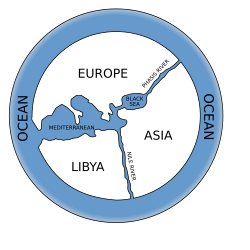
Reconstruction of an early world map made by Anaximander of the 6th century BCE, dividing the known world into three large landmasses, one of which was named Europe
Key Facts
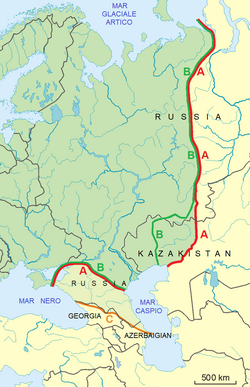
Definitions used for the boundary between Asia and Europe: A Ural Mountains - Emba river - Kuma–Manych Depression B Ural Mountains - Ural river - Kuma–Manych DepressionC Ural Mountains - Ural river - Caucasus Mountains
Total Area: Approximately 10,186,000 square kilometers.
Population: Over 745 million people (as of 2021).
Economic Power: A global leader with a projected GDP (PPP) of $43.53 trillion by 2025.
Major Languages: Russian, German, French, English, Italian, and Spanish are among the most common.
Primary Religion: Christianity (76.2%), followed by non-religious populations (18.3%).
Geography and Climate
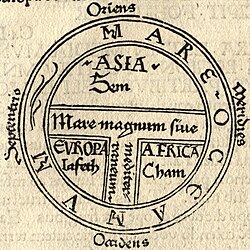
A medieval T and O map printed by Günther Zainer in 1472, showing the three continents as domains of the sons of Noah – Asia to Sem (Shem), Europe to Iafeth (Japheth) and Africa to Cham (Ham)
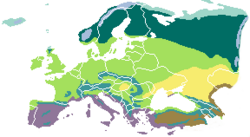
Europe's geography is characterized by a wide variety of biomes—large naturally occurring communities of flora and fauna. These range from the tundra and taiga (coniferous forests) in the north to the mediterranean forests and temperate broadleaf forests in the south.
Biomes of Europe and surrounding regions: tundra alpine tundra taiga montane forest temperate broadleaf forest mediterranean forest temperate steppe dry steppe
The continent's climate is highly varied, influenced by its latitude and proximity to various bodies of water. The Köppen-Geiger climate classification system helps categorize these regions, which include everything from subarctic conditions in the north to warmer, seasonal climates in the south.
Köppen-Geiger climate classification map for Europe[242]
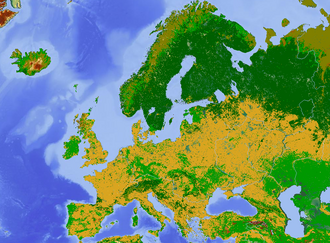
Geologically, the continent features diverse structures, including mountain ranges like the Urals and the Caucasus, which often serve as the boundary between Europe and Asia. The land use is also diverse, with significant areas dedicated to arable farmland, forests, and pastures.
Land use map of Europe with arable farmland (yellow), forest (dark green), pasture (light green) and tundra, or bogs, in the north (dark yellow)
Quick Statistics of Europe
Metric
Value
Area (sq km)
c. 10,186,000
Population (2021)
745,173,774
Population Density
72.9/km²
GDP (Nominal, 2025 est)
$28.22 trillion
GDP (PPP, 2025 est)
$43.53 trillion
Human Development Index (HDI)
0.845
Historical Evolution
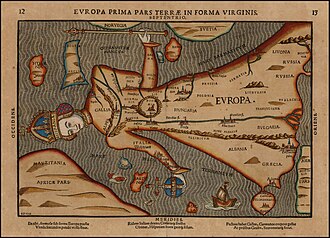
Depiction of Europa regina ('Queen Europe') in 1582
Prehistory and Classical Antiquity
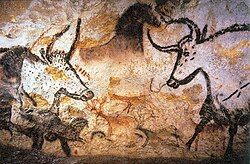
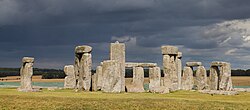
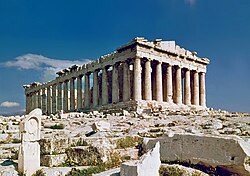
The roots of European civilization stretch back to the Paleolithic era, evidenced by ancient cave paintings. As human societies organized, monumental structures like Stonehenge and the Parthenon emerged, marking the transition into more complex social and political structures.
Paleolithic cave paintings from Lascaux in France (c. 15,000 BCE)Stonehenge in the United Kingdom (Late Neolithic from 3000 to 2000 BCE)The Parthenon in Athens (432 BCE)
The Middle Ages and Early Modern Period
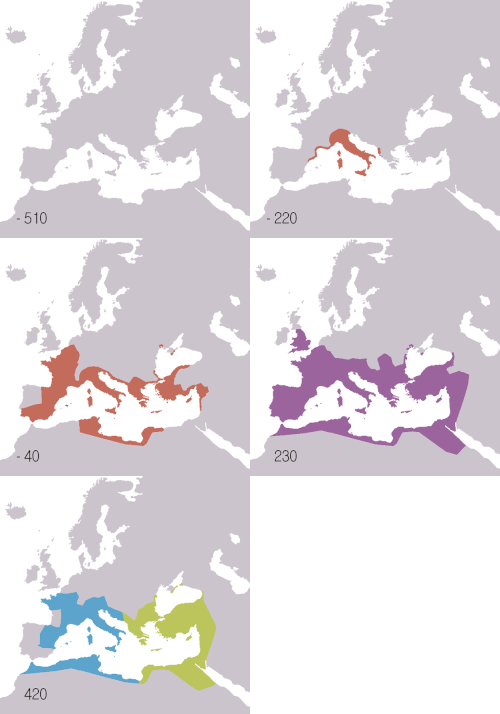
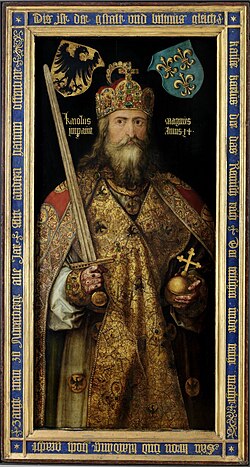
The history of Europe is marked by the rise and fall of empires. The growth of the Roman Empire provided a foundational structure for much of the continent, followed by the complex political landscape of the Middle Ages. Figures like Charlemagne, often called the "Father of Europe," played a pivotal role in shaping the territory and influence of the medieval period.
Animation showing the growth and division of Ancient RomeCharlemagne is called the "Father of Europe" by many historians for his influence on the Middle Ages and on the territory he ruled in Europe. He is seen as a founding figure by multiple European states, and several historical royal houses of Europe trace their lineage back to him. Charlemagne has been the subject of artworks, monuments and literature during and after the medieval period.
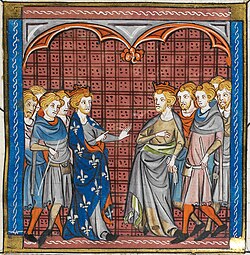
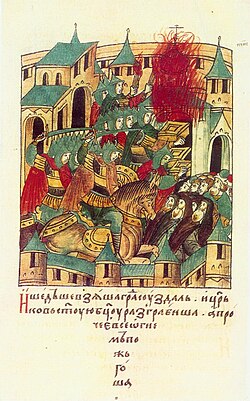
During the High and Late Middle Ages, maritime republics in Italy expanded trade networks across the Mediterranean, connecting Europe with Asia and Africa. However, the period was also marked by conflict, including the Mongol invasions and the Crusades.
The maritime republics of medieval Italy reestablished contacts between Europe, Asia and Africa with extensive trade networks and colonies across the Mediterranean, and had an essential role in the Crusades.[97][98]Tancred of Sicily and Philip II of France, during the Third Crusade (1189–1192)The sacking of Suzdal by Batu Khan in 1238, during the Mongol invasion of Europe (1220s–1240s)
The Industrial Revolution and Modern Era
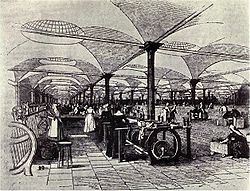
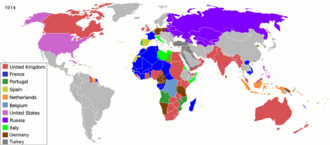
The 18th and 19th centuries saw the onset of the Industrial Revolution, which began in Great Britain and fundamentally transformed European economies and social structures. This era also saw the expansion of colonial empires and shifting national boundaries.
Marshall's Temple Works (1840); the Industrial Revolution started in Great Britain.Map of European colonial empires throughout the world in 1914
The 20th century brought unprecedented challenges, including the two World Wars. These conflicts reshaped borders, caused massive population shifts, and led to the eventual formation of new political alliances and international organizations.
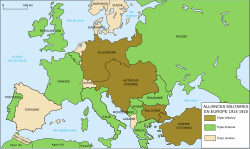
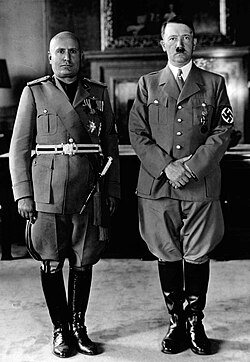
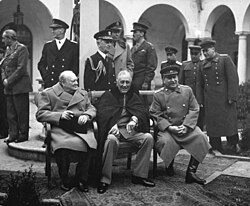
Map depicting the military alliances of the First World War in 1914–1918Nazi Germany began the devastating Second World War in Europe by its leader, Adolf Hitler. Here Hitler, on the right, with his closest ally, the Italian dictator Benito Mussolini, in 1940.The "Big Three" at the Yalta Conference in 1945; seated (from the left): Winston Churchill, Franklin D. Roosevelt and Joseph Stalin
Demographics and Modern Society
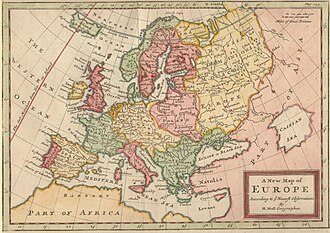
A New Map of Europe According to the Newest Observations (1721) by Hermann Moll draws the eastern boundary of Europe along the Don River flowing south-west and the Tobol, Irtysh and Ob rivers flowing north.
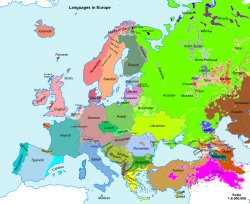
Today, Europe is a continent of diverse linguistic and religious groups. While Christianity remains the largest religious group, there is a significant and growing population that identifies as having no religion. The linguistic landscape is equally varied, with major languages such as Russian, German, and French spoken by millions.
Distribution of major languages of Europe
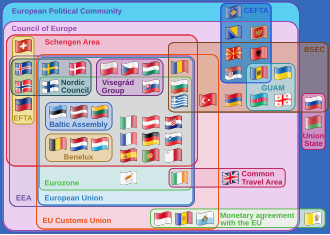
Economically, Europe remains a powerhouse. The continent contains some of the world's largest economies, with high levels of GDP per capita in many nations. The integration of many European states through organizations like the European Union has created a unique political and economic landscape.
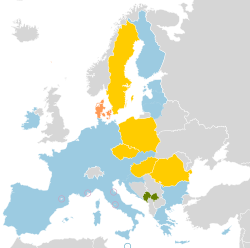
A clickable Euler diagram showing the relationships between various European regional organisations vteEurozone (blue colour)
Frequently Asked Questions
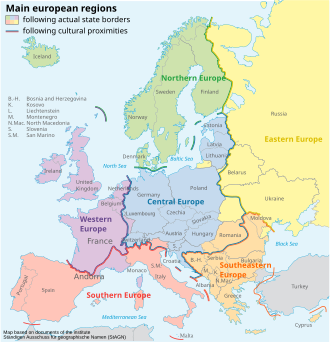
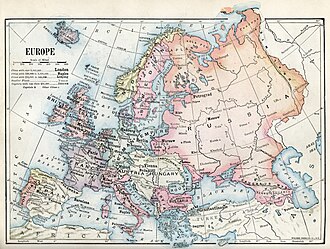
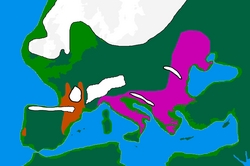
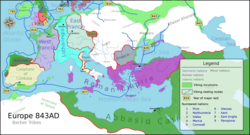
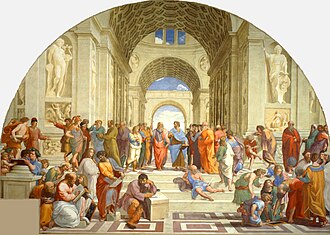
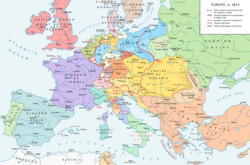
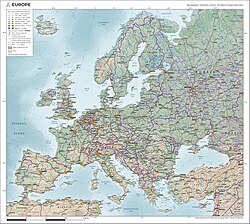
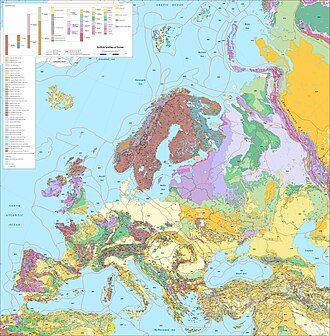
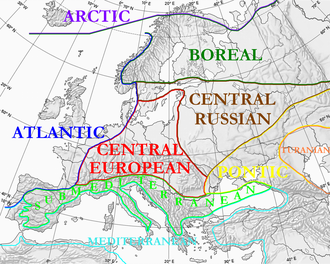
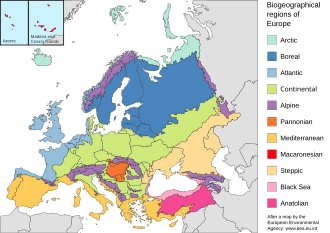
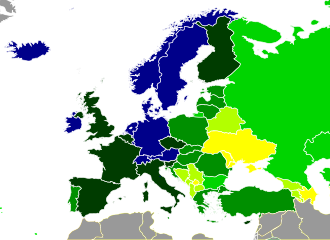
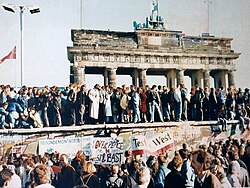
1916 political map of Europe showing most of Moll's waterways replaced by von Strahlenberg's Ural Mountains and Freshfield's Caucasus crest, land features of a type that normally defines a subcontinentLast Glacial Maximum refugia, c. 20,000 years agoViking raids and division of the Frankish Empire at the Treaty of Verdun in 843The School of Athens (1511) by Raphael: Contemporaries of the artist, including Leonardo da Vinci and Michelangelo, are represented in classical guise in this work emblematic of Renaissance humanism.Habsburg dominions in the centuries following their partition by Charles V, Holy Roman Emperor. The principal military base of Philip II in Europe was the Spanish road stretching from the Netherlands to the Duchy of Milan.[148]The national boundaries within Europe set by the Congress of ViennaSerbian war efforts (1914–1918) cost the country one quarter of its population.[196][197][198][199][200]Flag of Europe, adopted by the Council of Europe in 1955 as the flag for the whole of Europe[223]General topographic map of Europe showing physical, political, and population characteristics, as per 2024Surficial geology of EuropeFloristic regions of Europe and neighbouring areas, according to Wolfgang Frey and Rainer LöschBiogeographic regions of Europe and bordering regionsOnce roaming the great temperate forests of Eurasia, European bison now live in nature preserves in Białowieża Forest, on the border between Poland and Belarus.[253][254]Democracy in Europe according to 2026 V-Dem Electoral Democracy Index with dark blue more democratic and dark red less democratic[256]GDP (PPP) per capita of European countries >$60,000 $50,000 – $60,000 $40,000 – $50,000 $30,000 – $40,000 $20,000 – $30,000 $10,000 – $20,000Fall of the Berlin Wall in 1989One of Kosovo's main economical sources is mining, because it has large reserves of lead, zinc, silver, nickel, cobalt, copper, iron and bauxite.[275] Miners at the Trepča Mines in Mitrovica, Kosovo in 2011.Population growth in and around Europe in 2021[282]Map purportedly displaying the European continent split along cultural and state borders as proposed by the German organisation Ständiger Ausschuss für geographische Namen (StAGN)
What are the largest cities in Europe?
Some of the largest urban areas in Europe include Moscow, Istanbul, London, Paris, Madrid, and Berlin.
How is the boundary between Europe and Asia defined?
The boundary is often defined by several different geographical markers, including the Ural Mountains, the Ural River, the Emba River, the Kuma–Manych Depression, and the Caucasus Mountains.
What is the most common religion in Europe?
Christianity is the most common religion in Europe, accounting for approximately 76.2% of the population.
Which languages are most widely spoken in Europe?
The most common languages include Russian, German, French, English, Italian, Spanish, Polish, Ukrainian, Romanian, Dutch, Serbo-Croatian, and more.
What is the economic status of Europe?
Europe is a major global economic force, with a projected nominal GDP of $28.22 trillion and a GDP (PPP) of $43.53 trillion by 2025.
![Köppen-Geiger climate classification map for Europe[242]](/images/0b/f2/0bf25273fb9df20d5251cd1c64976faca1427e9a05dcc941525620362db0cc17.webp)
![The maritime republics of medieval Italy reestablished contacts between Europe, Asia and Africa with extensive trade networks and colonies across the Mediterranean, and had an essential role in the Crusades.[97][98]](/images/14/00/14004a923371f99791d20b07f5692abeca65aaf18550a624e2158810bfd7b5bc.png)
![Habsburg dominions in the centuries following their partition by Charles V, Holy Roman Emperor. The principal military base of Philip II in Europe was the Spanish road stretching from the Netherlands to the Duchy of Milan.[148]](/images/53/91/5391d68923b2780dbc9629ec12f514dbef3b262f7dc80b225abe4fdcadab94fb.png)
![Serbian war efforts (1914–1918) cost the country one quarter of its population.[196][197][198][199][200]](/images/66/93/669324cf4f74b2f68c38bfc1eaa00844bd317382ccdd174cbfdc8e2570c9e899.jpg)
![Flag of Europe, adopted by the Council of Europe in 1955 as the flag for the whole of Europe[223]](/images/c5/5d/c55dac59caee80fb34dd810c02dc95877154723e58c5a71b510f180f7e8c08ac.webp)
![Once roaming the great temperate forests of Eurasia, European bison now live in nature preserves in Białowieża Forest, on the border between Poland and Belarus.[253][254]](/images/08/02/0802e3fe2903902c92bb8bc58bf8b5a737c593b94307f6b00fc39143e8c99521.jpg)
![Democracy in Europe according to 2026 V-Dem Electoral Democracy Index with dark blue more democratic and dark red less democratic[256]](/images/34/e1/34e14f05be3b23b586dc1faa6511442a775ff8c5c53a5d057337411fbacd8d04.webp)
![One of Kosovo's main economical sources is mining, because it has large reserves of lead, zinc, silver, nickel, cobalt, copper, iron and bauxite.[275] Miners at the Trepča Mines in Mitrovica, Kosovo in 2011.](/images/10/9e/109e5dd82a634f61fd32b38724f5cad57a29237932baabdfe0bb6d4653c6dcec.jpg)
![Population growth in and around Europe in 2021[282]](/images/ad/1f/ad1f13ee54dc192a92654513e861cc5df1ed45315f1f2413ca6d5280fbac8f12.webp)