Reflected Light Sources in the Visible Spectrum
When we look at the night sky or the objects around us, we often assume that everything emitting light is a primary source. However, a significant portion of what we see is actually reflected light—light that has bounced off a surface rather than being generated by the object itself. While primary light sources, such as stars or lightbulbs, create their own energy, reflected sources act as cosmic or terrestrial mirrors.
The Nature of Visible Light Reflection
Reflection occurs when light rays strike a surface and bounce back into the medium from which they originated. In the context of the visible spectrum—the portion of electromagnetic radiation that human eyes can detect—this process allows us to see non-luminous objects. Without reflection, the universe would be a collection of isolated points of light surrounded by absolute darkness.
Celestial Examples of Reflected Light
The most prominent examples of reflected light are found in space, where massive bodies interact with the radiation emitted by stars.
The Moon
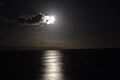
The Moon is perhaps the most familiar example of a reflected light source. It does not produce its own visible light; instead, it reflects the light emitted by the Sun. The phases of the Moon are simply a result of how much of its illuminated side is visible from Earth.
Zodiacal Light
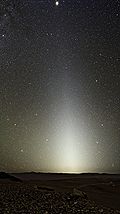
Zodiacal light is a faint, diffuse glow seen in the night sky along the ecliptic (the path the Sun follows). This phenomenon is caused by sunlight reflecting off interplanetary dust particles that orbit the Sun within the plane of the solar system.
Reflection Nebulae
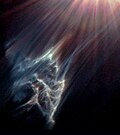
In deep space, certain clouds of interstellar dust create what astronomers call reflection nebulae. Unlike emission nebulae, which glow with their own ionized gas, reflection nebulae simply scatter and reflect the light of nearby bright stars, often appearing blue because shorter wavelengths of light are scattered more efficiently.
Key Facts
- Non-Luminous: Reflected light sources do not generate their own energy.
- Dependency: These sources require a primary light source (like a star) to be visible.
- Visible Spectrum: This classification focuses specifically on light detectable by the human eye.
- Diverse Scales: Reflection occurs on scales ranging from microscopic dust particles to planetary bodies.
Summary of Reflected Light Examples
| Source | Primary Light Origin | Mechanism |
|---|---|---|
| The Moon | The Sun | Surface reflection |
| Zodiacal Light | The Sun | Interplanetary dust scattering |
| Reflection Nebula | Nearby Stars | Interstellar dust scattering |
Frequently Asked Questions
What is the difference between a light source and a reflected light source?
A light source (or luminous object) generates its own light through processes like fusion or electricity. A reflected light source does not produce light but becomes visible by bouncing light from another source off its surface.
Does the Moon produce any of its own light?
No, the Moon is not a luminous body. All the visible light we see coming from the Moon is reflected sunlight.
What causes the blue color in reflection nebulae?
Reflection nebulae often appear blue because the dust particles scatter shorter (blue) wavelengths of light more effectively than longer (red) wavelengths.
Is zodiacal light the same as a nebula?
No. While both involve light reflecting off dust, zodiacal light is caused by dust within our own solar system, whereas a nebula is a massive cloud of gas and dust located in interstellar space.