Realpolitik: The Pragmatic Approach to Power and Diplomacy
In the complex arena of international relations, leaders often face a choice between adhering to high-minded ideals or responding to the gritty realities of the world as it exists. This tension is at the heart of Realpolitik, a political philosophy that prioritizes practical considerations, given circumstances, and national interests over ideological, moral, or ethical premises. By focusing on what is achievable rather than what is ideal, Realpolitik aligns itself with the broader philosophical traditions of realism and pragmatism.
While often viewed as a neutral or positive tool for effective governance, the term is sometimes used pejoratively. Critics may describe Realpolitik as amoral, coercive, or Machiavellian, suggesting that it sacrifices ethics for the sake of power. To understand this approach, it is helpful to contrast it with Idealpolitik, which is guided by moral principles, and Gefühlspolitik, which is driven by emotion or popular sentiment.
Key Facts
- Definition: Political decision-making based on practical factors and power rather than ideology or ethics.
- Origin: Coined by Ludwig von Rochau in 1853 in his work regarding the state of Germany.
- Core Goal: To achieve tangible results by acknowledging the "law of the strong" while pursuing enlightened goals.
- Key Figures: Associated with leaders like Otto von Bismarck, Henry Kissinger, and Lee Kuan Yew.
- Opposites: Contrasted with Idealpolitik (moral-based) and Gefühlspolitik (emotion-based).
The Origins and Etymology of Realpolitik
The term was coined in 1853 by Ludwig von Rochau, a German writer and politician. In his book, Grundsätze der Realpolitik angewendet auf die staatlichen Zustände Deutschlands, Rochau sought to address a specific conundrum: how to achieve liberal, enlightened goals in a world that does not operate by liberal rules.
Rochau observed that while the Enlightenment proved that "might is not necessarily right," it did not make the power of the strong disappear. He famously argued that to bring down the walls of Jericho, a "simple pickaxe" (practical action) is more useful than the "mightiest trumpet" (idealistic rhetoric). Over time, the term evolved, moving away from Rochau's original liberal intent and becoming more closely associated with the raw exercise of state power.
Global Applications of Realpolitik
Germany and the Legacy of Bismarck
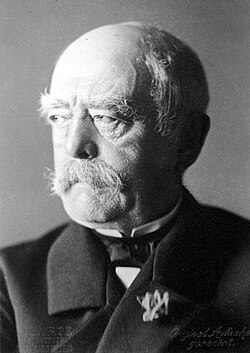
In Germany, Realpolitik is often viewed less negatively than in the U.S., where it is frequently equated with "power politics." It became a cornerstone of 19th-century nationalism, particularly following the failed Revolutions of 1848. The most prominent practitioner was Otto von Bismarck, the first Chancellor of the Kingdom of Prussia, who used these pragmatic tactics to secure Prussian dominance and unify Germany.
China's Tradition of Realism
Long before the German term existed, China practiced a form of realism known as Chinese Legalism. This tradition, echoed in The Art of War, focused on advancing the material interests of the state. This approach was pivotal during the Spring and Autumn period (771–403 BC) and eventually led to the founding of the first Chinese Empire under the Qin dynasty in 221 BCE.
Singapore's Administrative State
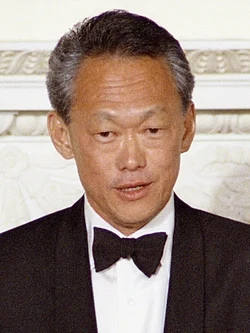
Singapore is often cited as a modern example of a "depoliticised" administrative state. Under the leadership of Lee Kuan Yew, the state emphasized rational and scientific modes of public administration over ideology. While the government framed this as pure pragmatism, some scholars argue that this rhetoric itself became a form of ideology used to institutionalize the power of the People's Action Party.
The United States and Strategic Engagement
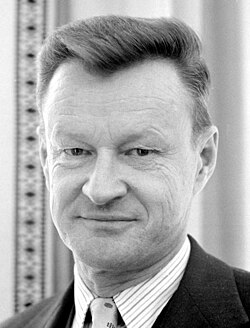
In the U.S., Realpolitik has often appeared as a flexible alternative to standard policy. In the 1960s, Zbigniew Brzezinski advocated for "peaceful engagement" with the Soviet Union. Rather than relying on anti-Soviet propaganda, Brzezinski suggested using economic incentives and cultural exchanges to entice Eastern Bloc nations toward liberalization.
This pragmatic streak continued into later administrations. For instance, Rahm Emanuel, chief of staff to Barack Obama, noted that Obama's approach mirrored that of George H.W. Bush, emphasizing a "cold-blooded" focus on national self-interest.
Pakistan's Geopolitical Strategy
Pakistan's relationship with the U.S. during the late 20th century provides a clear example of Realpolitik in action. General Muhammad Zia-ul-Haq recognized the strategic advantage of aligning with the U.S. during the Soviet-Afghan War. Despite previous tensions, Zia secured a US$3.2 billion military and economic aid package from the Reagan administration.
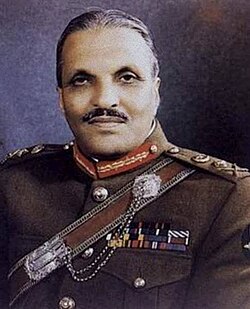
Furthermore, Zia prioritized national security over international non-proliferation norms by pursuing a nuclear program to deter India, demonstrating a preference for national survival over global ethical standards.
Summary of Political Approaches
| Approach | Primary Driver | Core Focus | Perception |
|---|---|---|---|
| Realpolitik | Circumstances & Power | Pragmatism and National Interest | Practical / Amoral |
| Idealpolitik | Moral Principles | Ethics and Ideals | Principled / Unrealistic |
| Gefühlspolitik | Emotion | Popular Sentiment | Empathetic / Reactive |
Frequently Asked Questions
What is the main difference between Realpolitik and Idealpolitik?
Realpolitik is based on practical factors and the reality of power, whereas Idealpolitik is guided by moral principles and the pursuit of an ideal state of affairs, regardless of current constraints.
Who coined the term Realpolitik?
The term was coined by Ludwig von Rochau, a German writer and politician, in his 1853 book regarding the national state of affairs of Germany.
Is Realpolitik always considered negative?
No. While it can be used pejoratively to imply a lack of morality (Machiavellianism), it is also viewed as a neutral or positive approach to effective, realistic governance and diplomacy.
How did Otto von Bismarck use Realpolitik?
Bismarck applied Realpolitik to achieve Prussian dominance in Germany, using pragmatic statecraft and power politics to unify the German states in the mid-19th century.
How did Zbigniew Brzezinski apply these principles in the U.S.?
Brzezinski moved away from hostile rhetoric toward the Soviet Union, instead proposing "peaceful engagement" through economic and cultural exchanges to realistically influence the Eastern Bloc.