Paternalistic Conservatism: Balancing Tradition and Social Welfare
Paternalistic conservatism is a political philosophy rooted in the belief that society develops organically and that its members share mutual obligations. Unlike ideologies that prioritize absolute individualism, this strand of conservatism emphasizes the duty of the privileged and wealthy to support the less fortunate—a concept known as noblesse oblige (the inferred obligation of nobility to act with generosity and nobility toward those less privileged).
Emerging as a response to the social upheavals of the Industrial Revolution, paternalistic conservatism seeks a balance between the individual and the state. It rejects the notion of a command economy but advocates for a dirigiste approach, where the government acts as a benevolent figure to ensure fair play, equal opportunity, and a robust social safety net to combat poverty.
Key Facts
- Core Philosophy: Based on organicism, hierarchy, and the belief that social classes have mutual duties.
- Economic Stance: Supports a mixed economy with state intervention and wealth redistribution, but rejects planned or command economies.
- Historical Trigger: Developed in the 19th century to address the inequality and poor working conditions caused by the Industrial Revolution.
- Key Figures: Benjamin Disraeli (UK), Otto von Bismarck (Germany), and Theodore Roosevelt (USA).
- Primary Goal: To maintain social stability and prevent revolution by improving the lives of the working class.
The Origins of Paternalistic Thought
The Industrial Revolution brought unprecedented economic growth but also widespread poverty, appalling working conditions, and social unrest. In the United Kingdom, early Tory politicians like Richard Oastler, Michael Thomas Sadler, and Lord Shaftesbury integrated humanitarian concerns with their political views. They were critical of classical economics and the 1834 New Poor Law, arguing instead that the state must guarantee decent wages, housing, and treatment for the poor.
One-Nation Conservatism in the UK
Benjamin Disraeli formalized these ideas into One-Nation Conservatism, detailed in his novels Coningsby and Sybil, Or The Two Nations. Disraeli warned that industrialization was splitting the UK into "two nations"—the rich and the poor. To prevent this divide, he proposed a society where social hierarchies remained intact, but the wealthy fulfilled their social obligations to protect and support the working class.
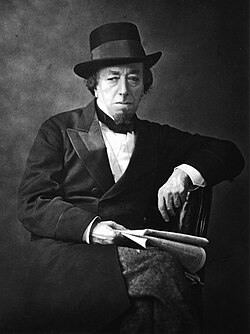
This legacy continued through subsequent British leaders, including Stanley Baldwin, Neville Chamberlain, Winston Churchill, and Harold Macmillan.
Global Implementations of Paternalism
Germany and State Socialism
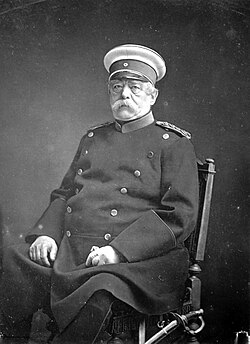
In 19th-century Germany, Otto von Bismarck utilized paternalism as a strategic tool to maintain state power. To undermine the appeal of the Social Democratic Party and prevent a socialist revolution, Bismarck implemented the world's first modern welfare state in the 1880s.
Under his program of State Socialism, the government introduced compulsory insurance for workers covering sickness, accidents, incapacity, and old age. While Bismarck enacted Anti-Socialist Laws to suppress political opponents, his welfare policies were designed to foster loyalty to the monarchy and the nation.
Japan's Paternalistic Democracy
Post-war Japan, led by the Liberal Democratic Party (LDP), adopted a model closer to paternalistic democracy than Western liberal democracy. Influenced by Confucian traditions, the LDP exercised strong economic control and incorporated social security and pollution measures to maintain its dominant political position.
![Prior to the 1980s, nationalists in the LDP, including Nobusuke Kishi, supported paternalistic welfare policy.[31]](/images/1d/78/1d78b9f4808b46d49dc98f4a22d35153cdf7880fed047498d48c85e5ac00f67e.jpg)
Progressive Conservatism in the United States
In the U.S., Theodore Roosevelt championed progressive conservatism. Through his "Square Deal" and "New Nationalism" philosophies, Roosevelt argued that wise progressivism and conservatism worked hand-in-hand. This approach was characterized by a paternalistic view of government intervention to regulate industry and protect the public, a stance also echoed by William Howard Taft and Dwight D. Eisenhower.
Comparative Summary of Paternalistic Approaches
| Region | Key Figure/Party | Primary Mechanism | Main Objective |
|---|---|---|---|
| United Kingdom | Benjamin Disraeli | One-Nation Conservatism | Bridging the gap between rich and poor |
| Germany | Otto von Bismarck | State Socialism | Undermining socialism via welfare |
| Japan | LDP | Corporate Statism / Confucianism | Social stability and economic control |
| United States | Theodore Roosevelt | Progressive Conservatism | Regulating industry for the public good |
Theoretical Perspectives and Critiques
Paternalistic conservatism differs sharply from free-market ideologies like right-libertarianism. While the latter promotes laissez-faire economics, paternalists prioritize social solidarity and the collective well-being of the organic society.
Because of this support for state intervention, some free-market economists, such as Murray Rothbard and Jesús Huerta de Soto, have pejoratively labeled the ideology as "right-wing socialism." Critics argue that this framework is less about helping the poor and more about maintaining a state-promoted social hierarchy that preserves the privileges of the elite.
Frequently Asked Questions
How does paternalistic conservatism differ from socialism?
While both support state intervention and social welfare, paternalistic conservatism seeks to preserve existing social hierarchies and market-based economies. It rejects the socialist goal of public control over the means of production and the implementation of a command economy.
What is the meaning of noblesse oblige in this context?
Noblesse oblige is the belief that wealth, power, and privilege come with a social responsibility to act with generosity and provide support to those who are less fortunate.
Why did Otto von Bismarck create the first welfare state?
Bismarck's primary motivation was political stability. By providing compulsory insurance for workers, he aimed to gain the loyalty of the working class and detract support from the Social Democratic Party and other socialist movements.
What is One-Nation Conservatism?
Developed by Benjamin Disraeli, it is a philosophy that advocates for a paternalistic society where the upper classes support the working classes to prevent the nation from splitting into two antagonistic camps of rich and poor.
Is paternalistic conservatism still relevant today?
Yes, its influence persists in various forms of social market economies and conservative parties that support a social safety net as a means of maintaining social cohesion and stability.