Ravensburg: A Journey Through Germany's Historic Imperial City
Nestled in the state of Baden-Württemberg, Ravensburg is a city where medieval grandeur meets modern industrial precision. First mentioned in 1088, this historic settlement evolved from a strategic stronghold into a powerful Free Imperial City and a pivotal hub for European trade. Today, it is celebrated for its remarkably preserved old town, its rich—and sometimes dark—history, and its role as a center for mechanical engineering.
From the towering heights of the Mehlsack to the winding streets of its historic center, Ravensburg offers a window into the socio-economic shifts of the Holy Roman Empire and the resilience of a community that has weathered wars, plagues, and political upheavals.
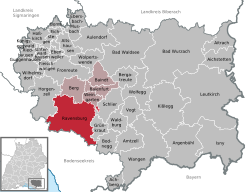
Key Facts
- Location: Baden-Württemberg, Germany (Tübingen administrative region).
- Population: 50,628 (as of December 31, 2024).
- Historical Status: Former Free Imperial City and major medieval trading center.
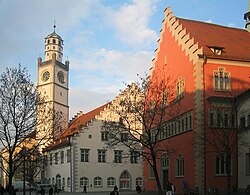
- Key Landmark: The Mehlsack, a 51-meter tall defensive tower.
- Economic Base: Strong tradition in mechanical engineering and pharmaceutical manufacturing.
- Elevation: 450 meters above sea level.
A Legacy of Trade and Power
Ravensburg's early history is marked by its association with powerful figures. In the 12th century, Welf IV used the town as a place to hold a captured bishop for ransom. Despite being razed by fire in 1131 during the campaigns of Frederick II, Duke of Swabia, the town was quickly rebuilt and fortified by 1138.
The city's trajectory changed significantly in June 1276, when Emperor Rudolf I granted Ravensburg the status of an Imperial Free City, a privilege that gave the town a high degree of autonomy. This independence fueled economic growth, leading to the formation of the "Great Ravensburg Trading Society" around 1380. Founded by merchant families from Ravensburg, Buchhorn, and Constance, this society operated shops across Europe, trading in linen, fustian, oriental spices, Mediterranean wines, and Bohemian ores.
Innovation also flourished here; in 1402, Ravensburg established one of the first paper mills north of the Alps, adding paper to its list of valuable commodities.
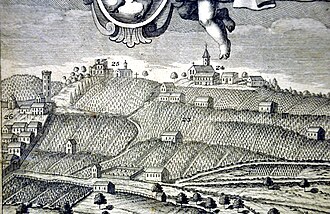
Darker Chapters: Persecution and Superstition
The city's prosperity was occasionally overshadowed by periods of intense violence and superstition. Between May and July 1430, Ravensburg was gripped by a blood libel—a false accusation that the Jewish community had conspired to murder a 13-year-old Christian boy. This resulted in the burning of most of the city's Jewish population.
Later, in the 1480s, a series of disasters—including a devastating plague in 1482-83 and a savage hailstorm in 1483—led the populace to believe that sorcery was at work. This atmosphere of fear invited the inquisitor Henricus Institoris (Heinrich Kramer). Under "the lightest torture," women such as Agnes the bathkeeper and Anna of Mindelheim confessed to collaborating with demons to cause the hailstorms and harm livestock.
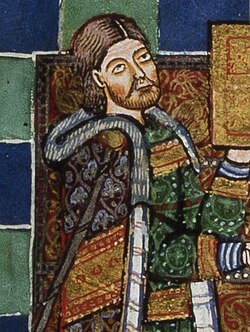
From the Reformation to the Modern Era
Following the Reformation, Ravensburg adopted a paritetic government, an equal distribution of public offices between Catholics and Protestants. This unique system was formally recognized in the 1648 Peace of Westphalia, making Ravensburg one of four "Paritetic Imperial Cities."
The 19th century brought political shifts. In 1803, the city underwent secularisation and mediatisation, eventually becoming part of the Kingdom of Württemberg in 1810. Interestingly, the economic stagnation that followed the Thirty Years' War served as a blessing for future generations; because few new buildings were constructed between the 17th and 19th centuries, the medieval city center remained largely intact.
Economy, Infrastructure, and Culture
Modern Ravensburg is a vital node in Germany's transport network, situated at the crossing of federal roads B30, B31, and B32. The city is also served by the historic "Swabian Railroad," which began operations in 1847.
The local economy has transitioned from medieval trade to high-tech engineering. The city hosts several global leaders, including Vetter Pharma (pre-filled injection systems), Omira (dairy), and Hawera Probst (drill bits). The pastry brand Tekrum also maintains a strong international presence.
| Category | Details |
|---|---|
| State | Baden-Württemberg |
| Total Area | 92.05 km² |
| Population Density | 550.0/km² |
| Key Industries | Mechanical Engineering, Pharma, Dairy |
| Notable Institutions | Ravensburg University of Cooperative Education |
Frequently Asked Questions
What is the Mehlsack?
The Mehlsack (or "Flour Sack") is a 51-meter tall defensive tower built in the 15th century. It serves as a symbol of civic pride and is one of the most prominent landmarks of the city's historic fortifications.
What was the Great Ravensburg Trading Society?
Founded around 1380, it was a powerful merchant guild that established a vast network of trading companies across Europe, dealing in textiles, spices, wines, and paper.
How did the city handle the religious divide after the Reformation?
Ravensburg implemented a paritetic government, meaning public offices and the city council were split equally between Catholics and Protestants to ensure fair representation.
Why is the medieval architecture so well-preserved?
Economic stagnation following the Thirty Years' War meant that very few new buildings were constructed during the 18th and early 19th centuries, leaving the original medieval structures untouched.
What are the main industries in Ravensburg today?
The city is a hub for mechanical engineering, pharmaceutical systems (Vetter Pharma), and food production (Omira and Tekrum).