Racial Segregation in the United States
Racial segregation in the United States refers to the systematic separation of people based on racial categorizations. While most prominently associated with the separation of Black and white people, it also encompassed the de facto (existing in practice) separation of other ethnic minorities from majority communities. This separation extended across nearly every facet of American life, including housing, healthcare, education, employment, and transportation.
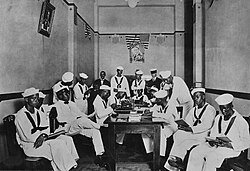
Beyond physical separation, segregation manifested through institutional roles and legal prohibitions, such as anti-miscegenation laws that banned interracial marriage. Even within the U.S. Armed Forces, formal segregation persisted until 1948, where Black units were kept separate and typically commanded by white officers.
Key Facts
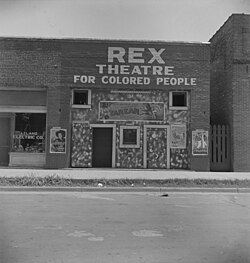
![A black man goes into the "colored" entrance of a movie theater in Belzoni, Mississippi, 1939.[27]](/images/c8/ba/c8ba54b7cf457a3930facbefe8babbf4c19b6c6b4dcf5f7352ac9e5e4c066e56.jpg)
- De Jure Segregation: Separation mandated by law, most notably through Jim Crow laws in the South.
- De Facto Segregation: Separation that occurs through social custom or economic patterns without legal requirement.
- Plessy v. Ferguson (1896): The Supreme Court ruling that established the "separate but equal" doctrine.
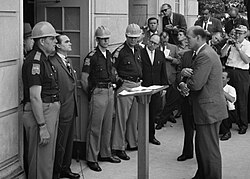
- Brown v. Board of Education (1954): The landmark case that overturned segregation in public schools.
- Civil Rights Act of 1964: Federal legislation that outlawed de jure segregation in public accommodations.
- Hypersegregation: An extreme form of residential segregation found in several major U.S. metropolitan areas.
The Legal Evolution of Segregation
The legal landscape of racial separation was shaped by several pivotal Supreme Court decisions and legislative acts. In the 1857 Dred Scott v. Sandford case, the Court ruled that Black people were not U.S. citizens and were not protected by the Constitution.
Following the Civil War, the Reconstruction era saw attempts to establish equality. The Reconstruction Acts of 1867 and the Fifteenth Amendment (1870) granted African Americans the right to vote, while the Civil Rights Act of 1875 forbade segregation in accommodations. However, the Supreme Court overturned the 1875 Act in 1883.
The era of Jim Crow—named after a minstrel show character—was solidified by the 1896 Plessy v. Ferguson decision. This ruling upheld the constitutionality of "separate but equal" facilities. In reality, these facilities were rarely equal, creating a system of second-class citizenship.
![An African-American man drinking at a "colored" drinking fountain in a streetcar terminal in Oklahoma City, 1939 by Russell Lee[15]](/images/48/25/4825c8349787cae282ee4e196d49e1c2df5816c4cf1104cf8c7afa622a4a3ad3.jpg)
The Path to Desegregation
The tide began to turn in 1954 with Brown v. Board of Education, which unanimously ruled that segregated public schools were unconstitutional. This was followed by other landmark cases, such as Heart of Atlanta Motel, Inc. v. United States (1964), which helped dismantle the Jim Crow system.
De Jure vs. De Facto Segregation

To understand segregation, it is essential to distinguish between its two primary forms:
- De Jure Segregation: This is segregation by law. It was enforced through slave codes before the Civil War and later through Black Codes and Jim Crow laws. These were eventually outlawed by the Civil Rights Act of 1964, the Voting Rights Act of 1965, and the Fair Housing Act of 1968.
- De Facto Segregation: This is segregation that exists without legal sanction. It is driven by social behavior, economic disparities, and the historical legacy of de jure laws. This form persists today, particularly in residential and school settings.
Regional Differences
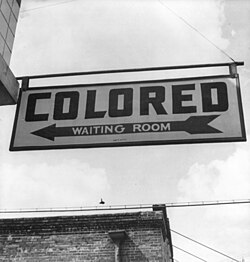
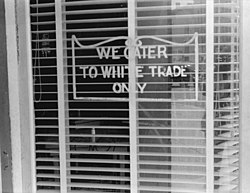
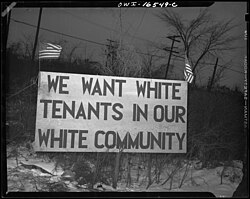
While de jure segregation was most prevalent in the Southern United States, the North and West experienced significant de facto segregation. Private business owners often enforced their own exclusionary policies, such as "white only" establishments, which were not outlawed until the 1960s.
Residential Segregation and Hypersegregation

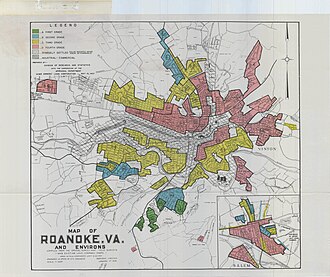
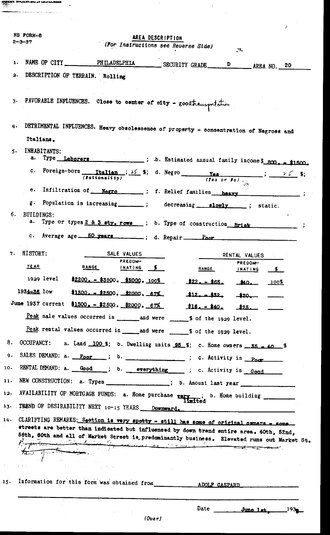
Residential segregation was often reinforced by systemic practices like redlining, where certain neighborhoods were marked as "detrimental" based on racial composition, limiting investment and homeownership for minorities.
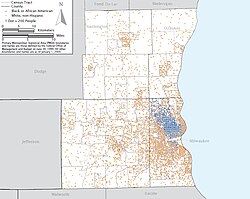
As industries moved out of inner cities, many African American residents were unable to leave, leading to the creation of inner-city ghettos. This resulted in hypersegregation. According to 2000 Census data, 29 metropolitan areas showed Black-white hypersegregation, with Los Angeles and New York City also displaying Hispanic-white hypersegregation.
The Lasting Impact of Segregation
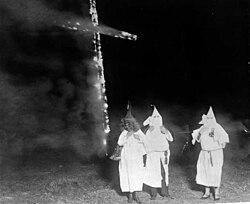
The effects of segregation continue to influence American society, particularly in education and economic stability.
Education and Opportunity
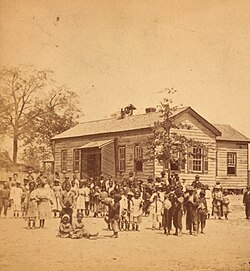
Despite legal bans, school segregation remains a challenge. In the 2002–2003 academic year, public school enrollment in Chicago was 87% Black or Hispanic, while Washington, D.C. was 94% Black or Hispanic. A Government Accountability Office report noted that from 2000 to 2014, the percentage of deprived Black or Hispanic students in K–12 public schools increased from 9% to 16%.
Economic and Social Costs
A 2017 study by the Metropolitan Planning Council and the Urban Institute estimated that racial and economic segregation costs the United States billions of dollars annually. Analysis of 100 urban hubs between 1990 and 2010 found that economic segregation affecting Black populations was associated with higher homicide rates.
| Year | Event/Case | Impact |
|---|---|---|
| 1857 | Dred Scott v. Sandford | Ruled Black people were not U.S. citizens. |
| 1896 | Plessy v. Ferguson | Established "separate but equal" doctrine. |
| 1948 | Executive Order 9981 | Ended segregation in the U.S. Armed Forces. |
| 1954 | Brown v. Board of Education | Outlawed segregated public schools. |
| 1964 | Civil Rights Act | Outlawed de jure segregation in public accommodations. |
| 1968 | Fair Housing Act | Banned discrimination in housing. |
Frequently Asked Questions


What is the difference between de jure and de facto segregation?
De jure segregation is separation mandated by law (such as Jim Crow laws), whereas de facto segregation occurs through social patterns, individual choices, or economic conditions without legal requirement.
What was the "separate but equal" doctrine?
Established by the Supreme Court in Plessy v. Ferguson (1896), this doctrine claimed that racial segregation was legal as long as the facilities provided to each race were equal in quality. In practice, facilities for Black Americans were almost always inferior.
When did the U.S. military end segregation?
Segregation in the United States Armed Forces ended on July 26, 1948, when President Harry S. Truman signed Executive Order 9981.
What is hypersegregation?
Hypersegregation is an extreme form of residential segregation where a minority group is isolated not only by race but also by high concentrations of poverty and limited access to resources, often resulting in the formation of inner-city ghettos.
Does racial segregation still exist in the U.S.?
While de jure segregation is illegal, de facto segregation persists today, particularly in residential patterns and the composition of public school districts in many major cities.