Queen's Own Royal West Kent Regiment
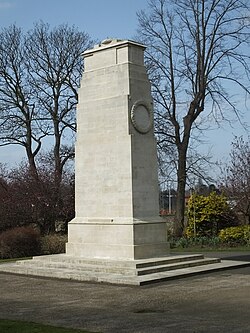
The Queen's Own Royal West Kent Regiment, popularly known as the Royal West Kents, was a distinguished line infantry regiment of the British Army. Based in the county of Kent, the regiment served with honor from its formal creation in 1881 until its amalgamation in 1961. Throughout its history, the regiment was defined by its versatility, serving in diverse theaters from the deserts of Mesopotamia to the jungles of Malaya.
The regiment was established on July 1, 1881, as part of the Childers Reforms—a series of organizational changes to the British Army. It was formed by the amalgamation of two existing units: the 50th (Queen's Own) Regiment of Foot and the 97th (The Earl of Ulster's) Regiment of Foot. Over the following decades, the unit underwent several name changes, eventually settling on the Queen's Own Royal West Kent Regiment in April 1921.
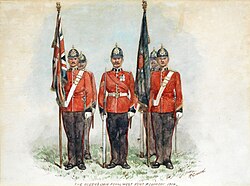
Key Facts
- Active Period: 1881–1961.
- Headquarters: Invicta Park Barracks, Maidstone, Kent.
- Mottos: Invicta (Invincible) and Quo Fas et Gloria Ducunt (Whither Duty and Glory Lead).
- Nicknames: The Celestials, The Devils Royals, The Blind Half Hundred, and The Dirty Half Hundred.
- Role: Line infantry.
Regimental Structure and Early Years
In its early years, the regiment maintained a complex structure consisting of regular, militia, and volunteer battalions. The 1st Battalion descended from the 50th Foot, while the 2nd Battalion descended from the 97th Foot. By 1908, with the creation of the Territorial Force, the regiment's composition shifted as some units were transferred to the London Regiment or reorganized into the Kent Brigade of the Home Counties Division.
| Category | Details |
|---|---|
| Founding Date | July 1, 1881 |
| Predecessor Units | 50th (Queen's Own) and 97th (The Earl of Ulster's) Regiments of Foot |
| Primary Base | Maidstone, Kent |
| Successor Unit | Queen's Own Buffs, The Royal Kent Regiment (1961) |
| Final Lineage | Princess of Wales's Royal Regiment (1992) |
Service in the First World War
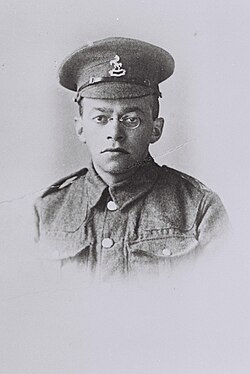
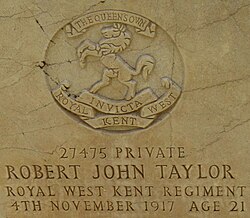
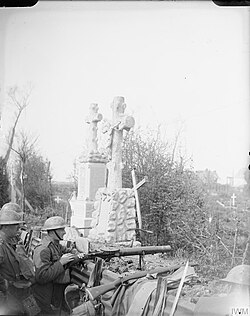
During the Great War, the Royal West Kents operated across multiple global fronts. The 2nd Battalion served in Mesopotamia, arriving in Basra in 1915. A portion of this battalion was captured during the Siege of Kut in April 1916, while others remained in the region for the duration of the conflict.
The Territorial Force battalions (1/4th and 1/5th) were deployed to British India in 1914, eventually joining various Indian Army brigades. Meanwhile, the 2/4th Battalion participated in the Gallipoli campaign in 1915 and later fought in the First Battle of Gaza in 1917.
Inter-war Period and the Second World War
Between the wars, the regiment saw action in the Third Anglo-Afghan War and suppressed a Mahsud tribal rebellion in the Northwest Frontier in 1920. The 2nd Battalion also served in Palestine during the Arab revolt before moving to Malta in 1939.
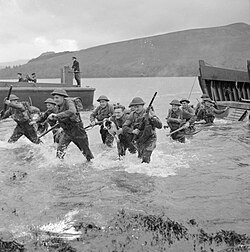
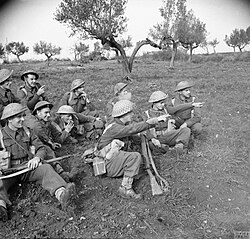
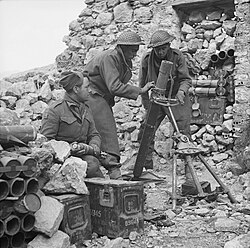
The Second World War saw the regiment deployed in various capacities. The 5th Battalion fought through the Italian Campaign, including the Moro River Campaign, the Battle of Monte Cassino, and the Gothic Line. Other units were converted for specialized roles; for example, the 20th Londons became a searchlight regiment of the Royal Artillery, and the 10th Battalion was converted into the 119th Light Anti-Aircraft Regiment, serving in the Battle of Normandy and Operation Market Garden.
Post-War Era and Counterinsurgency
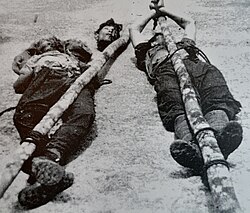
Following the independence of India in 1948, the British Army reduced most infantry regiments to a single regular battalion, leading to the disbandment of the 2nd Battalion. From 1951 to 1954, the remaining Regular Battalion was deployed to Malaya to fight the Malayan National Liberation Army (MNLA) during the Malayan Emergency.
This period was marked by brutal jungle warfare. In later years, former soldiers admitted that the practice of decapitating MNLA guerrillas was common among British units during this conflict, a revelation that caused significant public outcry in Britain.
Amalgamation and Legacy
The regiment's independent existence ended on March 1, 1961, when it amalgamated with the Buffs (Royal East Kent Regiment) to form the Queen's Own Buffs, The Royal Kent Regiment. This unit was later merged into the Queen's Regiment in 1966, and finally into the Princess of Wales's Royal Regiment in 1992.
The regiment is remembered for its unique uniforms; as the 97th Foot, they wore sky-blue facings on their red coats—a color derived from the Order of Saint Patrick—which earned them the nickname "The Celestials."
Frequently Asked Questions
How was the Queen's Own Royal West Kent Regiment formed?
The regiment was created on July 1, 1881, through the amalgamation of the 50th (Queen's Own) Regiment of Foot and the 97th (The Earl of Ulster's) Regiment of Foot as part of the Childers Reforms.
What does the motto "Invicta" mean?
The motto "Invicta" is Latin for "Invincible," reflecting the spirit and heritage of the county of Kent.
Where did the nickname "The Celestials" come from?
The nickname originated from the sky-blue facings worn on the red coats of the 97th Foot, a color associated with the Order of Saint Patrick.
What happened to the regiment after 1961?
In 1961, it merged with the Buffs (Royal East Kent Regiment) to become the Queen's Own Buffs. Through subsequent mergers in 1966 and 1992, its lineage now continues within the Princess of Wales's Royal Regiment.
In which major conflicts did the regiment serve?
The regiment served in the Second Boer War, the First World War (including Mesopotamia and Gallipoli), the Second World War (including the Italian Campaign and Normandy), and the Malayan Emergency.