Queen's Own Cameron Highlanders
The Queen's Own Cameron Highlanders, originally designated as the 79th (The Queen's Own Cameron Highlanders) Regiment of Foot, was a distinguished line infantry regiment of the British Army. Raised in 1793, the regiment spent over 160 years serving across the globe, from the battlefields of the Napoleonic Wars to the jungles of Burma. In 1961, the regiment amalgamated with the Seaforth Highlanders (the Duke of Albany's) to form the Queen's Own Highlanders.
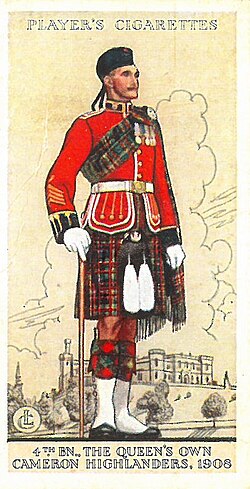
Based at the Cameron Barracks in Inverness, the regiment was defined by its strong Scottish identity, wearing the Cameron of Erracht tartan and adhering to the motto Pro rege et patria (For King and country).
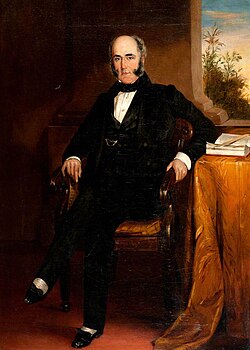
Key Facts
- Active Period: 1793–1961.
- Role: Line infantry within the Highland Brigade.
- Tartan: Cameron of Erracht (Regiment) and Royal Stuart (Pipers).
- Headquarters: Cameron Barracks, Inverness.
- Major Amalgamation: Joined the Seaforth Highlanders in 1961.
- Highest Honor: Four recipients of the Victoria Cross.
Early History and the Napoleonic Wars (1793–1815)
The regiment began its service on the Irish establishment before officially becoming part of the British Army in 1804 as the 79th Regiment of Foot (Cameron Highlanders). Their early reputation was forged during the Napoleonic Wars, starting with the Battle of Copenhagen in 1807.
The 79th Foot played a significant role in the Peninsular War, deploying to Portugal in 1808. They fought in several pivotal engagements, including the Battle of Corunna, the Battle of Bussaco, and the Siege of Badajoz. Their campaign continued through the Battle of Salamanca and the occupation of Madrid, concluding with the Battle of Toulouse in April 1814.
Victorian Era and Global Deployments (1816–1914)
Following the wars with France, the regiment undertook various tours of duty in Canada and Gibraltar. In 1854, they joined the Highland Brigade for the Crimean War, seeing action at the Battle of Alma, the Battle of Balaclava, and the grueling siege of Sevastopol.
The regiment's service extended to India, where they helped suppress the Indian Rebellion, specifically during the Capture of Lucknow and the Battle of Bareilly in 1858. In 1873, Queen Victoria presented the regiment with new colours and granted them the title "Queen's Own."
Under the Childers reforms of 1881, the regiment was redesignated as the 1st Battalion, Queen's Own Cameron Highlanders, serving as the county regiment for Inverness-shire. This era saw them deployed to Egypt for the Anglo-Egyptian War and twice to the Sudan, including the 1898 reconquest under General Kitchener at the Battle of Omdurman.
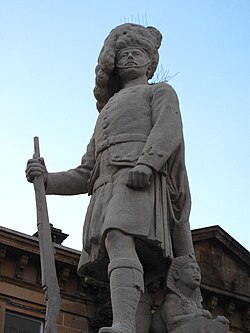
The World Wars
First World War
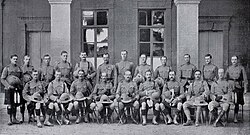
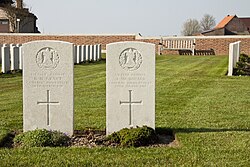
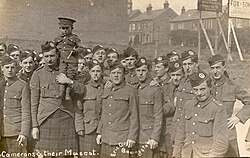
During the Great War, the regiment expanded significantly, fielding regular, militia, and territorial battalions. The 1st and 2nd Regular battalions served in France, Greece, and India. The Territorial Force and "New Army" service battalions, such as the 5th, 6th, and 7th, fought extensively on the Western Front, enduring high casualties at Arras.
Inter-war Period
Between the wars, the regiment maintained a global presence. The 1st Battalion served in India and the Sudan, while the 2nd Battalion was deployed to Ireland during the Irish War of Independence, engaging in fire-fights with the Irish Republican Army (IRA), and later served in Germany, Palestine, and Egypt.
Second World War
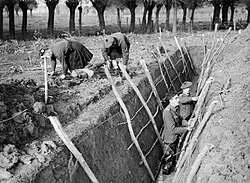
The Second World War saw the regiment split across multiple theaters. The 1st Battalion fought in the Battle of France and the Dunkirk evacuation before deploying to Burma, where they fought at the Battle of Kohima and the Battle of Mandalay.
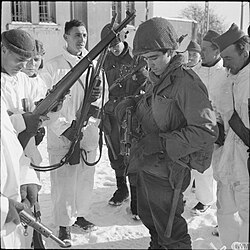
The 2nd Battalion served in North Africa, fighting in Operation Battleaxe before being captured at Tobruk in 1942; they were later reformed and served in Italy and Greece. The 5th Battalion participated in the Second Battle of El Alamein, the invasion of Sicily, and the Normandy landings, fighting through the Battle of the Bulge.
Post-War Service and Legacy
After 1945, the regiment served in the occupation of Japan and performed internal security duties in Malaya. They were also part of the United Nations forces in Korea in 1955 and served in Aden in 1956. Due to the independence of India, the 2nd Battalion was placed in "suspended animation" in 1948, reducing the regiment to a single regular battalion until its final amalgamation in 1961.
| Category | Details |
|---|---|
| Founded | 1793 |
| Amalgamated | 1961 (with Seaforth Highlanders) |
| Key Battles | Copenhagen, Alma, Omdurman, Kohima, El Alamein |
| Victoria Crosses | 4 Recipients |
| County Association | Inverness-shire |
Frequently Asked Questions
When was the Queen's Own Cameron Highlanders formed?
The regiment was raised in 1793, originally as the 79th (Highland-Cameron Volunteers) Regiment of Foot.
What happened to the regiment in 1961?
In 1961, the Queen's Own Cameron Highlanders amalgamated with the Seaforth Highlanders (the Duke of Albany's) to form the Queen's Own Highlanders.
Which tartan did the regiment wear?
The regiment wore the Cameron of Erracht tartan, while the pipers wore the Royal Stuart tartan.
Who were the Victoria Cross recipients of the regiment?
The recipients were Donald Farmer (Second Boer War), and Angus Douglas-Hamilton, James Dalgleish Pollock, and Ross Tollerton (all during the First World War).
Where was the regiment's headquarters located?
The regiment was garrisoned at the Cameron Barracks in Inverness.