Pupa: The Remarkable Transformation Stage of Holometabolous Insects
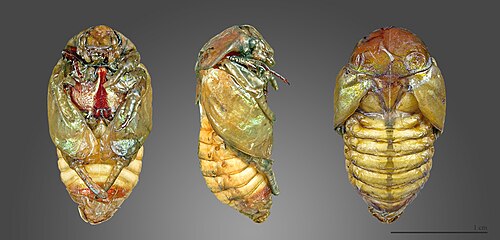
In the complex life cycle of many insects, there exists a period of profound biological restructuring known as the pupa. This stage is a hallmark of the holometabola clade—insects that undergo complete metamorphosis. Unlike insects that transition directly from larva to adult, holometabolous insects move through four distinct stages: egg, larva, pupa, and finally, the imago (the mature adult).
The transition into and out of this stage is a highly regulated biological event. It is governed by a delicate balance of hormones, specifically juvenile hormone, prothoracicotropic hormone, and ecdysone. The process of entering the pupal state is called pupation, while the eventual emergence of the adult is known as eclosion.
Key Facts
- Metamorphosis: The pupal stage is where larval structures break down and adult structures grow from imaginal discs.
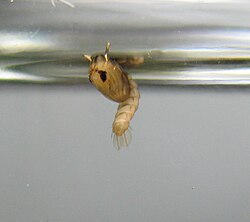
- Mobility: Most pupae are sessile (immobile), though mosquito pupae, known as tumblers, can swim actively.
- Duration: The stage can last from a few days to several years, depending on the species and environmental temperature.
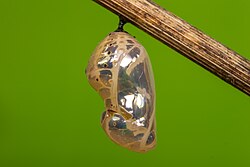
- Terminology: A butterfly pupa is often called a chrysalis, while a protective silk casing is a cocoon.
The Biological Process of Transformation
During the pupal stage, the insect undergoes a massive internal reorganization. While it is a common misconception that the insect completely liquefies inside its casing, the reality is a sophisticated process of cellular differentiation. The existing larval tissues are dismantled, and new adult structures are built using specialized clusters of cells called imaginal discs.
Because the pupa is often immobile and vulnerable to predators, many species have evolved ingenious defense mechanisms. Some hide underground or in crevices, others use chemical secretions for protection, and some even produce vibrations or sounds to deter threats. Social insects, such as certain ants and bees, rely on the protection of the adult members of their hive.
Duration and Dormancy
The length of the pupal stage is highly variable. For instance, monarch butterflies complete this stage in just eight to fifteen days. However, many insects use the pupal stage to survive unfavorable conditions through diapause (a period of dormancy). In temperate regions, this often means staying dormant through the winter, while in tropical climates, pupae may remain dormant during the dry season.
Classifying Pupal Types
Entomologists classify pupae based on their physical characteristics, specifically regarding their mandibles and appendages.
Classification by Mandibles
- Decticous pupa: Possesses articulated mandibles used to help the insect emerge (e.g., Neuroptera and certain Lepidoptera).
- Adecticous pupa: Lacks articulated mandibles (e.g., Coleoptera and Diptera).
Classification by Appendages
- Exarate pupa: The appendages are free and not fused to the body.
- Obtect pupa: The appendages are held closely against the body, often encased in a cocoon (common in most butterflies).
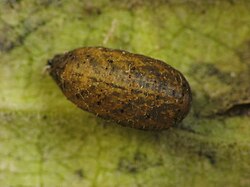
- Coarctate pupa: The pupa is enclosed within a hardened larval skin called a puparium (common in many flies).
Specialized Structures: Chrysalis and Cocoon
The terms chrysalis and cocoon are frequently used interchangeably, but they represent different biological concepts. A chrysalis specifically refers to the pupa of a butterfly. The name is derived from the Ancient Greek word chrysós, meaning gold, referring to the metallic sheen found on many species.
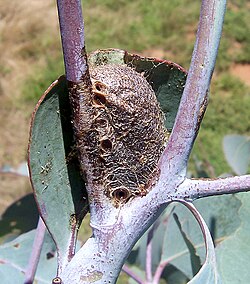
A cocoon, conversely, is a protective casing spun from silk by the larvae of moths and other insects. These silk structures can vary from soft and translucent to tough and opaque. Some caterpillars even incorporate their own hairs or bits of vegetation into the cocoon to provide extra camouflage or defense.
The Emergence (Eclosion)
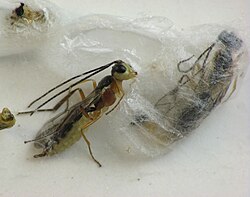
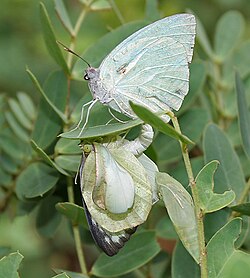
When the adult is ready, it is referred to as a pharate adult. To emerge, the insect must split the pupal case. Butterflies often use a liquid called cocoonase to soften the shell, and some use specialized claws at the base of their wings to assist the exit. Once the insect has emerged, the discarded exoskeleton is called an exuvia.
In some rare cases, such as within the Heliconius genus, mating can even occur during the pupal stage, where a male mates with a female just as she is about to emerge.
Summary of Pupal Characteristics
| Term/Type | Definition/Context | Common Examples |
|---|---|---|
| Chrysalis | The pupal stage of a butterfly | Butterflies |
| Cocoon | A silk casing spun by larvae | Moths |
| Puparium | A pupa enclosed in a hardened larval shell | Flies (Muscomorpha) |
| Tumbler | An actively swimming pupa | Mosquitoes |
Frequently Asked Questions
What is the difference between a pupa and a cocoon?
A pupa is the actual biological life stage of the insect. A cocoon is a protective structure made of silk that many larvae spin around the pupa for safety.
Do insects liquefy inside the pupa?
While the internal tissues undergo massive breakdown and reorganization to form adult structures from imaginal discs, the insect does not completely turn into liquid.
Why are some pupae called "tumblers"?
The term "tumbler" is used for mosquito pupae because, unlike most other pupae which are stationary, they are highly active and can swim around in the water.
What is eclosion?
Eclosion is the technical term for the act of an adult insect emerging from its pupal case or cocoon.
How do butterflies protect themselves while immobile?
Butterflies use various strategies including camouflage, forming cocoons, hiding in soil or crevices, and in some cases, using chemical defenses or making vibrations to scare predators.