The Scientific Legacy of Johann Friedrich Wilhelm Herbst
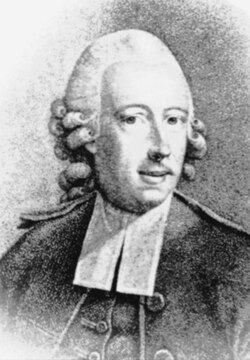
In the history of natural history, few figures have contributed as extensively to the classification of the natural world as Johann Friedrich Wilhelm Herbst. A dedicated German naturalist and entomologist—a scientist who specializes in the study of insects—Herbst played a vital role in documenting the diversity of life during the late 18th and early 19th centuries.
Early Life and Background
Born on November 1, 1743, in Petershagen, Minden-Ravensberg, Herbst led a life that balanced military service with rigorous scientific inquiry. He served as a chaplain within the Prussian army, a role that preceded his most significant academic achievements. In 1770, he married Euphrosyne Luise Sophie in Berlin; she was the daughter of the Prussian Hofrat Libert Waldschmidt. The couple's marriage appears to have been childless.
Major Scientific Contributions
Herbst is perhaps best known for his monumental efforts to catalog and classify various species. One of his most significant achievements was the co-editing of Naturgeschichte der in- und ausländischen Insekten (Natural History of Native and Foreign Insects) alongside Carl Gustav Jablonsky. Published between 1785 and 1806 in 10 volumes, this work represented one of the earliest comprehensive attempts to survey the order Coleoptera, which comprises beetles.
Beyond his work with insects, Herbst made groundbreaking strides in marine biology. His work, Naturgeschichte der Krabben und Krebse, was released in installments between 1782 and 1804. This three-volume set stands as the first full survey of crustaceans, the group of arthropods that includes animals such as crabs, lobsters, and shrimp.
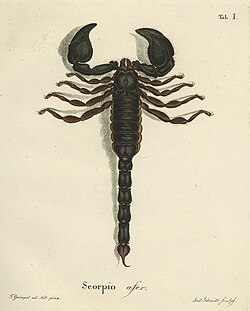
His scholarly output was vast and varied, covering a wide range of biological subjects. His publications included Anleitung zur Kenntnis der Insekten (a three-volume guide to insect knowledge) and Einleitung zur Kenntnis der Würmer, a two-volume introduction to the study of worms. Additionally, he produced Natursystem der ungeflügelten Insekten (Classification of the Unwinged Insects), a four-part series published between 1797 and 1800.
Summary of Major Works
| Title | Publication Period | Volume/Part Count | Primary Subject |
|---|---|---|---|
| Naturgeschichte der in- und ausländischen Insekten | 1785–1806 | 10 volumes | Coleoptera (beetles) |
| Naturgeschichte der Krabben und Krebse | 1782–1804 | 3 volumes | Crustaceans |
| Anleitung zur Kenntnis der Insekten | 1784–1786 | 3 volumes | Insects |
| Einleitung zur Kenntnis der Würmer | 1787–1788 | 2 volumes | Worms |
| Natursystem der ungeflügelten Insekten | 1797–1800 | 4 parts | Unwinged insects |
Key Facts
- Johann Friedrich Wilhelm Herbst was a German naturalist and entomologist.
- He served as a chaplain in the Prussian army.
- He co-authored one of the first complete surveys of Coleoptera (beetles).
- He produced the first full survey of crustaceans.
- His scientific career spanned several decades, with major works published between 1782 and 1806.
Frequently Asked Questions
Who was Johann Friedrich Wilhelm Herbst?
He was a German naturalist and entomologist from Petershagen who made significant contributions to the study of insects and crustaceans.
What was his most significant contribution to entomology?
He co-edited a 10-volume work titled Naturgeschichte der in- und ausländischen Insekten, which was one of the first attempts at a complete survey of the order Coleoptera (beetles).
What is Coleoptera?
Coleoptera is the scientific name for the order of insects that includes beetles.
Did he study animals other than insects?
Yes, Herbst conducted the first full survey of crustaceans and also wrote works regarding the study of worms.
What was his professional background outside of science?
Before or during his scientific pursuits, he served as a chaplain in the Prussian army.