Understanding Protozoa: The Complex World of Single-Celled Life
In the vast, invisible landscape of the microscopic world, few groups are as diverse or as historically debated as the protozoa. These single-celled eukaryotes—organisms whose cells contain a distinct nucleus—can be found in nearly every environment on Earth. Whether they are living freely in a drop of pond water or acting as sophisticated parasites within a host, protozoa play a critical role in global ecosystems.
While the term is often used to describe single-celled organisms that feed through heterotrophy (consuming organic matter like other microbes or debris), modern science has revealed that "protozoa" is not a single, unified family tree. Instead, it is a polyphyletic group, meaning its members do not all descend from one single common ancestor. This complexity makes them one of the most fascinating subjects in biological study.
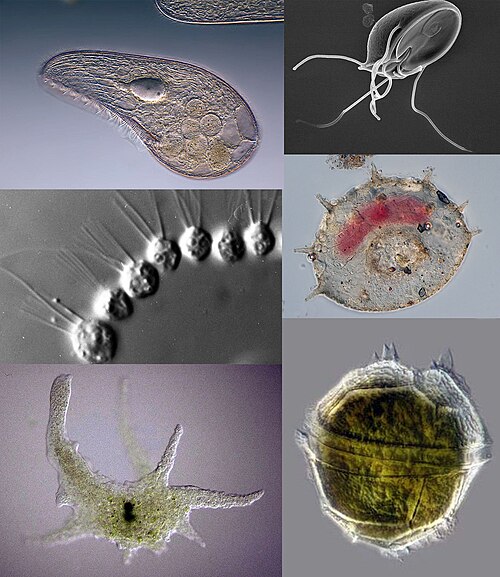
Key Facts
- Definition: Single-celled eukaryotes that are typically heterotrophic.
- Diversity: Includes various forms such as amoebae, ciliates, and flagellates.
- Reproduction: Primarily asexual via binary fission, but can also reproduce sexually.
- Size Range: Varies from 1 micrometer to massive forms reaching 20 centimeters.
- Ecological Roles: Can be free-living, parasitic, or mutualistic partners.
The Evolution of Classification
The history of how we name and group these organisms is as complex as the organisms themselves. The term "protozoa" was first introduced in 1818 by zoologist Georg August Goldfuss. He used the Greek-derived name to mean "first animals," believing they were the simplest forms of life. At that time, the classification was much broader and included multicellular animals like sponges, jellyfish, and corals.
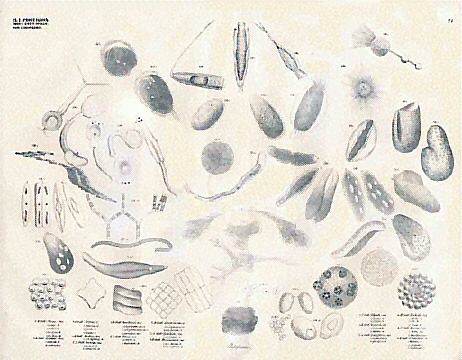
As microscopy improved, the definition began to shift. In 1848, C. T. von Siebold applied the emerging cell theory—the concept that all living things are composed of cells—to propose that protozoa were strictly unicellular. He separated them from multicellular animals (Metazoa) and organized them into classes like Infusoria (mostly ciliates) and flagellates.
By the late 19th century, the rigid "two-kingdom" system (animals vs. plants) began to crumble. Scientists realized many organisms didn't fit neatly into one category. For instance, some organisms could photosynthesize like plants but move and eat like animals. In 1860, John Hogg argued that these organisms were neither strictly plants nor animals, proposing a new kingdom called Primigenum to house both protozoa and unicellular algae.
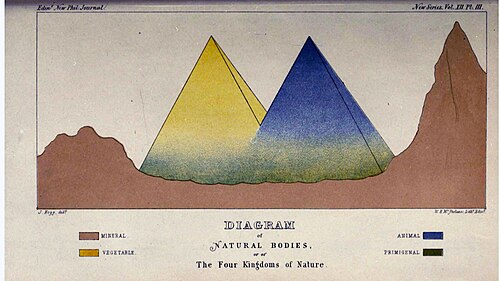
This led to the proposal of the kingdom Protista by Ernst Haeckel in 1866. Throughout the 20th century, biologists like Herbert Copeland and Lynn Margulis worked to refine these categories. Today, the term "protozoa" is often used loosely to describe heterotrophic protists, even though modern phylogenetics (the study of evolutionary relationships) has distributed many traditional protozoan groups into different evolutionary supergroups.
Biological Characteristics and Life Cycles
Reproduction and Aging
Most protozoa reproduce asexually through binary fission, a process where a single cell divides into two identical daughter cells. Many species also engage in sexual reproduction, which is often triggered by environmental stress or food scarcity. This can occur through isogamy (gametes of similar size) or anisogamy (gametes of different sizes). Some species also use conjugation to exchange genetic material without immediate reproduction.
Interestingly, some protozoa exhibit clonal aging. In the species Paramecium tetraurelia, researchers have found that asexual lines can lose vitality and expire after a certain number of divisions. This aging process is linked to the macronucleus rather than the cytoplasm.
Size and Structure
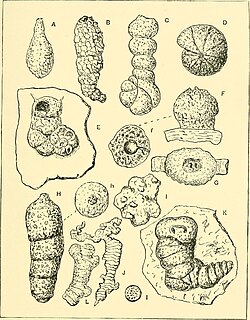
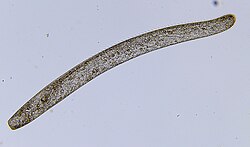
The size of protozoa varies dramatically. While many are microscopic, some are surprisingly large. For example, the ciliate Spirostomum ambiguum can reach 3 mm in length, and certain deep-sea xenophyophores (a type of foraminifera) can have shells up to 20 cm in diameter.
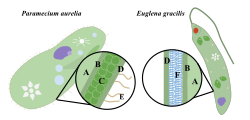
To maintain their shape and protect their internal components, many protozoa possess a pellicle—a specialized outer membrane or layer. Others may develop scales or complex skeletons to provide structural integrity.
Life Cycle Stages
Many protozoan pathogens utilize a two-phase life cycle to survive. They alternate between a trophozoite stage (the active, feeding, and proliferating stage) and a cyst stage (a dormant, resistant resting stage). These cysts allow the organism to survive harsh environmental conditions until they find a suitable host or habitat.
Ecological Roles: From Parasites to Partners
Protozoa occupy diverse ecological niches. Many are free-living, moving through soil or water to consume bacteria and organic debris. Others have developed complex relationships with other life forms.
In parasitism, protozoa act as pathogens, causing significant diseases in humans, such as malaria, giardiasis, and sleeping sickness. Conversely, some protozoa engage in mutualism, a relationship where both organisms benefit. A classic example is the partnership between certain protozoa and termites, where the protozoa live in the termite gut to assist in digestion.
Comparison of Common Protozoan Species
| Species | Cell Type | Size (micrometres) |
|---|---|---|
| Plasmodium falciparum (trophozoite) | Malaria parasite | 1–2 |
| Bodo saltans | Free-living flagellate | 5–8 |
| Trypanosoma cruzi | Parasitic kinetoplastid | 14–24 |
| Entamoeba histolytica | Parasitic amoeban | 15–60 |
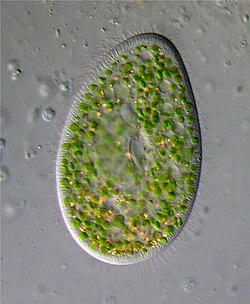
| Paramecium caudatum | Free-living ciliate | 120–330 |
| Amoeba proteus | Free-living amoebozoan | 220–760 |
| Syringammina fragilissima | Foraminifera amoeba | Up to 200,000 |
Frequently Asked Questions
Are protozoa considered animals?
Historically, they were called "first animals," but modern biology does not classify them as animals. They are single-celled eukaryotes that lack the multicellular tissue structures found in the Animal kingdom.
How do protozoa reproduce?
Most reproduce asexually through binary fission or multiple fission. However, many also undergo sexual reproduction or exchange genetic material through processes like conjugation.
Can a single-celled organism be large?
Yes. While most are microscopic, some species like the xenophyophores can reach diameters of up to 20 cm.
What is the difference between a trophozoite and a cyst?
A trophozoite is the active, feeding stage of a protozoan's life cycle, while a cyst is a dormant, protective stage used to survive harsh environments.
Why is the classification of protozoa so confusing?
The term "protozoa" is polyphyletic, meaning the organisms grouped under this name do not all share a single common ancestor. As genetic testing improves, many groups once called protozoa are being moved to different evolutionary lineages.