Prokaryotes: The Ancient Microscopic Architects of Life
In the vast tapestry of biological history, prokaryotes represent some of the most fundamental and enduring forms of life. Derived from the Ancient Greek words for "before" and "kernel," the term refers to cellular organisms that lack a distinct cell nucleus or other membrane-bound organelles. While they may appear simple compared to the complex cells that make up plants and animals, these single-celled microorganisms are the engines driving Earth's most critical chemical cycles.
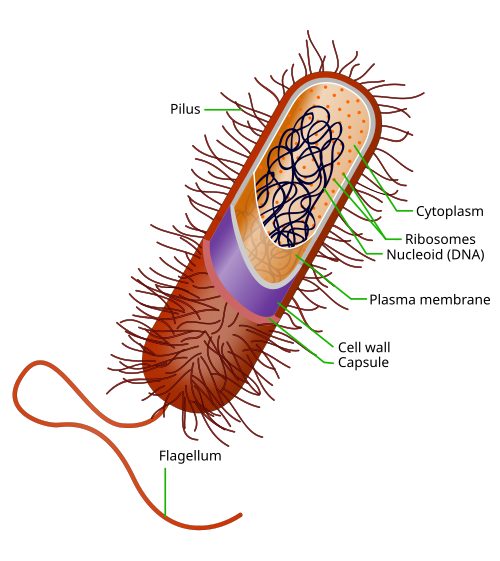
Key Facts
- Cellular Structure: Prokaryotes lack a membrane-enclosed nucleus; their DNA is located in a region called the nucleoid.
- Domains of Life: Under the modern three-domain system, prokaryotes are divided into Bacteria and Archaea.
- Reproduction: They primarily reproduce asexually through a process called binary fission.
- Ecological Role: They are essential primary producers and degraders in carbon, nitrogen, phosphorus, and oxygen cycles.
- Evolutionary History: They are among the earliest life forms, with ancestors dating back over 4 billion years.
The Structure of a Prokaryotic Cell
Unlike eukaryotic cells, which contain specialized compartments like mitochondria or chloroplasts, prokaryotes operate within a single, streamlined cellular space. Their internal components are organized to support rapid growth and survival in diverse environments.
Common structural elements include:
- Cell Membrane: The outer boundary regulating what enters and exits the cell.
- Cell Wall: A protective layer found in most groups (though absent in some like Mollicutes).
- Cytoplasm: The jelly-like substance filling the cell.
- Ribosomes: The machinery responsible for protein synthesis.
- Nucleoid: The area where the genetic material is concentrated.
- Flagellum: A whip-like appendage used for movement (not present in all species).
- Capsule: An additional outer layer found in certain groups.
Reproduction and Genetic Exchange
Prokaryotes typically reproduce via binary fission, a method of asexual reproduction where a single cell divides into two identical daughter cells. However, they possess a remarkable ability to increase genetic diversity through horizontal gene transfer.
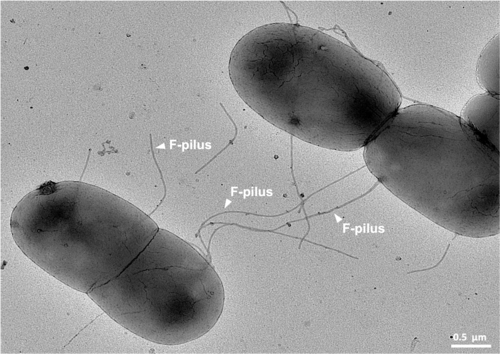
This exchange allows prokaryotes to share genetic information—such as antibiotic resistance or metabolic capabilities—without the need for sexual reproduction. This genetic fluidity is a cornerstone of their rapid adaptation to changing environments.
Colonies, Biofilms, and Microbial Mats
While many prokaryotes exist as solitary cells, many species prefer to live in complex, multicellular communities. Some bacteria, such as cyanobacteria, produce sticky substances that hold colonies together in structures known as biofilms.
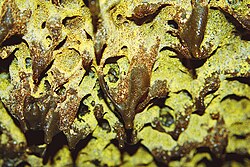
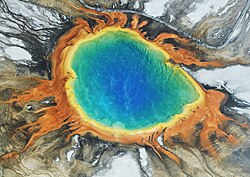
In certain environments, these symbiotic colonies can form massive, multilayered microbial mats. Over geological timescales, these mats can become mineralized, leaving behind fossilized structures known as stromatolites, which provide a window into the ancient Earth.
Evolutionary Origins and the Three Domains
The history of life on Earth is a story of profound transformation. Molecular phylogenetics—the study of evolutionary relationships through genetic data—has revealed that the division between prokaryotes and eukaryotes is not just a matter of complexity, but of fundamental biological organization.
The Last Universal Common Ancestor (LUCA), which is considered "prokaryote-grade," is estimated to have evolved approximately 4.09–4.33 billion years ago. Since then, life has branched into three distinct domains:
- Bacteria: A diverse domain of prokaryotes.
- Archaea: A domain of prokaryotes that often shares molecular similarities with eukaryotes, such as histone proteins and specific DNA replication methods.
- Eukaryota: Complex organisms with membrane-bound nuclei and organelles.
![Phylogenetic tree showing the diversity of prokaryotes, mainly Bacteria. The eukaryotes appear bottom right as a branch of the Archaea.[52]](/images/aa/d2/aad29dec8bd614fd06bf8e03d23ac0d516b545318ea1853f506b537d3f2f047e.png)
The Theory of Symbiogenesis
One of the most significant leaps in evolution was the transition from prokaryotic to eukaryotic life. This is explained by symbiogenesis, the theory that eukaryotic cells arose from the merger of different prokaryotic organisms. For example, mitochondria—the energy producers in our cells—are believed to have evolved from an aerobic bacterium that entered into a symbiotic relationship with another cell.
![In the theory of symbiogenesis, a merger of two prokaryotes, an archaean and an aerobic bacterium, created the eukaryotes, with aerobic mitochondria; a second merger added chloroplasts from a third prokaryote, a photosynthetic cyanobacterium, creating the green plants.[43]](/images/e9/cb/e9cb97de8e68d89d1e7e206794ffe6c0406cbffe0cc8b1aa6226645ea032242a.webp)
Recent scientific models suggest that eukaryotes may actually be a specialized branch within the Archaea, specifically the Asgard group, rather than a completely separate lineage. This view shifts the primary division of life to the distinction between Bacteria and the rest of the domains.
![Phylogenetic tree showing the diversity of prokaryotes.[66] This 2018 proposal shows eukaryotes within the archaean Asgard group which represents a modern version of the eocyte hypothesis. In this view, the division between bacteria and the rest is what groups organisms into the two major domains.](/images/2e/39/2e39a0af250f3580981b27809954359261dd79918d9607f009108a29fd6afb1d.png)
Comparison of Cellular Organization
| Feature | Prokaryotes | Eukaryotes |
|---|---|---|
| Nucleus | None (DNA in cytoplasm) | Present (DNA enclosed in membrane) |
| Organelles | Few or none | Many (e.g., mitochondria, chloroplasts) |
| Reproduction | Asexual (binary fission) | Sexual (with haploid gametes) |
| DNA Transfer | Horizontal gene transfer common | Primarily vertical inheritance |
Frequently Asked Questions
What is the main difference between a prokaryote and a eukaryote?
The primary difference is the presence of a nucleus. Eukaryotes have a membrane-bound nucleus that houses their DNA, whereas prokaryotes lack a nucleus, leaving their genetic material free in the cytoplasm.
Are all prokaryotes harmful to humans?
No. While some prokaryotes are pathogens that cause disease, many are essential for life. They act as primary producers in ecosystems and play vital roles in nutrient cycling, such as the nitrogen and carbon cycles.
How do prokaryotes reproduce so quickly?
Most prokaryotes reproduce through binary fission, a process where a single cell replicates its DNA and splits into two. This asexual method allows for extremely rapid population growth under favorable conditions.
What are Archaea?
Archaea are a domain of single-celled prokaryotes. While they look similar to bacteria, they have distinct molecular characteristics, such as different types of ATP synthase and DNA replication processes, and they are more closely related to eukaryotes in several key ways.
What is a biofilm?
A biofilm is a community of microorganisms, such as bacteria, that stick to each other and to a surface using a self-produced matrix. This structure provides protection and allows the organisms to function as a coordinated group.