Understanding the Species: The Fundamental Unit of Life
In the vast tapestry of Earth's biodiversity, the species serves as the most basic unit of classification. It is a taxonomic rank used to categorize organisms and serves as a vital tool for scientists and conservationists studying the complexity of life. While the concept may seem straightforward, defining exactly what constitutes a species is one of the most enduring challenges in biology.
Current scientific estimates suggest there are between 8 and 8.7 million species of eukaryotes (organisms with complex cells). However, as of 2011, only about 14% of these had been formally described by researchers.
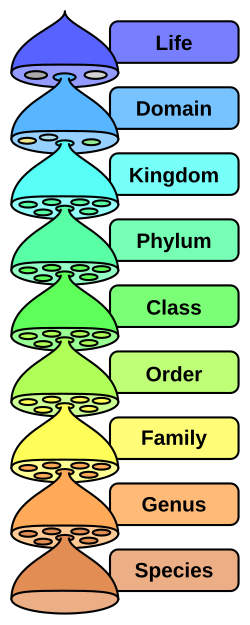
The Science of Naming: Binomial Nomenclature
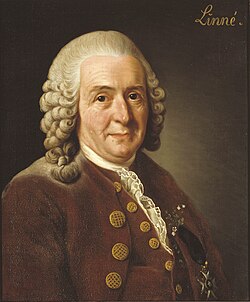
To organize the millions of living things on our planet, scientists use a standardized system called binomial nomenclature. Created by Carl Linnaeus, this system assigns every species a two-part scientific name. The first part identifies the genus (a group of closely related organisms), and the second part is the specific name, or specific epithet.
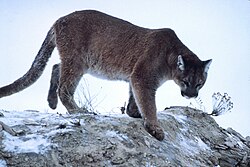
For example, the animal commonly known as a cougar, mountain lion, or puma is scientifically identified as Puma concolor. In this case, Puma is the genus and concolor is the specific name.
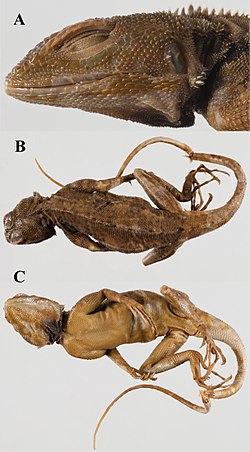
When a new species is identified, researchers often designate a type specimen, known as a holotype, to serve as the definitive physical example of that species.
Defining a Species: Diverse Scientific Concepts
Because life is so diverse, biologists use different "concepts" to define species depending on the organism being studied. There is no single perfect definition, but several frameworks are widely used.
The Biological Species Concept
Proposed by Ernst Mayr in 1942, the Biological Species Concept defines a species as the largest group of organisms that can interbreed to produce fertile offspring. This concept focuses on reproductive isolation—the idea that members of one species are prevented from breeding with members of another.

Morphological and Typological Concepts
In many cases, species are defined by their morphology, which refers to their physical shape, structure, and appearance. This is often the only way to identify species in the fossil record, where reproductive behavior cannot be observed.
![All adult Eurasian blue tits share the same coloration, unmistakably identifying the morphospecies.[9]](/images/ce/13/ce13a6e713079c482ec032516248fb5d0c56d281860a41d7f7f4df44fb9419d6.jpg)
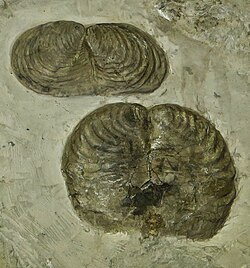
Palaeontologists must rely on these physical characteristics when deciding if fossilized remains, such as the Inoceramus bivalves, represent a distinct species.
The Chronospecies Concept
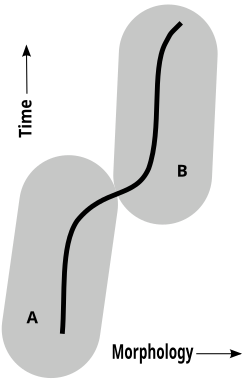
In the study of evolution over long periods, scientists use the term chronospecies. This describes a single lineage where the physical form changes so significantly over time that researchers eventually divide the lineage into two or more distinct species.
The Phylogenetic or Cladistic Concept
The phylogenetic species concept defines a species as the smallest lineage that can be distinguished by a unique set of genetic or morphological traits. This approach is particularly useful in palaeontology because it does not require proof of reproductive isolation.

Microbiology and the Genetic Frontier
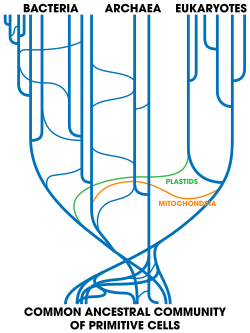
In the microscopic world, traditional definitions often fail. Bacteria and archaea frequently exchange genes through horizontal gene transfer, a process where genetic material moves between even distantly related species, complicating their evolutionary history.
To manage this complexity, microbiologists often use DNA barcoding. This involves looking at specific gene regions, such as the 16S ribosomal RNA gene, to determine similarity. While a 97% similarity threshold was once a rule of thumb, this was narrowed to 98.7% in 2006 to improve accuracy.
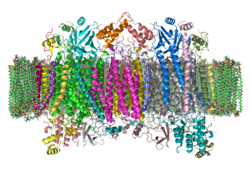
For even greater precision, scientists use whole genome comparison. One method, known as Average Nucleotide Identity (ANI), quantifies the genetic distance between entire genomes. Interestingly, researchers have observed an "ANI gap" between 85% and 95% in prokaryotic sequences, suggesting a natural genetic boundary that helps define species.
The "Species Problem" and Evolutionary Change
The reason defining a species is so difficult is that evolution is a continuous process. Species are not static; they change over time. This leads to several biological complexities:
- Hybridization: When two different species breed, the boundaries between them can become blurred.
- Ring Species: A series of populations that can interbreed with their neighbors but are reproductively isolated from populations at the opposite end of the "ring."
- Asexual Reproduction: For organisms that reproduce without mating, the concept of reproductive isolation does not apply, making each clonal lineage potentially a unique "microspecies."
- Viral Quasispecies: Viruses exist in a state of constant mutation and selection, requiring a specialized way to categorize them.
Historically, views on species have shifted from the "great chain of being"—a hierarchical view held from the time of Aristotle—to the modern understanding of evolution. Charles Darwin’s 1859 work, On the Origin of Species, revolutionized biology by explaining how species arise through natural selection.
Key Facts
- Estimated Eukaryotic Species: Between 8 and 8.7 million.
- Binomial Nomenclature: A two-part naming system consisting of a Genus and a specific epithet.
- Biological Species Concept: Defined by the ability to produce fertile offspring (proposed by Ernst Mayr, 1942).
- DNA Barcoding: A method using specific gene sequences to distinguish species.
- ANI Gap: A genetic boundary observed between 85–95% in prokaryotic sequences.
Summary of Species Concepts
| Concept | Primary Basis | Main Application |
|---|---|---|
| Biological | Reproductive isolation | Interbreeding organisms |
| Morphological | Physical traits/appearance | Fossils and visual identification |
| Phylogenetic | Unique genetic/morphological lineages | Evolutionary history and fossils |
| Ecological | Ecological niche | Role within an environment |
Frequently Asked Questions
What is binomial nomenclature?
Binomial nomenclature is a two-part scientific naming system. It uses a Genus name followed by a specific epithet to uniquely identify every species, such as Boa constrictor.
How many species are estimated to exist on Earth?
The most recent rigorous estimate for the total number of eukaryotic species is between 8 and 8.7 million.
What is a chronospecies?
A chronospecies is a species within a single lineage that changes its physical form over time. Eventually, the change becomes so great that scientists classify the lineage as two different species.
Why is it hard to define a species?
Defining species is difficult because evolution is a continuous process. Factors like hybridization (breeding between species), asexual reproduction, and constant genetic mutation make it hard to draw clear lines between groups.
What is DNA barcoding?
DNA barcoding is a technique used to identify species by looking at a specific, standardized region of an organism's DNA, similar to how a supermarket scanner uses a barcode to identify a product.